According to a recent article published by The New York Times, the U.S. Department of State is considering classifying the First Capital Command (PCC for its acronym in Portuguese) and the Red Command (CV for its acronym in Portuguese) as terrorist organizations, under pressure from the Bolsonaro family. The proposal affects Brazil’s political and electoral landscape and forms part of Donald Trump’s strategy, which since the beginning of his term has promoted a campaign to designate organized crime groups in Latin America and the Caribbean as terrorists. However, labeling these groups as terrorists is not merely a proposal to toughen criminal enforcement. It is a dispute over categories—and categories, in the field of international security, are never neutral.
Labeling an actor as “terrorist” does not simply describe a type of violence: it redefines the problem, alters the repertoire of legitimate responses, and shifts competencies among institutions. In other words, the debate is not only legal. It is also doctrinal, strategic, and geopolitical. What is at stake is the transformation of a phenomenon historically treated as a matter of public security and transnational crime into a threat subject to exceptional framing, with consequences for sovereignty and for the balance between policing, defense, and foreign policy.

This distinction matters because organized crime and terrorism are not interchangeable categories. Law No. 13.260/2016, which regulates terrorism in Brazil, was constructed around specific motivations—xenophobia, discrimination, intolerance, ideological, political, or religious reasons—articulated with the intent to provoke social or generalized terror.
Groups such as the PCC and CV, in turn, operate primarily according to a different logic: territorial control, management of violence, transnational circulation of illicit goods, internal discipline, and economic accumulation. This does not make these groups less violent or less dangerous. It does, however, make them different. Confusing these categories may produce not an expansion of state capacity, but a deterioration of diagnosis. And in security matters, imprecise diagnoses tend to generate ineffective or politically dangerous responses.
Bill 1.283/2025, introduced by Congressman Danilo Forte, amends the Anti-Terrorism Law to broaden the motivations of the crime of terrorism and extend its application to criminal organizations and private militias. At first glance, it appears to be a legislative adjustment presented as a response to escalating violence. But analytically, the bill does something deeper: it shifts the lexicon of confrontation. By bringing criminal factions closer to the terrorist framework, it opens space for criminal violence to cease being conceived primarily as an object of public security management and instead be understood as a threat to national order, with all the political and institutional weight that this shift entails.
This shift does not occur in a vacuum. In May 2025, Brazil rejected a request from the United States to classify the PCC and CV as terrorist organizations. The response was revealing: according to the National Secretary of Public Security, domestic legislation does not authorize such a classification because terrorism, in Brazil’s legal order, is not synonymous with violent criminality. Refusing the classification was, at once, a legal gesture and a gesture of sovereignty—a dispute over who has the authority to define the nature of the threat.
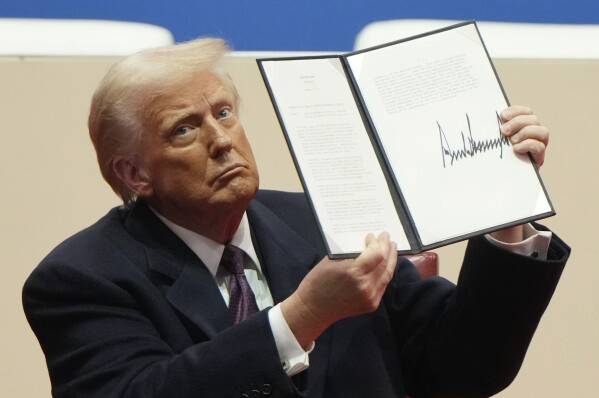
Brazil’s concern becomes intelligible in light of the hemispheric context. On January 20, 2025, Donald Trump signed Executive Order 14157, determining that cartels and other organizations be evaluated for designation as Foreign Terrorist Organizations and Specially Designated Global Terrorists. One month later, the Department of State formally announced the designation of eight Latin American groups, including the Tren de Aragua and six Mexican cartels. The political meaning of this move goes beyond financial sanctions or immediate diplomatic restrictions. By inscribing criminal organizations within the grammar of terrorism, Washington expands the field of intelligibility for harsher extraterritorial responses and repositions the fight against transnational crime within a logic of national security and strategic projection.
For Latin America, this precedent is sensitive for historical reasons. The region is well acquainted with the effects of transforming internal or transnational threats into justifications for expanding external presence, tutelage, or intervention. The fight against drugs, at different moments, has served not only as a policy of criminal containment but also as a legitimizing language for broader strategic objectives. The decisive point now is that the terrorist framing provides a basis for this expansion: it creates a normative and political environment in which measures that were previously more controversial begin to appear more acceptable, more urgent, and more defensible before public opinion and the security bureaucracy.
From the perspective of critical security studies, this process can be read as a classic case of securitizing shift. The central question is not only whether an actor is dangerous, but how the threat is constructed, communicated, and institutionalized. When a phenomenon is elevated to the status of an existential threat, the actors authorized to act also change, as do the instruments considered proportional and the spaces in which intervention becomes imaginable. This helps explain why the discussion about the PCC and CV cannot be treated as a simple criminal technicality. What is at stake is the boundary between public security and defense, between investigation and exceptionality, between domestic enforcement and openness to more intrusive external framings.
There is also an operational problem: terrorist classification may reduce, rather than expand, the precision of enforcement policies. Criminal factions require long-term intelligence, infiltration, financial tracking, and judicial cooperation. The terrorism framework tends to reward more militarized and politically performative responses. Once the category changes, so too does the pressure for responses compatible with it. The rhetoric of war often generates its own demand for instruments of war.
For this reason, the Brazilian debate must be framed more carefully than public polarization suggests. The relevant question is not whether the PCC and CV are serious threats—they clearly are. The question is different: what does the State gain, and what does it risk losing, by redefining them as terrorism? By adopting this nomenclature, Brazil would not only reclassify two criminal actors; it would reposition its security policy within a hemispheric environment marked by the expansion of anti-terrorist language and by external pressures to align diagnoses and instruments.
In this scenario, sovereignty is not a normative abstraction. It is the capacity to sustain an autonomous framing of the nature of the threat and, from it, to preserve some control over the means mobilized to confront it. Naming, in this case, is intervening—and that is precisely why the dispute over classification matters so much.
Autor

PhD in International Relations from PUC-Rio and professor at UFRRJ, Brazil. Research Coordinator at the Center for Security and Citizenship Studies (CESeC).