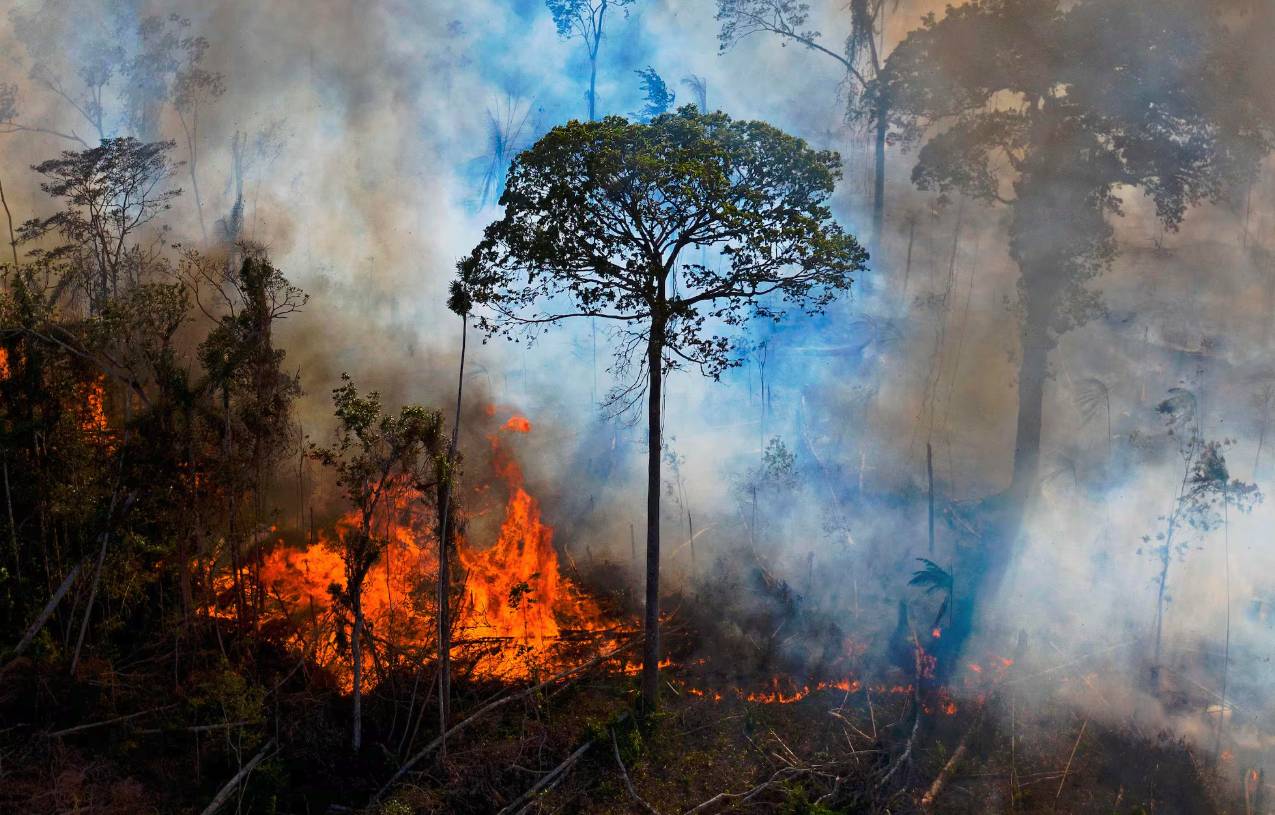
Six months after COP30 was held in the city of Belém, Brazil does not appear to have much to celebrate on environmental issues. Congress’s loosening of legislation for mineral exploration, government plans for oil extraction in the Amazon, allegations of water-source depletion for purely profit-driven purposes against companies such as Nestlé, and the destruction of natural and protected areas by emblematic national corporations such as JBS all fuel public cynicism.
Even though there is positive news, such as the sharp decline in deforestation recorded in 2025, tree cutting continues, especially in one of the country’s most pristine regions, driven by the expansion of agribusiness.

It is therefore no surprise that Brazilians approach World Environment Day feeling both apprehensive and fatigued. This sentiment is reflected in opinion polls and shapes the public agenda, especially in an election year and on the eve of presidential elections. Although it lacks the urgency attributed to crime and insecurity, corruption, and social inequality—which rank as society’s main concerns—the climate crisis in Brazil is nevertheless regarded as a key and worrying issue. In fact, according to a recent study by the consultancy Market Analysis, a solid majority of 82% recognizes global warming as a serious threat to humanity.
Brazilians view the crisis as alarming and associate it with the increase in natural disasters such as droughts, wildfires, floods, and hurricanes. According to reports from CEMADEN and the PREVOTS monitoring platform, 2025 set yet another disaster record and was also one of the hottest years since measurements began in the 1960s. These phenomena are now tangible to the general population and serve as unmistakable indicators that the climate crisis is a reality.
The steady worsening of climate conditions is taking a toll on the characteristic optimism of the average Brazilian. Environmental fatalism regarding the irreversibility of the crisis is on the rise, increasing from 20% in 2019 to 31% in 2026—the share of people who believe it is already too late to reverse climate change. This growing climate pessimism (although still a minority view) is explained not only by the evidence of increasingly frequent and devastating extreme events, but also by growing distrust in the actors expected to solve the problem, chiefly governments and businesses.
The Market Analysis study indicates that most Brazilians believe those responsible have clear names and faces: first the government, and then businesses. Governments are blamed for erratic policies and a lack of regulation or effective punishment for environmental violations and disasters. Businesses, meanwhile, are criticized for questionable production and profit models, as well as marketing strategies rooted in “greenwashing” or misleading environmental claims, which further fuel public cynicism.
As a result, Brazilians are placing less and less trust in the ability of these actors to address the problem. For example, only 30% believe that national and state governments are taking the necessary measures to protect the environment. This skepticism is higher in Brazil than in the other Latin American countries that participated in the study.
Unlike other countries in the region, Brazilians assign a particularly important problem-solving role to individuals, strongly embracing the belief that personal behavior can help improve the environment. In fact, 78% of respondents share this conviction—a high figure, though lower than it was at the end of the previous decade, reflecting the fatigue and emerging pessimism already noted.
Even so, this faith in individual empowerment does not necessarily translate into effective or transformative action. For example, far fewer Brazilians are willing to pay more for environmentally friendly products than people in other countries in the region.
As sociologist Ulrich Beck argued, attempting to solve a systemic problem through individual action or biographical solutions is a lost cause before it even begins. The possibility—and the sense of justice—in expecting individuals to provide adequate responses to problems caused by decades of neglect and poor management by far more powerful actors such as governments and corporations is virtually nonexistent. This does not mean dismissing the individual’s capacity and potential for agency. No one illustrates this better than Greta Thunberg.
Brazil offers no shortage of individual leaders who follow a similar path, perhaps to a degree unmatched anywhere else in Latin America. At the forefront is Environment Minister Marina Silva, alongside numerous activists from NGOs, think tanks, the media, and even Congress itself. The examples of Chico Mendes, Fernando Gabeira, Ailton Krenak, Sonia Guajajara, and Carlos Nobre, among many others, are emblematic.
Faced with growing climate anxiety among the population, Brazil enters a new cycle of environmental challenges while the electoral campaign continues to overlook these issues.
Autor

Fabián Echegaray es director de Market Analysis, consultora de opinión pública con sede en Brasil, y actual presidente de WAPOR Latinoamérica, capítulo regional de la asociación mundial de estudios de opinión pública: www.waporlatinoamerica.org.