At the end of March 2025, a group of students—women, men, and LGBTQ+ individuals—gathered in a school in La Jagua de Ibirico, a municipality located in Colombia’s Caribbean region, to share how the sudden return of Prodeco S.A.’s coal mining titles in 2021 had affected their lives and their territory. During the session, they spoke about lost jobs, fears, gender-based violence, economic dependence, and discrimination. At the same time, they collectively developed public policy recommendations aimed at preventing these experiences from being repeated during the just transition process.
The scene reflects a reality that is often left out of conversations about a just transition. Community voices revealed that the impacts of mine closures are not experienced in the same way by everyone. Women and LGBTQ+ individuals described barriers ranging from exclusion from decision-making spaces to various forms of violence and discrimination. Their experiences highlighted how gender roles and stereotypes, historically entrenched in a territory shaped by extractive activity, continue to condition the opportunities and participation of those who live in the municipality.

Recognizing this reality, the Human Rights Legal Clinic of the University of Magdalena and the Energy Transition Research Group (STEUnimagdalena) developed an interdisciplinary, socio-legal, and participatory research project funded by NRGI: “Deconstructing Gender-Based Patterns as a Fundamental Element of a Just Transition.” The process became a space for dialogue where academic knowledge and territorial experiences came together to imagine more just and inclusive transition alternatives.
A municipality adapted to coal
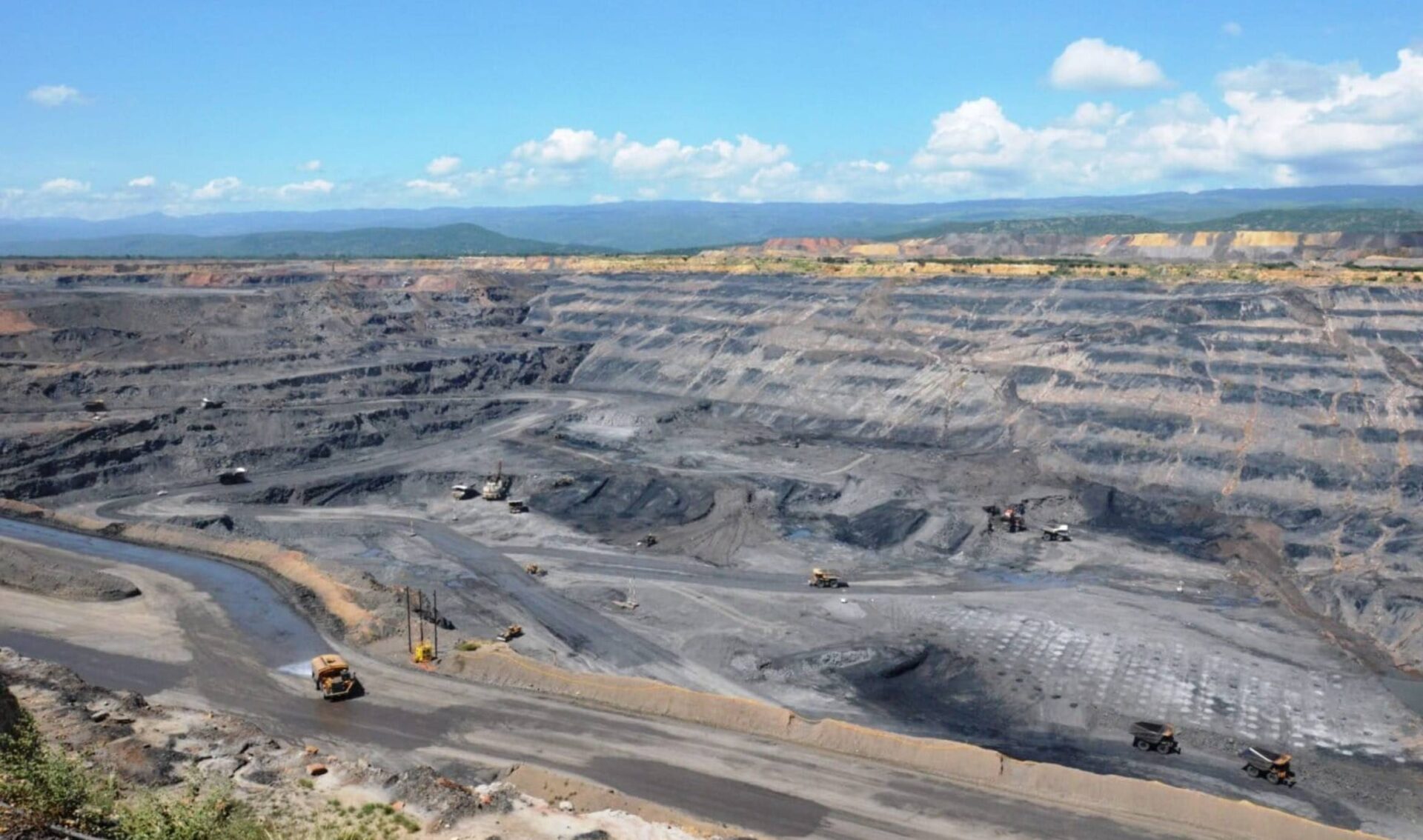
La Jagua de Ibirico, in the department of Cesar, is one of the territories most affected by the decline of coal. For decades, mining drove much of the local economy: it generated jobs, stimulated commerce, attracted population growth, and shaped the life plans of many families. Yet that development was also built upon profound inequalities.
While the mines primarily absorbed male labor, many women remained tied to caregiving work or tertiary-sector activities. Thus, while coal generated income, it also reinforced gender roles that limited opportunities for a significant portion of the population.
When Prodeco S.A. ceased its mining operations, the decision was justified by declining international coal prices and the effects of the pandemic, leaving thousands of people facing an uncertain future. The impact was immediate. Businesses closed, incomes fell, and many families saw the economic stability that had revolved around mining for years disappear. The closure also exposed problems that had long been accumulating beneath the surface.
The violence that emerges after the mine
Participatory workshops and focus groups revealed that the departure of coal was not only transforming the local economy but also exposing structural inequalities related to gender and sexual and gender diversity. These perceptions are reflected in the data. In 2024, La Jagua de Ibirico recorded 102 cases of gender-based violence—primarily physical violence, sexual violence, and neglect—according to figures from the Integrated Information System on Gender-Based Violence. Yet behind those numbers lies a reality that is far more difficult to measure: the cases that are never reported.
During community meetings, women spoke about their distrust of institutional support mechanisms and the difficulties of achieving economic autonomy in a context marked by income loss. LGBTQ+ individuals described experiences of discrimination and exclusion that, in many cases, continue to limit their access to employment opportunities and spaces for participation. Young people expressed uncertainty about the future and recognized the need for greater access to information on rights, gender issues, and mechanisms for responding to violence. Men also reflected on the pressures associated with traditional models of masculinity, including stigma, ridicule, and social sanctions directed at those who practice a more shared and responsible form of masculinity.
These testimonies conveyed an important lesson: a just transition does not only require transforming the economy; it also requires questioning the power relations and gender norms that organize everyday life.
A just transition cannot be merely productive
The experience of La Jagua de Ibirico demonstrates that transition cannot be reduced to the closure of mines or the replacement of one economic activity with another. If structural inequalities remain intact, the new model may simply reproduce the same exclusions as the old one.
In this context, the work carried out by the Legal Clinic and STEUnimagdalena sought to move beyond diagnosis. The research made it possible to develop public policy recommendations based on the voices of the community itself, creating a space where people affected by mine closures could imagine alternatives for the future of their territory.
The recommendations converged around a central idea: the transition must place people at its core. Women emphasized the need to strengthen their economic autonomy; the LGBTQ+ population called for meaningful recognition and inclusion in public policies; young people demanded genuine spaces for participation; and men highlighted the importance of promoting educational processes that challenge violence and gender stereotypes.
Academia and academic extractivism
In territories historically marked by extractivism, a question also arises for researchers: what happens when academia arrives, collects testimonies, produces knowledge, and then leaves? For this reason, the research embraced a process of co-creation. The goal was not to speak on behalf of the community but rather to generate inputs that could strengthen its advocacy efforts. The findings and recommendations have already been shared with local stakeholders, institutions, and organizations connected to the territory.
The challenge now is ensuring that these proposals do not remain confined to reports or technical documents. The transition in La Jagua de Ibirico is already underway. The question is whether it will be a transition marked by abandonment or an opportunity to build a more just and inclusive future.
This article is part of the compendium “Environmental Legal Clinics in Latin America and the Caribbean: Education, Territory, and Environmental Justice,” published in May 2026 by the Peruvian Society for Environmental Law, the Alliance of Environmental Legal Clinics of Latin America and the Caribbean, and Latinoamérica21.
Autor

Economist and young researcher at STEUnimagdalena, committed to a just energy transition, job retraining, and social and gender transformation in territories emerging from coal mining.

Law student, legal conciliator and researcher of the Legal Knowledge Research Group of the University of Magdalena, committed to human rights, the defense of vulnerable populations and gender.

Master of Laws, university lecturer and researcher in human rights and gender. Researcher with the Saberes Jurídicos group and coordinator of the Human Rights Legal Clinic at the University of Magdalena. Member of the Ibero-American Network of Women for Climate Action.