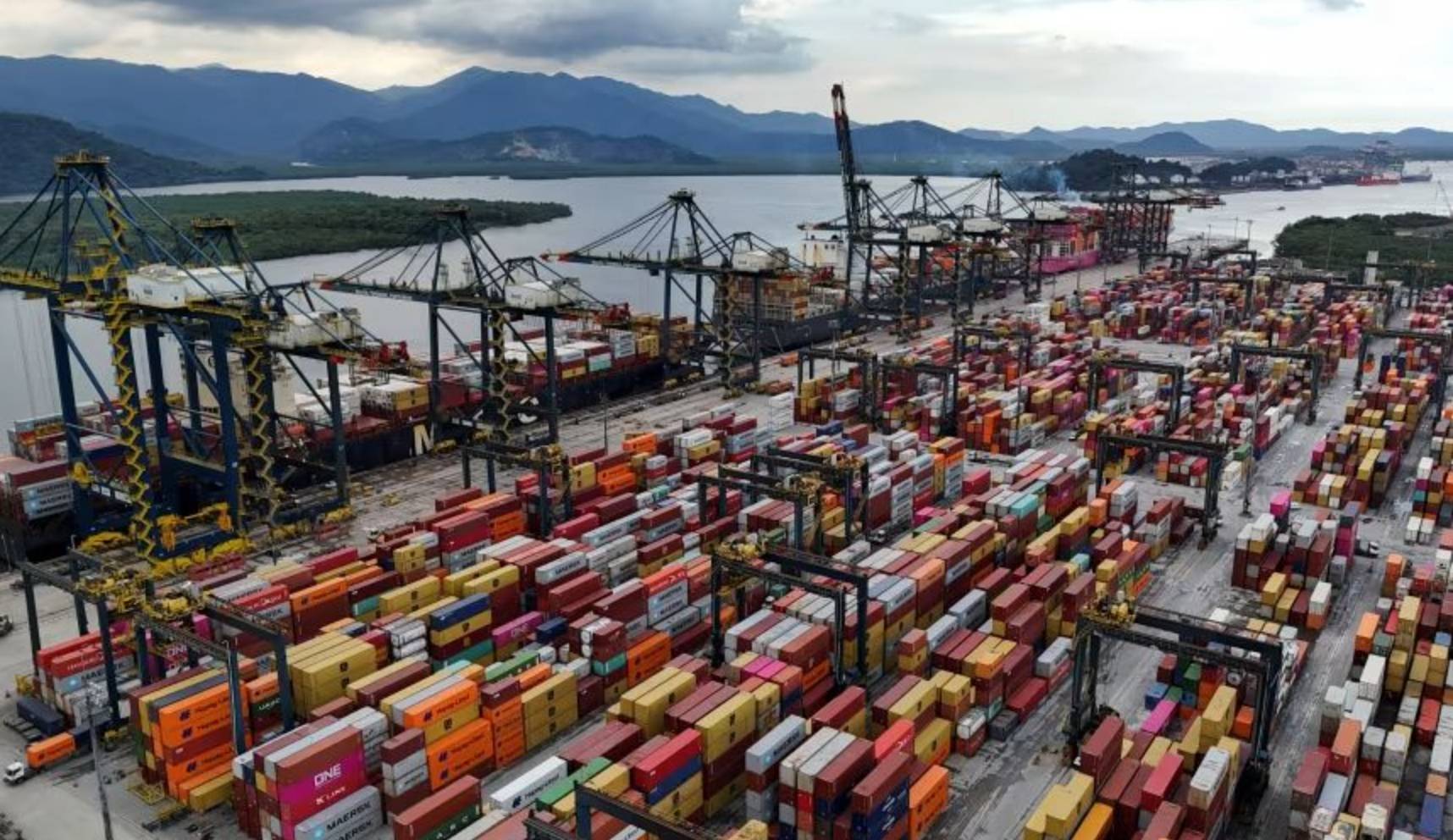
In Mid-July 2026, the United States levied a 25 percent tariff on imports from Brazil after concluding a yearlong investigation under Section 301 of the Trade Act of 1974. The U.S. imposed the 25 percent tariff citing concerns over digital trade practices, electronic payment services, preferential tariff treatment, and corruption that places companies complying with anti-bribery standards at a competitive disadvantage. Additionally, an ongoing U.S. probe against Brazil’s forced labor practices could add another 12.5 percent tariff.
The United States has long maintained legitimate economic and national security interests in ensuring fair market access, protecting intellectual property, and preserving the competitiveness of American industries. As Washington works to safeguard these interests, assessing the broader strategic implications of trade policy within its regional strategy for the Western Hemisphere remains an important element of understanding the region’s evolving geopolitical landscape.

For decades, Brazil and the United States have been long-standing trade partners. The United States has consistently maintained trade surpluses with Brazil in addition to being a primary source of foreign direct investment (FDI). In 2025, U.S. exports to Brazil were $54.4 billion, up almost 6 percent from 2024. Moreover, in 2025, U.S. imports from Brazil totaled $39.9 billion, down 5.7 percent from 2024. Lastly, the U.S. trade surplus was $14.4 billion in 2025, representing a 112.8 percent increase over 2024.
According to the IMF, in 2025, Brazil represented the second-largest economy in the Western Hemisphere behind the U.S. and tenth-largest in the world. The United Nations Conference on Trade and Development data ranks Brazil as the fifth-largest destination for global FDIs with an inflow of $66 billion in 2023 and largest receiver in Latin America. The United States is the largest source of FDIs in Brazil in terms of an ultimate beneficial owner basis, with estimates ranging between 22 percent to 34 percent of all FDI stock. According to the Banco Central do Brasil, in 2024, the United States’ total direct investment totaled $232.8 billion, representing the largest amount of direct investment into Brazil in financial services ($57.7 billion), technology services ($24 billion), commerce ($20.3 billion), and information services ($20.1 billion).
Even amid the depth of the bilateral economic relationship, the United States has increasingly relied on trade policy to address longstanding concerns regarding market access, industrial practices, and economic competitiveness. These measures advance longstanding U.S. economic and national security objectives, including concerns over market access, industrial practices, and economic competitiveness, but may also present broader geopolitical implications beyond bilateral commerce. Since April 2025, the United States has imposed a 10 percent tariff on Brazil (apart of “Liberation Day”), 40 percent tariff on selected products, and now 25 percent with potential for 12.5 percent more. As reported by the Atlantic Council, U.S. imports of Brazilian products have rapidly declined from prior to the tariffs while U.S. exports have remained relatively consistent. In 2024, Brazil supplied 20 percent of U.S. imports in raw resources, agriculture, and minerals. By September 2025, U.S. coffee imports from Brazil had fallen 46.5 percent, a decline of roughly 17,000 tons, compared with the monthly average of just over 38,000 tons recorded between January 2024 and March 2025.
These tariffs may also increase incentives for Brazil to deepen existing economic relationships with alternative partners such as China, particularly in sectors directly affected by higher U.S. trade barriers. Historically, China and Brazil have been key economic allies, as Brazil and China are both are founders of BRICS+ and engage in South-to-South Cooperation. In Brazil, China focuses on two forms of engagement: increase trade in raw commodities and in return export finished goods, and large-scale infrastructure development to create greater access to Brazilian markets.
Brazilian exports to China reached $100 billion in 2025 with soybeans accounting for one-third of total shipments. Chinese imports from Brazil consist primarily of raw commodities, mainly agriculture, creating areas of trade from U.S. tariffs. Yet, Brazilian imports from China rely on finished goods, often equipment to be able to cultivate or sustain these raw resources. In 2025, Chinese exports to Brazil reached a record high, totaling $70.9 billion, driven partly by offshore platforms, electric and hybrid vehicles, fertilizers, and chemical products. This economic realignment predates the latest U.S. tariffs and reflects Brazil’s longstanding strategy of diversifying its partnerships. The tariffs are therefore unlikely to create Brazil’s relationship with China, but they could accelerate an established shift by making Chinese markets more attractive.
In tandem with trade, China seeks greater control over Brazil’s supply chain through infrastructure. Since 2024, China has been pivotal in reviving momentum for the Brazil-Peru Bi Oceanic Railway which will allow Brazilian goods to move more quickly to Pacific ports and into Asian markets, effectively realigning logistic supply chains away from the United States. The railway would target areas with high levels of soy, beef, grain, or other agricultural points in Brazil to cut travel time to reach Asian markets. Moreover, the railway will connect with the port of Chancay, built by China’s COSCO for $3.5 billion, reducing shipping time for 20 days, and saving logistical costs by 20 percent. While the railway could significantly improve regional logistics, critics argue that China’s dominant role in financing and operating key components of the corridor could increase long-term strategic dependence.
China has also expanded its position in Brazil’s agricultural sector through investments in soybean production in the Amazon, growing their control from 1.6 million hectares in 2007 to 7.28 million hectares by 2022, causing widespread deforestation and the displacement of indigenous communities such as the Geraizeiros while degrading biodiversity and regional water systems. Although the ultimate impact remains uncertain, the production of a Bi-Oceanic Railway and other large infrastructure projects could increase China’s role in further deforesting the Amazon and displacing indigenous communities.
Chinese agricultural investments in Brazil have grown due to Chinese financial institutions such as the Export-Import Bank of China partnering with Brazil’s National Bank for Economic and Social Development to create a $1 billion investment fund in 2025. This investment is expected to prioritize sustainable development, ecological energy transition, green infrastructure, bioeconomy, agriculture, mining, digital economy, and artificial intelligence. This will grant China the ability to provide capital investments in strategic Brazilian sectors such as energy and agriculture to deepen China’s long-term influence.
Looking Ahead, in this critical election year for Brazil, foreign policy will be a major focus as the nation’s continues to seek avenues of dialogue on the basis of fair trade, bilateral investment, and its relations with the United States.
Autor

Holds a degree in International Relations and Politics and is a graduate student in the Global Affairs program at Florida International University, USA. Open source analyst at the Jack D. Gordon Institute.