On July 1, 2026, the U.S. government announced its decision not to automatically renew the United States-Mexico-Canada Agreement (USMCA), replacing automatic renewal with annual reviews through 2036. Faced with the possible termination of the agreement and the resurgence of industrial policies worldwide, Mexico is compelled to redefine the country’s institutional architecture and address fundamental questions: What role does Mexico want to play in the global economy? Which industries will it compete in? Who will its allies be, and what role will the state and private companies play?
To address these questions, the federal government has promoted the “Mexico Plan” as a development plan that incorporates elements of industrialization focused on import substitution and increasing local value added and domestic sourcing in exports in strategic sectors such as semiconductors, pharmaceuticals, automotive and aerospace. A detailed analysis of the plan reveals that its objectives in the semiconductor sector reinforce Mexico’s current dependent integration into the U.S. economy, strengthening the role of a manufacturing and assembly-based state engaged in low-productivity activities. At the same time, it allows us to glimpse an emerging strategy that seeks to shift the chip supply chain from Asia to the American continent, positioning Latin America as a key hub.

The reconfiguration of the semiconductor supply chain cannot be understood without considering the struggle for technological leadership between the U.S. and China. Following President Donald Trump’s policy of containing China’s technological advance, in 2022 former President Joe Biden signed the CHIPS and Science Act, which sought to incentivize semiconductor production in the U.S. while also limiting the transfer of technology and know-how to China.
One outcome of the CHIPS Act was an initiative developed by the U.S. Department of State together with the Inter-American Development Bank (IDB) to support semiconductor Assembly, Testing and Packaging (ATP) activities in Mexico, Panama and Costa Rica through the International Technology Security and Innovation Fund.
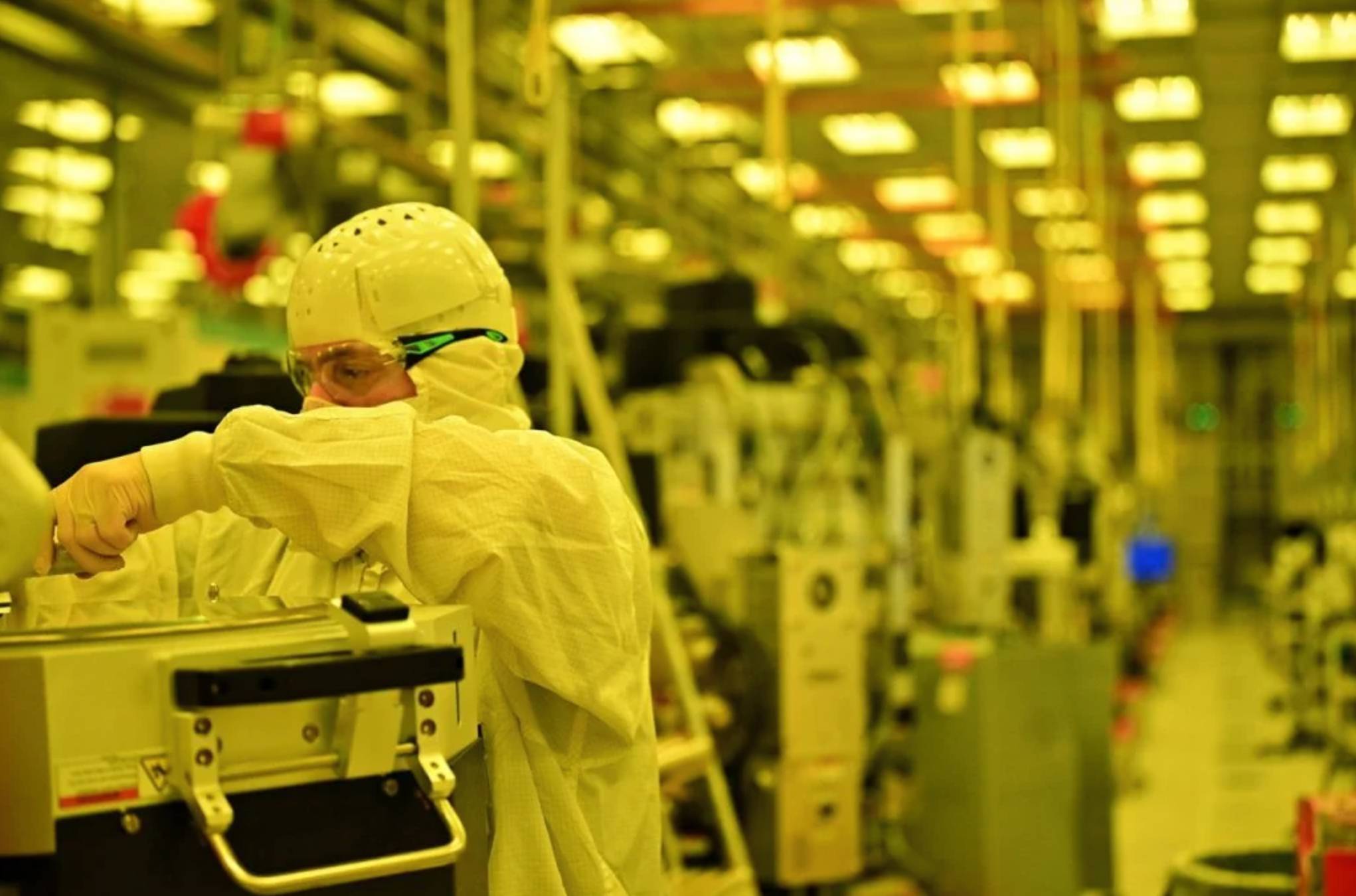
Through the Mexico Plan, the Mexican government reaffirmed its objective of promoting the relocation of $10 billion in ATP operations and attracting more than 30% of ATP producers’ investment. However, contrary to its desire to increase the value of its exports, ATP activities represent the lowest-value-added segment of the semiconductor supply chain. According to the Semiconductor Industry Association, they account for only 6% of the supply chain’s value added. By comparison, various sources estimate that R&D and wafer fabrication account for between 50–58% and 24–36% of value added, respectively.
According to the OECD, ATP activities generally have lower profit margins and are more labor-intensive than semiconductor production and design, since design requires greater investment in research and development (R&D), while manufacturing requires substantial capital investment.
The semiconductor supply chain exhibits a dual concentration, both at the national and corporate levels. This structure is inherently sensitive to geopolitical tensions. While most R&D activities are concentrated in the U.S. (with companies such as Apple, Intel and Nvidia), Assembly, Testing and Packaging (ATP) activities are distributed across China, Taiwan, Malaysia, Vietnam and the Philippines. Finally, cutting-edge semiconductor production is concentrated in Taiwan (through Taiwan Semiconductor Manufacturing Co., TSMC). Thanks to its strategic importance to the industry, Taiwan has managed to deter China’s territorial threats and secure the support of the United States and its allies.
The relocation of the supply chain reached a landmark in 2025, when the U.S. agreed with TSMC on an investment of more than $165 billion to establish cutting-edge semiconductor fabrication plants and ATP facilities on U.S. soil. Under this agreement, the supply chain is being reorganized to locate semiconductor design and production in the U.S., while part of the ATP activities are concentrated in Mexico, Panama and Costa Rica. At the same time, the U.S. government appears to be planning to secure access to natural resources, such as rare earths, in countries such as Colombia in order to guarantee the supplies needed for chip manufacturing.
This regional framework provides the elements necessary to anticipate the transformation of the semiconductor supply chain, in which Latin America plays an essential role. For this reason, for the U.S., relations with Latin American governments and control over their resources have emerged as matters of national security. For the countries of the region, however, moving beyond the role of mere assemblers and avoiding a new form of dependence disguised as reindustrialization is essential to preventing productive stagnation, social exclusion and institutional fragility, which the Economic Commission for Latin America and the Caribbean (ECLAC) identifies as development traps.
Autor

Master in International Relations and Political Science from the Geneva Institute of Higher International and Development Studies. Professional in international development cooperation, researcher at the GIS Nucleus of the Federal University of Rio de Janeiro.