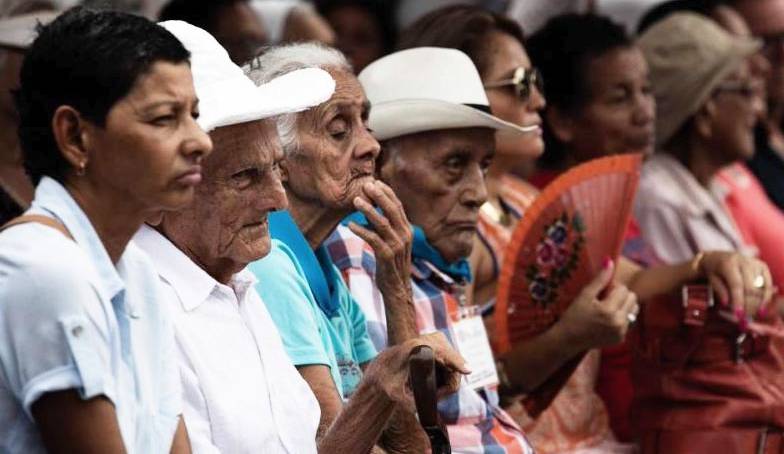
For all of us, there comes a point in life when visiting the doctor stops being an occasional occurrence. Appointments become more frequent, medication becomes part of our daily routine, and illnesses are no longer isolated episodes. Going to a medical appointment alone becomes increasingly difficult, and the need for family support begins to emerge.
What seems like an intimate, family experience then raises a much broader question for our healthcare systems: are we prepared to care for a population that will live longer and require medical attention over increasingly extended periods?

According to the Economic Commission for Latin America and the Caribbean (ECLAC), Latin America is undergoing a profound demographic transformation. Based on 2025 data, the region has approximately 98.1 million people aged 60 and over, equivalent to 14.7% of its population. By 2050, that figure could reach 182.7 million.
Population aging has accelerated over recent decades and represents one of the most significant changes our region will face. Healthcare systems will have to reorganize to meet the increasingly complex needs of an aging population. The real question, therefore, is not simply how long we will live, but what kind of medical care we will receive.
The great achievement is living longer
Population aging is the result of one of the greatest social and healthcare achievements of recent decades: life expectancy in Latin America rose from around 50 years in 1950 to 75.6 years in 2020. In other words, millions of people have gained several decades of life that previous generations could not expect to enjoy.
This progress deserves to be celebrated. Living longer reflects improvements in social and health conditions. But it also brings new responsibilities, because longer lives transform healthcare needs. Older people require more frequent checkups, ongoing management of chronic conditions, medication, rehabilitation, and support over extended periods. Healthcare is no longer an isolated episode; as the years go by, it becomes a journey that requires continuous care.
And this is where one of the region’s main healthcare challenges emerges. For decades, much of the way healthcare has been organized has focused on responding when illness strikes, especially when it becomes an emergency. But an aging society needs more than the ability to intervene during a crisis. It needs systems capable of providing care before, during, and after one occurs.
Are we prepared to provide better care?
Population aging will change not only the number of people seeking healthcare services, but also how those services must be organized. Someone living for years with hypertension, diabetes, or other chronic conditions does not need to turn to the healthcare system only when their condition worsens. They need monitoring, continuity, and ongoing support from healthcare professionals. They need a doctor who knows their medical history before a complication turns into an emergency.
That is why the challenge facing an aging Latin America cannot be addressed simply by building more hospitals or increasing capacity to respond to crises. A hospital can handle an emergency, but it cannot, on its own, provide care throughout a life that extends over several decades. This is where primary healthcare becomes essential.
An aging population needs accessible services capable of supporting people over time. It needs a strong primary care system, with health centers that do more than serve as an entry point to the healthcare system: they must be able to monitor patients, prevent complications, and ensure continuity of care.
Demographic data are essential to understanding population changes, but recognizing that the population is aging is only the first step. The next is to transform how healthcare systems respond to this new reality.
What Latin America needs
The demographic transition is unfolding at different rates across countries that are also marked by deep territorial inequalities. These inequalities translate into significant differences in access to healthcare services in old age.
Growing older in a major city, where more specialized healthcare facilities are concentrated, is not the same as growing older in a rural area. This situation is repeated across Latin America, where accessing specialized care can require long journeys.
As the older population grows, existing gaps in healthcare systems could become even more apparent. Geographic disparities in the availability of and access to services will no longer be merely a matter of how the system is organized. They will translate into differences in people’s ability to enjoy old age with better health, greater autonomy, and dignity.
For this reason, Latin American governments must refocus their attention on primary healthcare as a central pillar of their response to population aging.
Strengthening primary care means bringing healthcare closer to people and ensuring that follow-up care is available where they live. It means recognizing that a person’s place of residence should not, in itself, determine whether they can receive continuous care. It means ensuring that access to healthcare does not depend exclusively on reaching a hospital.
Latin America has learned to live longer. Now it must learn to provide better care.
Autor

Médico y magíster en Salud Pública. Especialista en Gerencia Hospitalaria y Administración de Hospitales. Investiga y divulga sobre desigualdades territoriales en salud, gobernanza sanitaria y sistemas de salud en América Latina.