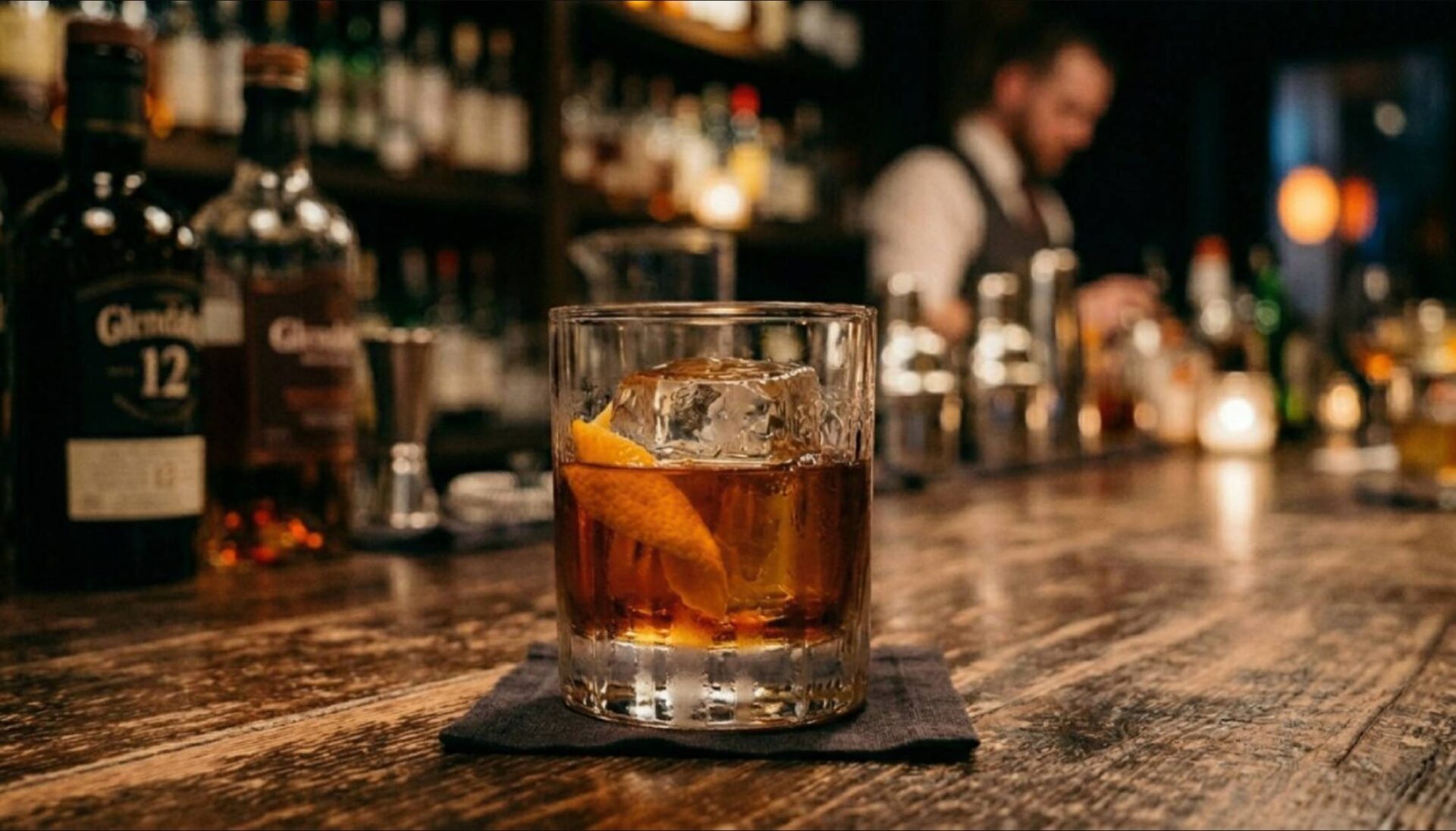
A mojito, a piña colada, a daiquiri or a Cuba libre. For decades, simply uttering any of those names at a bar in Madrid, Miami, Buenos Aires, Moscow or Tokyo has been enough to evoke the same promise: ice, music, partying and the tropics. Few Latin American products have traveled the world as effortlessly as the cocktails born around rum.
But behind that promise lie denser stories. The daiquiri and the Cuba libre emerged in a Cuba shaped by war and the presence of the United States. The piña colada appeared decades later, when modern tourism was beginning to turn the Caribbean into an exportable experience. Long before anyone spoke of premium brands, geographical indications or distillery routes, cocktails had already achieved something extraordinary: making rum a way of imagining the region.

Before all of them came sugarcane. Its cultivation arrived in the Americas with European colonization and became one of the foundations of the Caribbean economy, sustained for centuries by the exploitation of enslaved labor. Molasses was left over from sugar production, and it could be fermented and then distilled. What began as a way of making use of a by-product ultimately gave rise to a global industry.
Although rum is born from sugarcane, its current economy increasingly belongs to manufacturing, exports and marketing. No consumer pays one hundred dollars for a bottle because of the cost of molasses. They pay for the years in the barrel, the producer’s reputation, provenance, scarcity and the story built around the liquid.
The chain does not function the same way in every country, either. Some maintain an integrated production process from cultivation through bottling. Others import molasses, purchase distilled spirits, or concentrate their advantage in blending, aging and marketing.
Destination markets demonstrate the weight achieved by regional producers. In 2025, the United States imported approximately $161 million worth of rum and tafia. The Dominican Republic was its leading supplier, with $23.1 million; Barbados contributed $19 million, Jamaica $18.1 million and Venezuela $16.6 million. That same year, Spain purchased €42.5 million worth of Dominican rum, €29 million in Cuban rum and €8.38 million in Venezuelan product. The figures confirm that the Caribbean remains an important supplier, but they do not reveal how much of the final value remains in the producing countries.
Where rum is marketed can be just as important as where the sugarcane was grown. Large companies, bottling centers, distributors and re-export platforms participate in a chain in which the origin of the product does not always coincide with the place where profits are captured. The challenge is not simply to place more liters on the market, but to increase the value that remains in each country through aging, bottling, branding and distribution.
For a long time, rum reached consumers hidden behind other ingredients. It was the base of the mojito, daiquiri or piña colada, but rarely occupied the center of the conversation. That space belonged to whisky and cognac, associated with aging, provenance and prestige. Now rum is trying to enter that same category.
Projections from IWSR, an international firm specializing in alcoholic beverage market analysis, describe a global rum market that will remain virtually stagnant between 2024 and 2029. Within that landscape, the super-premium segment is showing greater dynamism in key markets such as the United States and the United Kingdom. Rum no longer aspires merely to be mixed; it also wants to be sipped neat, given as a gift and collected.
The change can be seen in bars. In cities far removed from the sugarcane fields, establishments dedicated to exploring rum’s diversity have emerged. Smuggler’s Cove, in San Francisco, opened in 2009 and by 2025 had around 1,300 expressions. Rum is thus beginning to cultivate consumers interested not only in drinking it, but also in learning about regions, methods and producers.
Countries have adopted different strategies to capture that value. Puerto Rico and the Dominican Republic combine industrial scale, recognized brands and access to major markets. Guatemala has protected a designation of origin that links the product to virgin cane honey, high-altitude aging and the solera system. Jamaica and Barbados rely on historical profiles and distinctive methods to compete in higher-end categories.
Cuba shows the other side of the relationship with agriculture. Estimates based on provincial results put sugar production for the 2024–2025 harvest at around 165,000 tons, the lowest level in more than a century. Since authenticity rules require its producers to use domestic inputs, the shortage of molasses threatens its rum industry.
Premiumization does not happen only inside the bottle. It is also built around it. Rum is marketed as part of a lifestyle encompassing tourism, music, gastronomy, cigars, parties and tradition. Compared with other spirits that have built their prestige around sobriety or distinction, rum offers sociability, pleasure and a form of relaxed luxury.
That association extends the value chain beyond the distillery. In different Caribbean countries, visitor centers combine history, production, tastings and shops. The visit educates consumers, brings them closer to higher-priced products and turns the distillery into a tourist attraction and a customer-loyalty platform. Specialized festivals expand that ecosystem by bringing together brands, experts and consumers. In Puerto Rico, the 2026 edition of Taste of Rum attracted nearly 1,800 attendees and featured more than 150 expressions.
In 2021, Jamaica’s tourism minister proposed turning this offering into a multidestination experience connecting the rum heritage of Cuba, Barbados and Jamaica. The idea could be extended to Puerto Rico, the Dominican Republic and other producers to diversify the offerings of island economies. The bottle carries the Caribbean to the world; rum tourism seeks to bring the world back to the Caribbean.
This potential is still poorly measured. Countries publish statistics on exports and visitor arrivals, but they rarely calculate how many travelers arrive motivated by distilleries, festivals or routes, how much they spend and how many jobs they support. The region produces much of the story that rum sells, although it does not always control the companies and channels that turn that story into profits.
Rum began as a by-product of the sugar economy and ended up becoming one of the most recognizable cultural expressions of Latin America and the Caribbean. Its new opportunity does not necessarily lie in producing more sugarcane or selling more liters, but in mastering the manufacturing, distribution and storytelling that allow each bottle to be worth more.
The next time someone orders a mojito, a piña colada, a daiquiri or a Cuba libre, they will probably be thinking about the flavor, the music or the vacation. Inside the glass there will also be centuries of agriculture, trade, tourism and brand building. Sugarcane remains the beginning of the story. The real business begins afterward.
Autor

Writer and consultant in political and institutional communication. He analyzes politics, society, and mobility dynamics in Latin America, with an emphasis on their institutional implications and the construction of political community.