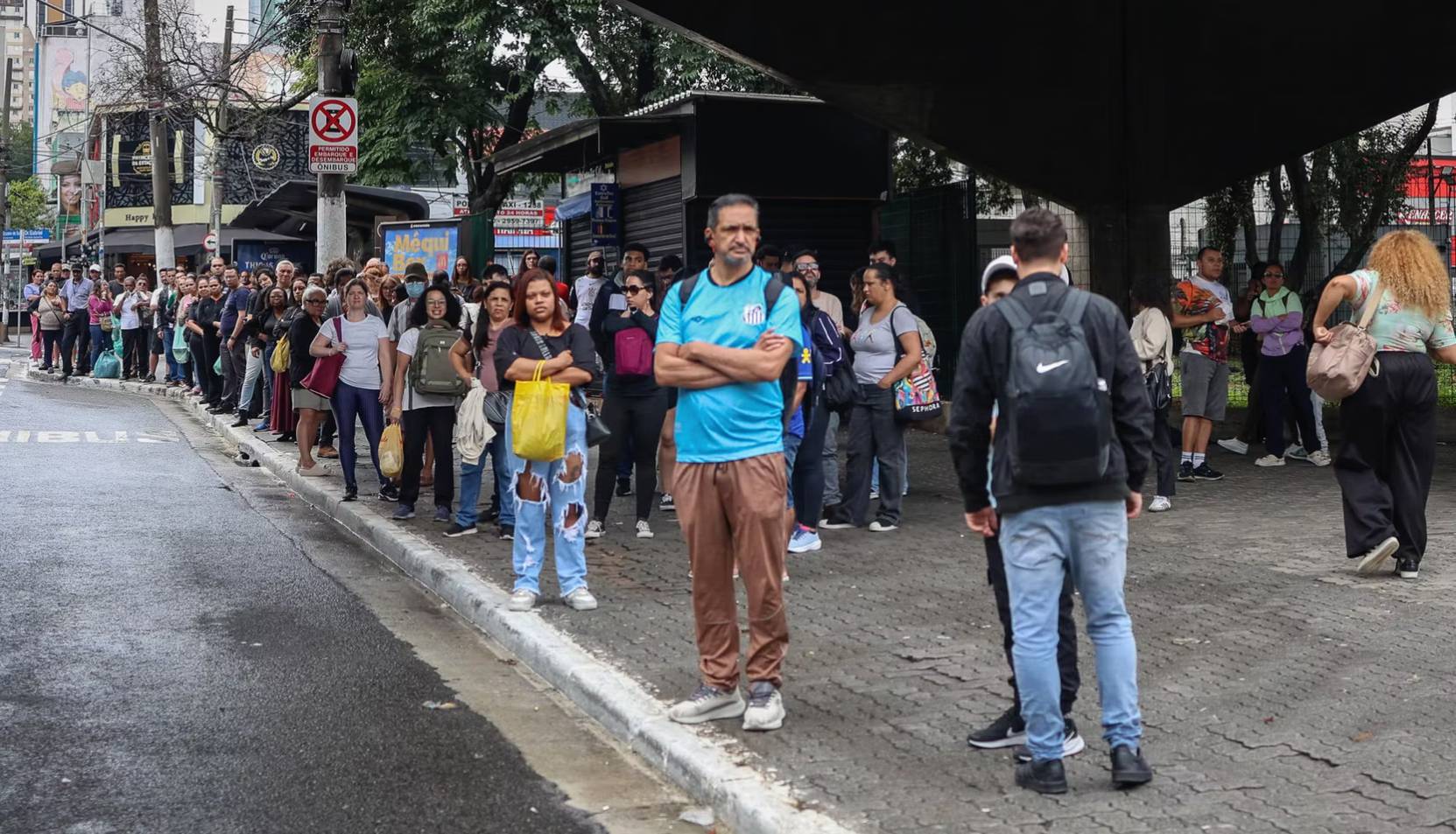
On the morning of October 25, as Brazil was choosing its president, Electoral Court inspectors found buses being held at depots in Salvador, one of the country’s largest cities. At one of them, inspection teams identified 55 parked vehicles that were in working condition. The regional court demanded the immediate reinstatement of free transportation and authorized the police to verify compliance. Voters, meanwhile, still needed those buses to reach the polling stations before five in the afternoon.
The Brazilian Constitution recognizes universal suffrage, and voting is compulsory for a large part of the adult population. That right, however, is exercised across a territory marked by inequalities ranging from urban outskirts to communities accessible only by river. In 2023, the Federal Supreme Court unanimously ruled that the absence of free public transportation during elections constituted an unconstitutional omission. It ordered that, starting in 2024, urban buses and intermunicipal and metropolitan services operate free of charge, at a frequency equivalent to that of working days. There was, therefore, an established obligation, predating the campaign and applicable to all municipalities, regardless of their mayors’ political preferences.

In Salvador, Mayor Bruno Reis, of União Brasil, had even signed a decree guaranteeing that frequency. He had also declared his support for Flávio Bolsonaro, the right-wing candidate and opponent of Luiz Inácio Lula da Silva. When judges found vehicles immobilized, Reis denied having ordered the reduction in service and explained that the companies had delayed dispatching them in order to remove campaign stickers attached to the buses. That explanation is being examined alongside circulation records and the instructions given to operators. During the vote, the court ordered the arrest of the municipal secretary for Mobility, Pablo Souza, who was in France; the following day, it revoked the order because the period in which he could be arrested in flagrante delicto had expired, and referred the facts to the Electoral Public Prosecutor’s Office and the Federal Police for investigation.
The allegations extended far beyond Salvador. Lula’s campaign reported transportation difficulties in localities across nine states. In São Paulo, governed by Ricardo Nunes, another Flávio Bolsonaro ally, it alleged that the fleet required by the courts had not been put into operation; the mayor rejected the accusation. In Feira de Santana, also in Bahia, transportation problems were reported under the administration of José Ronaldo, who had endorsed the Bolsonaro-backed candidate. The Ministry of Justice, for its part, reported failures verified using data from public agencies in eight states, and the Federal Police opened or prepared investigations into possible acts intended to obstruct the exercise of the right to vote.
The presence of mayors close to Bolsonarism among the municipalities cited in the complaints fueled suspicions that some restrictions may have been coordinated to affect voter turnout. This is precisely why the investigations matter: operational plans, messages exchanged between officials, instructions sent to companies, and bus location data may establish whether there were independent failures, deliberate decisions, or some form of coordination between administrations. A mayor’s political affiliation is not enough to prove responsibility, but neither does it replace the obligation to clarify how the service under their authority was organized.
In Indigenous territories, the threat of being left out of the polling stations took other forms. According to data released by the Federal Public Prosecutor’s Office, abstention among Indigenous voters had reached 26% in the first round, above the national average. There were reports of communities without fuel, boats, vehicles, or interpreters. On October 24, just one day before the second round, the president of the Superior Electoral Court had to reconsider a requirement for individual judicial authorizations to use vehicles and boats belonging to the federal government, following intervention by the Public Prosecutor’s Office. The correction made it possible to implement a previously approved transportation plan; this time, the risk of exclusion had arisen from an administrative requirement imposed too late.
As complaints mounted, voting hours were running out. The campaigns of Lula and Flávio Bolsonaro requested an extension of voting hours, although for different reasons: the former cited transportation restrictions, while the latter pointed to difficulties caused by rainfall in several states. The president of the Superior Electoral Court, Kassio Nunes Marques, requested technical information but did not rule on the extension before five in the afternoon. Following an appeal by Lula’s campaign, Justice Cristiano Zanin of the Federal Supreme Court ordered voting to be extended until seven. By then, numerous polling stations had already closed and could not be reopened. The measure ultimately applied only to polling stations that were still open; in São Paulo, the electoral authority reported that at least 80% had already closed by the time it received the official notification.
After weeks of mobilization, Lula was reelected with 64.2 million votes, and abstention fell from 21.08% to 19.2% between the two rounds. These figures do not make it possible to calculate how many voters lost the opportunity to cast their ballots because of a lack of transportation, or how many managed to reach the polling stations thanks to judicial decisions.
That night, Flávio announced that he would not recognize the victory and would seek to have the election annulled. He claimed that the extension had altered the electoral rules, even though his own campaign had also requested an extension because of the rain. Zanin’s decision came after five in the afternoon and could only be implemented at polling stations that were still open. Objections concerning its timing and scope deserve legal scrutiny, but any annulment would depend on the applicable legal requirements and proof of the alleged harm.
The following day, the Supreme Court ordered the senator to surrender his passports and prohibited him from leaving Brazil in connection with a criminal investigation separate from the electoral dispute. Flávio declared that he had no intention of leaving. Without surrendering the documents, he crossed the border into Argentina on October 27 and arrived in Miami with his family on October 28, after a stopover in Ecuador.
In Salvador, inspectors found 55 buses that were fit to operate. The investigations will have to establish who decided to keep them out of service and whether instructions were shared among the municipal administrations cited in the complaints. Election day ended with more voters at the polls and a result that was officially declared, but the measures to guarantee transportation came as the time available for voting was running out. For those who failed to reach their polling stations, the subsequent discussions about annulment offer no answer as to who was responsible for ensuring their transportation or why that right could not be exercised.
Autor

Lawyer and researcher, holding a law degree from Fundação Getulio Vargas and a master’s degree in Transitional Justice from the Geneva Academy. Her research focuses on human rights, democracy, memory, and international law.