In this year’s Brazilian presidential election, campaigns are targeting women with greater intensity, assigning them a central role in their electoral strategies. At the same time, women continue to be underrepresented in political power. As research on gender and politics has shown, women constitute the majority of Brazil’s electorate, but remain a minority in legislatures, party leadership, governments and the country’s main state institutions.
This discrepancy is particularly relevant in a country like Brazil, where gender inequality intersects with economic and racial inequality. Women, especially Black and poor women, are the most affected by domestic violence, have the least access to justice and continue to earn less for the same work. Instrumentalizing this issue solely for electoral purposes, without accompanying it with consistent public policy, comes at a very high social cost.

Gender issues have long played a central role in public opinion. Dilma Rousseff’s 2010 electoral campaign was marked by the instrumentalization of abortion; Jair Bolsonaro instrumentalized and benefited from false rumors related to gender and sexuality. Since then, “gender ideology” has become part of the political vocabulary of a significant segment of the Brazilian far right.
What is new is the way women have come to be mobilized in 2026. If, for years, gender was primarily an instrument of moral polarization, what we are now seeing is its explicit and simultaneous use: the two ideologically opposed camps are building plans and female spokespeople at the same time, driven by real-time polling. This shift is not the result of parties embracing the equality agenda, but rather of the perception, reinforced by polling, that the female vote could be decisive in a highly polarized election.
The data
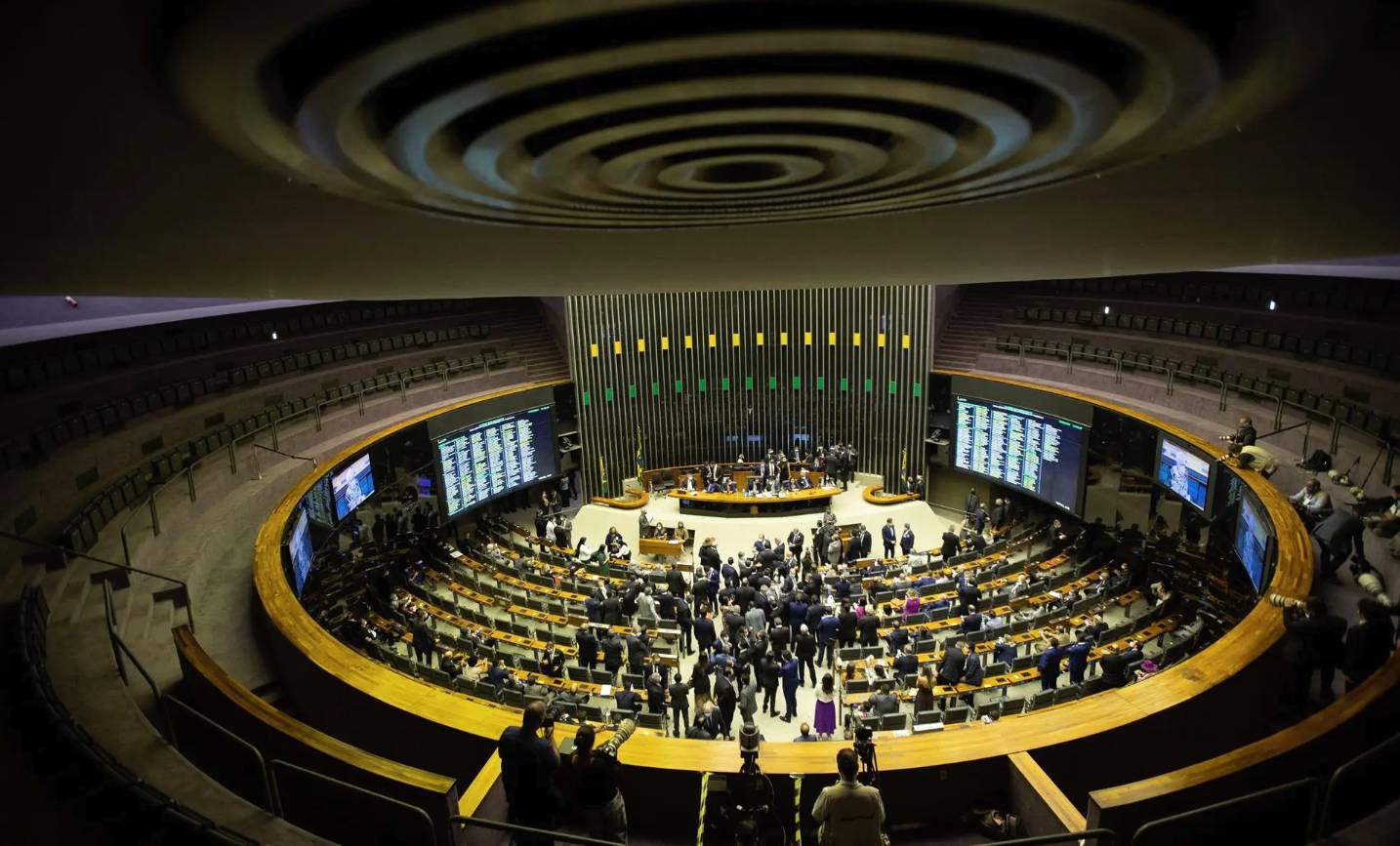
Despite having candidate quotas and a proportional allocation of Electoral Fund resources, the country remains among those with the lowest levels of female parliamentary representation in the world, according to the latest data from the Inter-Parliamentary Union, ranking 138th among roughly 180 parliaments, with women accounting for 17.2% of the Chamber of Deputies and 18.5% of the Senate. A recent study by Clara Araújo and Eduardo Ramos, published this year in the journal Dados, helps explain why: by analyzing the entire composition of the executive leadership of Brazilian political parties between 2018 and 2022, the authors show that women held just 20% of positions in these national bodies in 2018, a figure that rose to 22% in 2022; in state-level executives, the proportion increased from 25% to 30%. It should be noted, however, that the presence of women in these decision-making positions had a positive effect on the funding and launch of female candidacies, although the effect was statistically modest, and that the formal existence of women’s secretariats within party executives, conceived as channels for internal pressure, had no significant impact in either of the years analyzed.
What truly differentiates the parties, according to the study, is ideology, and this is the central point. Left-wing parties presented, on average, 5.5% more female candidates than centrist parties in 2022 and allocated between 6% and 9% more funding to female candidates. Right-wing parties, which were also less institutionalized—with 81% of state party directorates being “provisional” in 2022, compared with 21% among left-wing parties—showed a negative and statistically significant association with the fielding of female candidates, but had no significant effect on funding.
Political science has shown that men and women participate in different social-capital networks, and it is male networks, oriented toward the public sphere, that function as political capital convertible into candidacies. In addition, Brazil has high levels of gender-based political violence, and death threats are part of the daily lives of the few women who manage to attain positions of power. The murder of city councilor Marielle Franco, on March 14, 2018, became one of the most brutal and emblematic expressions of this violence.
Contested at the ballot box, excluded from power: this is the divide that defines one of the main characteristics of the 2026 elections. However, the more relevant question for the country’s future is not whether campaigns have begun to speak more directly to women, but whether this electoral centrality will produce concrete changes in the distribution of power and, consequently, in women’s lives and rights. Among the two leading candidates, Lula and Flávio, the possible answers come from very different starting points.
An ideological question
On the far-right, the growing prominence of Michelle Bolsonaro does not represent a reassessment of the Bolsonaro movement’s political tradition, but rather responds to the difficulties faced by candidates from the Liberal Party (PL) among female voters, consistently identified by successive polls since 2022. During Bolsonaro’s presidency, gender equality was never a structural priority of government action; on the contrary, the agenda was marked by opposition to diversity policies and the recurrent use of “culture wars” as a mobilization tool. Between 2020 and 2023, resources from the Ministry of Women, Family and Human Rights allocated to combating violence against women fell by almost 90%.
The situation is different in the camp led by Lula, as history and the data demonstrate. Since 2003, Workers’ Party (PT) governments have built a substantial set of policies aimed at women. Among the main ones are the Maria da Penha Law and the creation of the Special Secretariat for Policies for Women. During his current term, Lula reestablished the Ministry of Women in January 2023, and discretionary spending reached record levels. During the same period, the government enacted the Equal Pay Law for Women and Men (Law 14,611/2023), signed the National Pact for the Prevention of Femicide and revived the Women: Living Without Violence Program, with the goal of establishing 40 Brazilian Women’s Houses by 2026. Special calls for proposals were also launched to promote women’s participation in fields as diverse as science and cinema.
This record, however, should not serve as a free pass. The same Constitutional Amendment that created the funding quota for female candidates, enacted in 2022, included an amnesty for parties that had failed to comply with the quota in previous elections. A second attempt to expand this amnesty, Constitutional Amendment Proposal 9/23, was approved by the Chamber of Deputies in July 2024, with the support of PT lawmakers. The only left-wing party to direct its members to vote against it was the Socialism and Liberty Party (PSOL). In another example, the Lula government chose to appoint men to fill vacancies on the Federal Supreme Court, despite mobilization by groups such as Mulheres Negras Decidem, which advocated appointing the court’s first Black woman in its history.
Although the left has incorporated more concrete measures to advance gender equality—not only in campaign speeches, but also through budgets, legislation and women’s everyday lives—it cannot be exempted from mistakes or contradictions. At the same time, there is no equivalence between the two strongest political projects competing this year. Women have never been so present in the electoral campaigns on both sides, but the left should not respond to this by backtracking or wavering on the centrality of this agenda. It is the ideological difference in historical practice, rather than simply the intensity of each campaign’s circumstantial rhetoric, that should guide scrutiny of the promises made in 2026. We have more to gain than to lose if we consistently address the issues that affect women’s lives, calling on them to defend their rights and autonomy.
Autor

Master's Professor in Political Science at the School of Sociology and Public Policies of Iscte - Instituto Universitario de Lisboa, where she is also a researcher at CIES. She is a consultant for the European Commission on evidence-based policies.

Social scientist graduated from PUC-Rio, she was national vice-president of the Partido de los Trabajadores (PT) and the Unión Nacional de Estudiantes (UNE). She is currently a member of the PSOL and member of the PSOL-RJ women's sector executive.