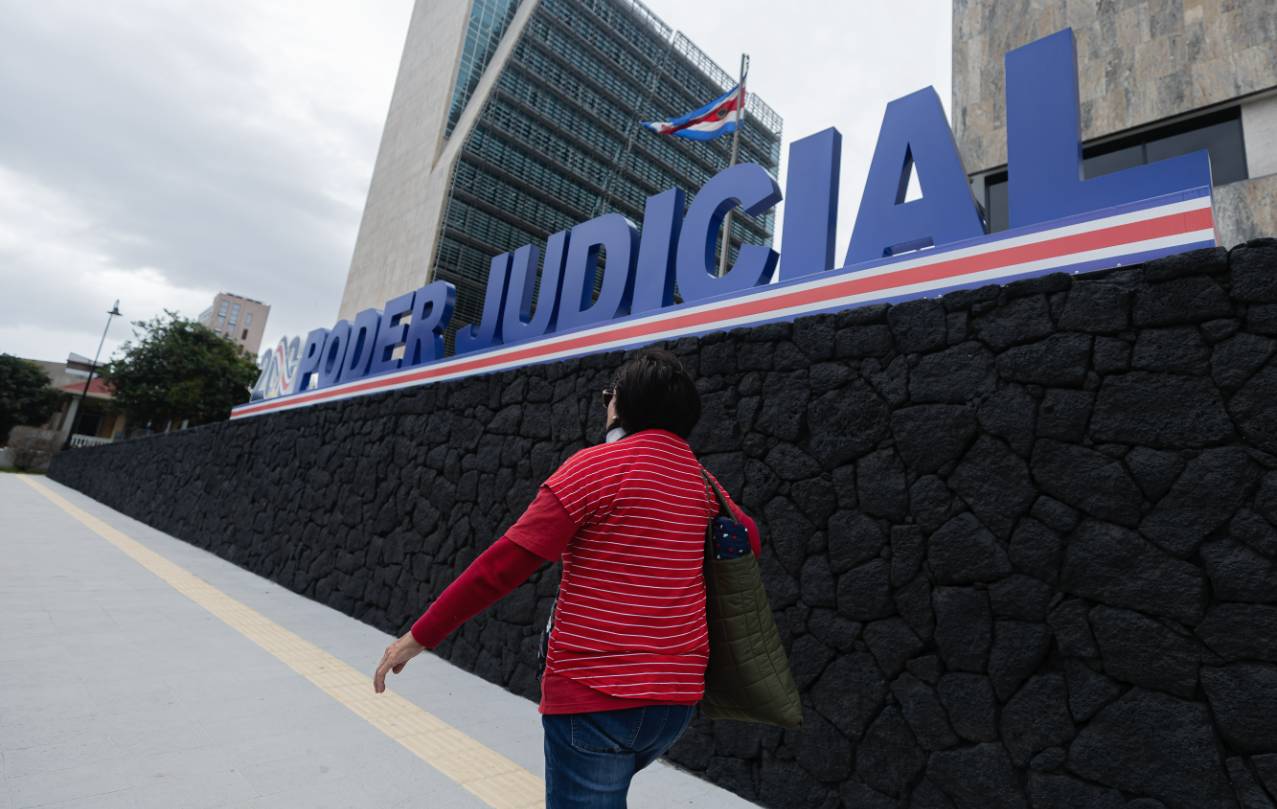
On July 30, Costa Rica’s Constitutional Court voted four to three to extend the terms of its substitute magistrates until the Legislative Assembly votes on the candidate list the Supreme Court sent it more than a year ago. President Laura Fernández called the four magistrates in the majority “coup plotters.” Three days later, her government and her party’s deputies filed a criminal complaint against the justices for prevaricato. The institutions that make Costa Rican democracy work are deteriorating faster than the constitutional math suggests.
When Fernández won 49 percent of the vote in February, and her Partido Pueblo Soberano took 31 of 57 legislative seats, the reassuring reading held that Costa Rica’s checks would absorb the shock, since the party fell seven seats short of the 38 votes needed to amend the constitution or appoint magistrates. Control of the court requires 38 votes, but blocking its renewal requires only 20, a math the government has been using since May. The same rules that prevent Fernández from packing the Court allow her party to keep it understaffed. The Assembly has held eleven rounds of voting without producing those votes and returned the Court’s list three times without substantive reasons. Substitute magistrates fill in when a sitting justice recuses or takes leave, so a chamber without them eventually cannot operate.

The battle has been played out through the judiciary’s budget. At the Finance Ministry’s request, the Court returned 13.2 billion colones to the 2026 budget on June 29. On July 13, the ministry withheld an additional 3 billion. In August, it proposed cutting a further 23.7 billion, roughly $52 million, with 9.5 billion falling on the Organismo de Investigación Judicial (OIJ), the country’s investigative police. The 2027 budget carries another 5 percent reduction, which the judiciary absorbed by proposing zero vehicle replacement; 51 percent of that fleet belongs to the OIJ. The same budget raises the Ministry of the Presidency’s allocation by 16.8 percent, adding nine advisors, seven vehicles, and a drone. The Court authorized legal action to prevent the cuts on August 24. None of this required amending the constitution. It required a finance minister willing to challenge the court, and Fernández has an unusual one: Rodrigo Chaves, her predecessor and mentor, holds the Finance and Presidency portfolios at once and retains immunity from the criminal investigations this same judiciary has opened against him.
On June 15, Fernández sent six bills to the Legislative Assembly. The centerpiece, the Ley Gerson Rosales Cascante, would establish that an armed response by a police officer or a private security guard in the course of duty is presumed legitimate self-defense, leaving prosecutors to prove otherwise. A second package followed on July 27, five more bills and a constitutional reform expanding extraditable offenses. The Constitutional Chamber will determine, through mandatory consultation, whether these texts touch constitutional guarantees, and if they do, passage requires 38 votes. The chamber that will answer that question is the one her party has kept below its full complement since May, which means the fight over appointments and the fight over the security package are the same fight.
The Colegio de Abogados’ Comisión de Asuntos Penales found technical defects and violations of constitutional principles in five of the six bills, including the law against criminal associations and the re-incidence bill, and recommended either deep revision or definitive shelving. The commission warned that the program is unworkable without reforming at least eight other laws, and that as drafted it risks violating the Mandela Rules and the American Convention on Human Rights. In an attempt to discredit the findings, Fernández replied that the report was not the official position of the Colegio but rather the work of a committee composed of progressive lawyers. A government that reads the bar association’s technical review as partisan is telling the country that any professional body that reaches an inconvenient conclusion is acting politically.
The security rationale offered for all of this does not hold up to scrutiny. Homicides peaked at 905 in 2023, fell to 876 in 2024, held near 870 in 2025, and are down roughly 15 percent through the first half of 2026 by the government’s own count. The decline began two years before Fernández took office. Her security minister, Gerald Campos, has said publicly that the piece still missing is convictions, which come from prosecutors and judges. The government’s answer has been to cut the OIJ more deeply than any other judicial dependency.
Latin America’s turn to mano dura has usually been attributed to voters’ willingness to trade legal protections for the promise of safety. Costa Rican survey evidence does not support that argument. Asked an open-ended question in CIEP-UCR’s March panel report about what most influenced their presidential vote, 23 percent named continuity and 14 percent named programmatic proposals, while security registered at 4 percent or below, in the same tier as party tradition and anticorruption. Hope outweighed fear as a stated motivation by 76 percent to 20 percent, and 60 percent chose a candidate over a party. Costa Ricans elected a personalist successor promising continuity, a thinner mandate than the one Fernández has been claiming.
Between April 2025 and May 2026, while the current government and its predecessor attacked the judiciary, Costa Ricans raised their ratings of every legal institution CIEP-UCR tracks, the Constitutional Court from 6.0 to 6.5 and the OIJ from 7.0 to 7.2. The September wave, fielded in late August, shows slight erosion in those marks and something more pointed. Asked in an open-ended question what they most disliked about the government’s first hundred days, respondents named the conflict with the judiciary more often than any other item, ahead of her leadership style and ahead of the economy. Crime remains the dominant national worry at close to 40 percent, so the objection is not coming from people indifferent to security. The same survey found that 59 percent of Fernández’s own supporters would think worse of her if the executive defied a ruling of the Constitutional Chamber. Wanting security and blaming the judiciary are separate propositions, and the evidence supports only the first.
The Bukele model reached Costa Rica without the legal or security architecture present in El Salvador. Costa Rica has no army to deploy, and a state of emergency would likely not survive review by the court, which is now being hollowed out. What did cross the border was the spectacle. The Centro de Alta Contención contra el Crimen Organizado (CACCO), being built beside La Reforma prison with blueprints donated by Nayib Bukele’s government, is 64 percent complete and will hold 5,100 prisoners at a cost near $35 million. Far more inmates than Costa Rica’s criminal convictions would suggest. Fernández has floated the idea of bringing schoolchildren from high-crime neighborhoods to tour it. This resembles what Christine Wade has called performative punitivism: a government unable to reproduce Salvadoran policing can still reproduce Salvadoran imagery for the price of one building.
U.S. policy under the “Trump Corollary” is now financing and rewarding the adoption of mano dura policies and the building of mega-prisons across the region. Costa Rica joined the Shield of the Americas at the March Doral summit and agreed to receive up to 1,300 third-country deportees a year, a bargain Costa Ricans oppose by 55 percent even as 65 percent back security cooperation with Washington in general. Marco Rubio congratulated Fernández and listed the priorities the two governments share; judicial independence was not among them.
President Fernández will likely finish her term in 2030 and hand power to an elected successor. The Supreme Electoral Tribunal is not under threat, and the political opposition still has leverage. What hangs in the balance is judicial independence: whether judicial investigators will have vehicles to work homicide cases, whether the Fiscalía will have prosecutors to turn those investigations into the convictions the government says it wants, and whether a constitutional court short of its full complement can absorb the caseload arriving once the CACCO opens. Costa Rican institutions are not yet collapsing. But no constitution enforces itself, and the executive branch has decided it will not answer to anyone else.
Autor

Profesor de ciencia política en la Universidad del Norte de Texas en Dallas. Estudioso cubanoamericano de las relaciones civiles-militares y de la política exterior de Estados Unidos hacia América Latina.