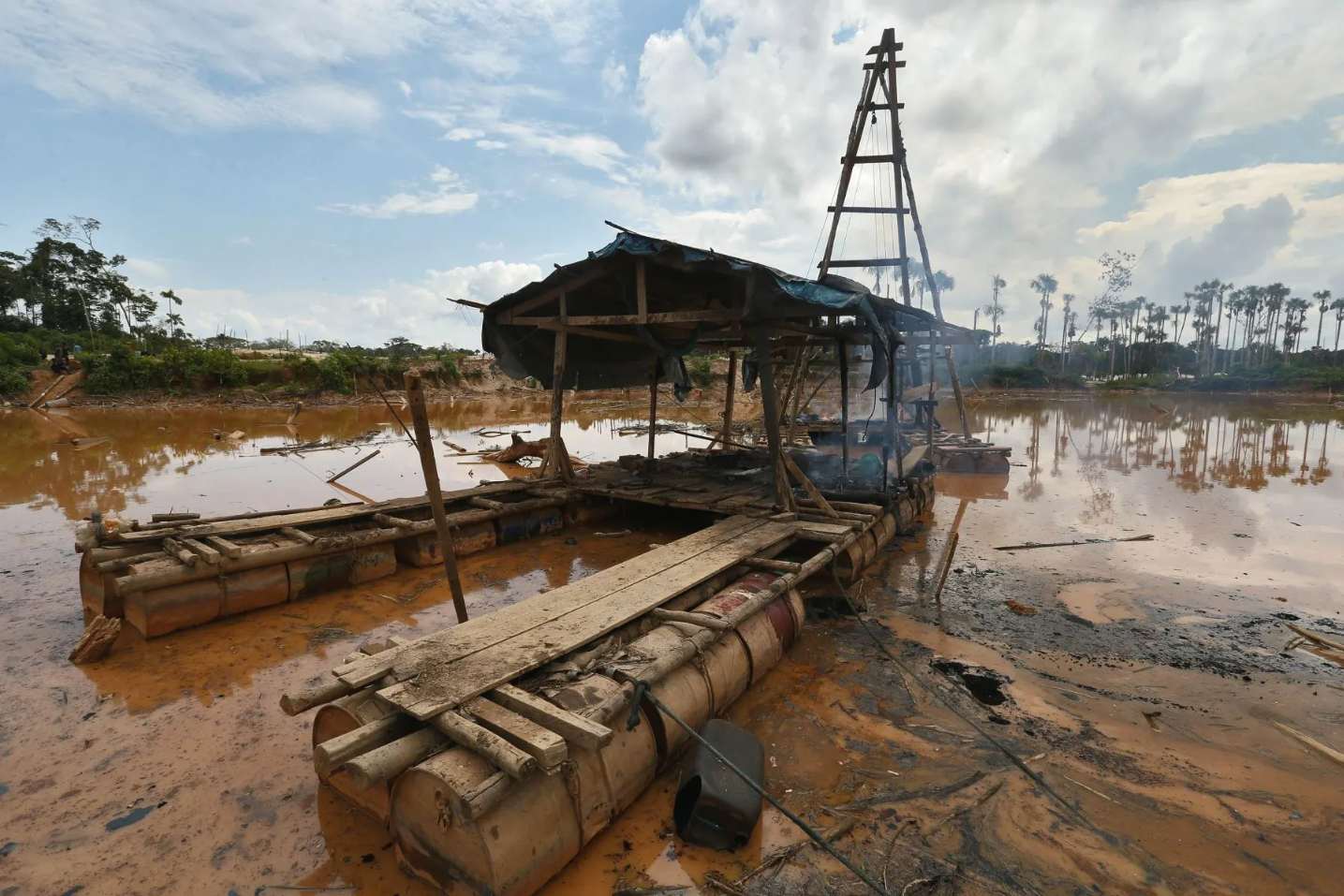
En el Perú que se encamina al 2026, el poder se mide en toneladas de sedimento removido, en dragas sobre ríos amazónicos y en votos reunidos en zonas donde el Estado llega tarde. La minería ilegal no es ya un fenómeno de frontera: es un actor político que aprendió a moverse dentro de los partidos, a negociar en comisiones, a empujar pre dictámenes y a olfatear vacíos de ley.
La evidencia reciente es incómoda: al menos diez aspirantes al Congreso en cinco regiones compiten con sanciones por extracción ilícita o como dirigentes de gremios que exigen “flexibilizaciones”, y lo hacen dispersos en distintas bancadas. No hablamos de una bancada monotemática, sino de una infiltración transversal, con Perú Libre y Podemos Perú en primera línea.

En el Congreso, además, los respaldos no son marginales: la ampliación del régimen de transición a la formalidad recibió votos mayoritarios de Fuerza Popular, Renovación Popular, Somos Perú, Podemos Perú, Bloque Magisterial, Avanza País, Perú Libre y Juntos por el Perú–Voces del Pueblo. Es decir, de todo el espectro político. El método es claro: entrar por las listas y luego doblar la norma desde adentro.
El REINFO, un sistema que se ha convertido en una suerte de barril sin fondo para ampliar indefinidamente el estatus de los mineros, se ha transformado en una herramienta polémica: mientras tramitan su formalización, se les brinda una cobertura excepcional que los exime de responsabilidad penal por minería ilegal mientras dure el trámite. Supuestamente, se buscaba que los mineros que se amparan en este registro tuvieran y cumplieran compromisos, pero esa exigencia se ha desvanecido.
En paralelo, el candidato Rafael López Aliaga, de Renovación Nacional, ha encendido otra alarma con una promesa tendenciosa hecha en el foro empresarial CADE: revocar concesiones mineras formales, que él ha denominado “ociosas” para redistribuirlas, en un guiño explícito a bases informales que reclaman esas áreas -usualmente por la fuerza-. Esta es una consigna demagógica por tres razones:
Primero, los tiempos reales para un proyecto minero, entre descubrimiento, estudios, consulta, permisos y construcción, requieren 40 años en promedio hasta producir según el Instituto Peruano de Economía. En segundo lugar, no es gratis “retener” una concesión. El titular paga por mantener su derecho. López Aliaga ha repetido que “pagan 3 dólares”. Por su parte, Carlos Gálvez, director de la Sociedad Minera El Brocal replicó que la cuenta real, con penalidades y obligaciones, puede escalar a 30 y hasta 150 dólares por hectárea al año si no hay producción. En tercer y último lugar, esta propuesta configura un premio a la toma por fuerza. En un país con invasiones de concesiones y fiscalización débil, “revocar y repartir” en campaña normaliza la captura territorial.
Adicionalmente, si bien López Aliaga niega nexos con mineros ilegales, su propuesta se alinea con los objetivos de los gremios ilegales y allana el tablero político y regulatorio en pleno arranque de campaña. Periodistas como Marco Sifuentes ya han contradicho al candidato, señalando que hay al menos 3 miembros de su partido vinculados a la Confemin, gremio que engloba a los mineros ilegales.
A la par, el precio del oro en máximos y la violencia en enclaves mineros (Pataz es una cicatriz reciente) han dado músculo a los gremios para cercar Lima: bloqueos, campamentos frente al Congreso sin ningún tipo de movilización policial en contra (hecho curioso si se compara con las marchas de la generación Z), presión sobre ministros y caídas de gabinetes. Quien subestima esa capacidad de movilización no entiende el incentivo: oro que se vende fácil, con mercurio que envenena ríos y con rutas que hoy comparten mineros y redes criminales internacionales. Esa normalización se traduce en política: si tengo fuerza para cerrar carreteras, también la tengo para colocar candidatos y doblar brazos en comisiones.
La informalidad no brota por magia. Es una respuesta cruda a tres cosas: (i) déficit de empleo formal y de industrias que absorban mano de obra en corredores mineros; (ii) barreras de entrada a la formalización (trámites complejos, corrupción, asistencia técnica); y (iii) precio del oro en máximos, que hace rentable asumir riesgos con redes que proveen insumos y salida del metal.
Si los partidos políticos siguen habilitando operadores evidentes del circuito ilegal, y si se hace campaña prometiendo repartir concesiones como si fueran rifas, el resultado será una ley a la carta y un Estado aún más controlado por actores sociales que contaminan sin ningún tipo de restricción. Este ecosistema no es romántico: arrastra violencia, contrabando, trata, lavado y devastación ambiental en un país cuya economía depende en gran medida de la minería.
Autor

Graduated in Comunication for Development from the Pontificia Universidad Católica del Perú. MBA from the Pacífico Business School. He has worked as a consultant in various government institutions, in communication agencies and non-profit organizations.