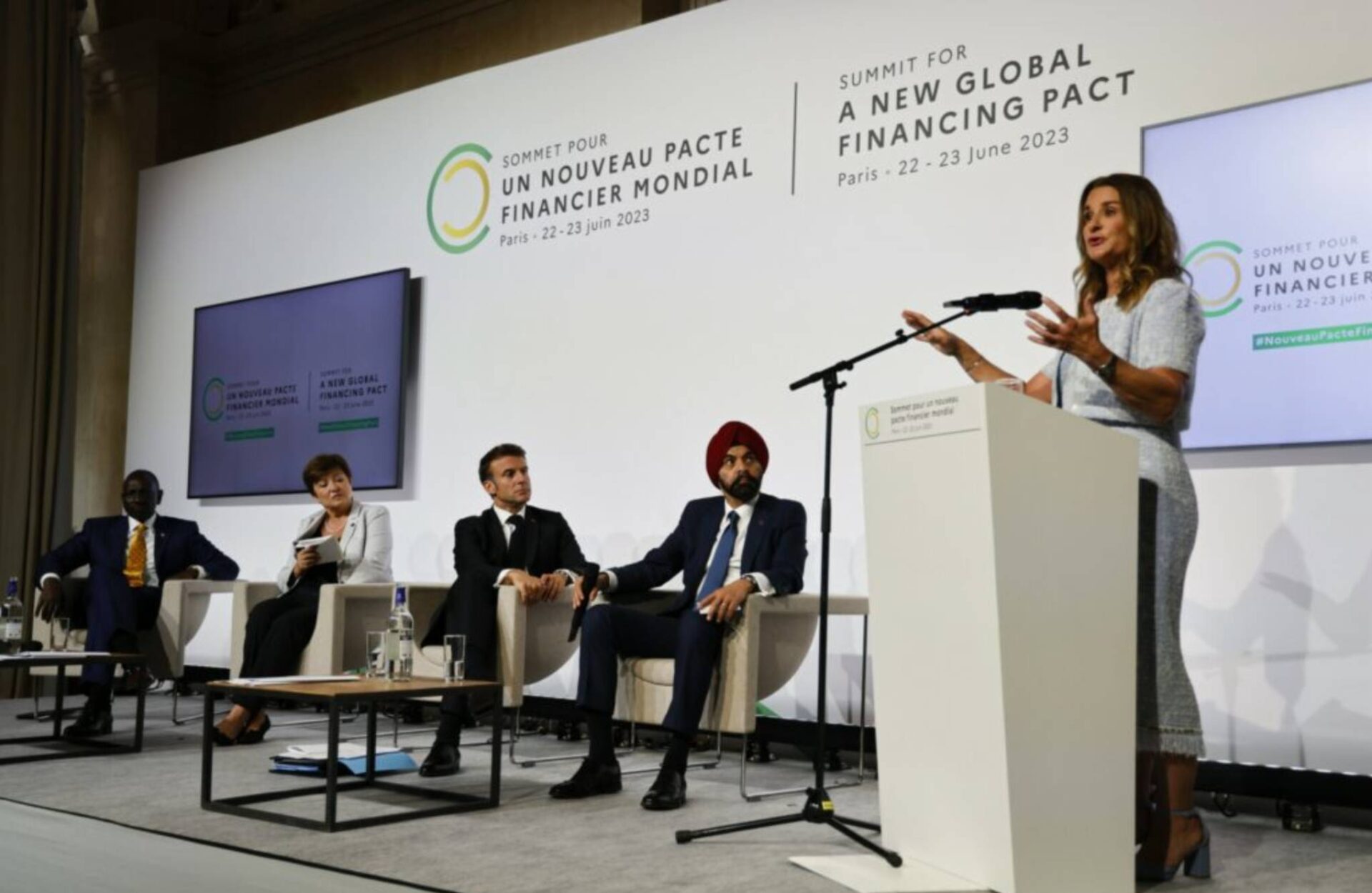
For years, leaders from emerging and developing economies (EMDEs) have highlighted the shortcomings of the multilateral financial institutions established in the aftermath of World War II. Among the sharpest critiques of the biases embedded in the Bretton Woods framework came from Colombian economist José Antonio Ocampo, who advocated reforming what he described as the international monetary non-system.
While the global financial crisis marked a turning point in the emergence of a new macroeconomic perspective, it also became increasingly clear that additional factors had to be incorporated into discussions about the macro-financial stability of member countries. Consequently, both the World Bank (WB) and the International Monetary Fund (IMF) began emphasizing the need to include climate risks in sovereign risk assessments while also acknowledging an international landscape increasingly shaped by geopolitical rivalry and competition for power.

This new landscape would be incomplete without mentioning the rise of the far right and its approach to these overlapping crises. Its leaders not only deny climate change but also seek to delegitimize environmental policies and block climate-related financing. Behind many of these political movements stand oil companies—an industry that has historically denied, concealed and downplayed global warming. Donald Trump is the most prominent figure in this regard, but the influence of Javier Milei, Abelardo de la Espriella and other Latin American leaders seeking to emulate his ideas should not be underestimated. Obscurantism is advancing, and climate denialism continues to gain followers.
Under pressure from the U.S. government —its largest shareholder— the World Bank has recently eliminated its climate finance target. Until now, the institution had committed to allocating up to 45% of its lending portfolio to projects delivering climate-related benefits under its Climate Change Action Plan (CCAP). However, according to U.S. Treasury Secretary Scott Bessent, removing this requirement will not only improve efficiency but also allow the institution to return to what he describes as its original mission: providing concessional financing to oil companies, preferably American ones.
As a result, the World Bank is redirecting its focus toward financing new “carbon bombs” located in developing countries. The downside will not only be reduced funding for the energy transition but also a development path that distances these countries from clean energy and the technologies of the future.
Paradoxically, this policy shift comes more than four months after the outbreak of conflict in the Middle East, during which the closure of the Strait of Hormuz significantly reduced global oil supplies. Asian countries have been particularly affected, forcing them to reassess their energy strategies and rethink security through the lens of renewable energy. China, meanwhile, has reasons to celebrate. The conflict has not only boosted sales of electric vehicles and solar panels but has also marked a pivotal moment in the structural shift in global power—from oil producers to electrons.
This transformation is evident not only in industry and trade, where China already dominates many global value chains. It also reflects the growing international expansion of Chinese companies, which are finding greater openness among Asian countries to green foreign direct investment. This trend is reinforced by increasing sustainable financing from Chinese banks, as well as by green lending from newly established multilateral institutions such as the New Development Bank (NDB) and the Asian Infrastructure Investment Bank (AIIB), both of which continue to expand their climate-related financing portfolios. In short, the crisis has enabled China to position itself as both a partner in the energy transition and a guarantor of global economic stability.
Geopolitical competition has fundamentally reshaped the international financial architecture. Washington-based multilateral development banks no longer fully serve their original purpose of financing development. This new environment may increasingly differentiate emerging and developing economies according to their proximity to the United States, with countries within its sphere of influence becoming more vulnerable to pressure to slow or halt the energy transition. In this context, the World Bank’s decision to promote fossil fuel investment reinforces what could be called the “oil pathway.”
Following this path risks distancing these countries from the world’s most dynamic markets, potentially undermining their future integration into the global economy while increasing financial exposure through the declining value of carbon-intensive assets—or so-called stranded assets. Decisions made today may prove extremely costly, not only because of their economic and financial consequences but also because bilateral agreements and dispute settlement mechanisms can constrain future policy changes.
Ultimately, all of this highlights the profound vulnerability of our countries, whose room for independent decision-making is increasingly constrained by the negligence of political elites and the short-term outlook that dominates our societies.
Autor

Associate Researcher at the Center for the Study of State and Society - CEDES (Buenos Aires). Author of "Latin America Global Insertion, Energy Transition, and Sustainable Development", Cambridge University Press, 2020.