On 13 October, Latin America’s favourite strongman made a surprising admission. Asked about the review of prison cases, Nayib Bukele said his government was considering the early release of roughly half of those jailed for collaborating with gangs. “He is guilty,” he explained, “but release him conditionally.”
Three days and a deluge of unfavourable headlines later, Bukele returned to the podium, insistent that the press had twisted his words. Only 10,629 of the more than 93,000 detained under the state of exception would have their cases reviewed, he said, and those who qualified would first have to work their way out through a prison labour scheme.

For a leader as unyielding as Bukele, even a limited review represents a major retreat. Just last year, he promised that the prisoners would not be freed “not now, not ever”, and said he “couldn’t care less” if his detractors called him a dictator. So what could have prompted this sudden change of heart?
Mounting pressure
Since Trump’s return to the White House, Washington’s protection has largely kept Bukele’s critics at bay. But with the US midterms forecast to return a less forgiving Congress, and Democrats already voicing concern about the regime, that indulgence may not survive the upcoming vote.
Foreign investors, too, would welcome a softer image. Few companies want their names associated with headlines about mass detention, which is presumably why Bukele first floated early release while unveiling a $2.9 billion investment by the Spanish energy group Cox.
Closer to home, pressure from detainees’ families and rights groups is another likely concern. At least 554 prisoners have died in custody, according to the rights group Socorro Jurídico Humanitario, and security forces and prison staff face more than 6,400 complaints of abuse. Next week, the Inter-American Commission on Human Rights will hold a hearing on the treatment of those detained under the state of exception, which could become a first step towards binding judgments from the Inter-American Court.
Domestic opinion, meanwhile, pulls in two directions. With the election just over four months away, seven in ten Salvadorans now name the economy as their principal concern. Bukele’s one-trick pony approach to security has got him this far, but his popularity will keep suffering unless he can deliver on the economy as convincingly as he has on crime.
But even if a prison system holding some 2 per cent of the population is an expensive way to keep the peace––$200 million a year, by the president’s own estimate––the crackdown has not lost its charm. In the same IUDOP poll, carried out in May, almost 70 per cent wanted the state of exception extended. That helps to explain his subsequent retreat, but it raises an obvious question: why risk such an unpopular offer in the first place?
Debts and copycats
Some commentators in the region suspect Bukele has other debts to settle, not to voters but to the gangs. This suggestion, first raised by the Salvadoran journalist Walter Raudales, may not be as outlandish as it first seems. In 2023, US prosecutors alleged that Bukele’s government had eased prison conditions for MS-13 leaders in exchange for votes and fewer public killings, and the prisons chief who would oversee the releases, Osiris Luna, is the official the US Treasury sanctioned for negotiating those benefits.
Raudales also asks whether a disorderly release might be the prelude to “fresh outbreaks of crime”, justifying the state of exception for years to come. There is precedent for that in Salvadoran politics, too. ARENA’s Plan Mano Dura was launched in 2003 just as homicides were falling, and the head of the party later admitted that crime had been “deliberately politicized” for electoral gain. Mano dura has proven to be the gift that keeps on giving: two decades on, Bukele governs on the strength of having defeated the maras that those mass arrests helped create.
Across the region, many have scrambled to copy the formula, hoping to emulate Bukele’s success. According to InSight Crime, 16 mega-prisons have been proposed in ten countries since CECOT opened in 2023, the most recent of which was inaugurated in Costa Rica the day after Bukele first floated his plan. Some have gone further still: in Brazil, presidential hopeful Flávio Bolsonaro wants chemical castration for sex offenders, Daniel Noboa has declared Ecuador at war with criminal groups, while Colombia’s Abelardo de la Espriella––who once dismissed Bukele as “a boy scout”––has taken to posing on social media among the bodies of so-called “narco-terrorists” slain by security forces.
A savvy Bukele, who spent many years in advertising before assuming the presidency, may have seen a market saturated with copies of his product as an opportunity to launch something new. Answering what he calls the “remission” of the gang “cancer” with mercy would certainly set him apart from an increasingly hardline crowd. Stepping back as his admirers rush forward would also offer another has a further advantage: if Washington’s mood turns, they, not Bukele, will be first in the firing line.
Freedom by decree
Whatever Bukele’s motivations, human rights defenders shouldn’t hold their breath. Even the possible releases hinge on presidential whim, not due process, and Bukele has already shown that what he gives today, he can take away tomorrow.
Since 2021, Bukele’s legislature has packed the Constitutional Chamber and the attorney general with loyalists; habeas corpus petitions, once a meaningful check, are now almost never admitted. The courts that remain convict en masse. Earlier this year, Human Rights Watch found that one public defender was given ten minutes to defend 102 people, while anonymous judges handed 30-year sentences to alleged gang “collaborators” without a single acquittal.
The review process is similarly opaque. According to the president’s brother Ibrajim, who has no official role but nonetheless wields considerable influence, cases are assessed by an anonymous “independent team” made up of prosecutors, the prison service, and the First Lady’s office. Salvadoran law offers no alternative. Conditional release is reserved for convicted prisoners who have served two-thirds of their sentence, and more than 90 per cent of detainees have yet to stand trial.
For the select few who may still qualify under the revised plan, freedom means accepting the government’s version of events, and the label that comes with it. As Abraham Ábrego, legal director of the rights group Cristosal, points out, Bukele’s speaks only of “collaborators”, never the innocent. Calling them anything else would admit wrongful detention and risk opening the door to costly compensation claims. The courts manufacture guilt in bulk; the president hands out mercy case by case. Bukele is no longer just judge and jury. He is a fair-weather liberator, too.
The show must go on
“There is one thing I am afraid of,” Bukele told his cabinet in November 2023, “and that is leaving a bad legacy.” The past week will not have assuaged his fears. His brief experiment with leniency pleased neither his supporters, who dread the gangs’ return, nor his critics, who see more arbitrary power. It also showed something voters rarely see from Bukele: doubt.
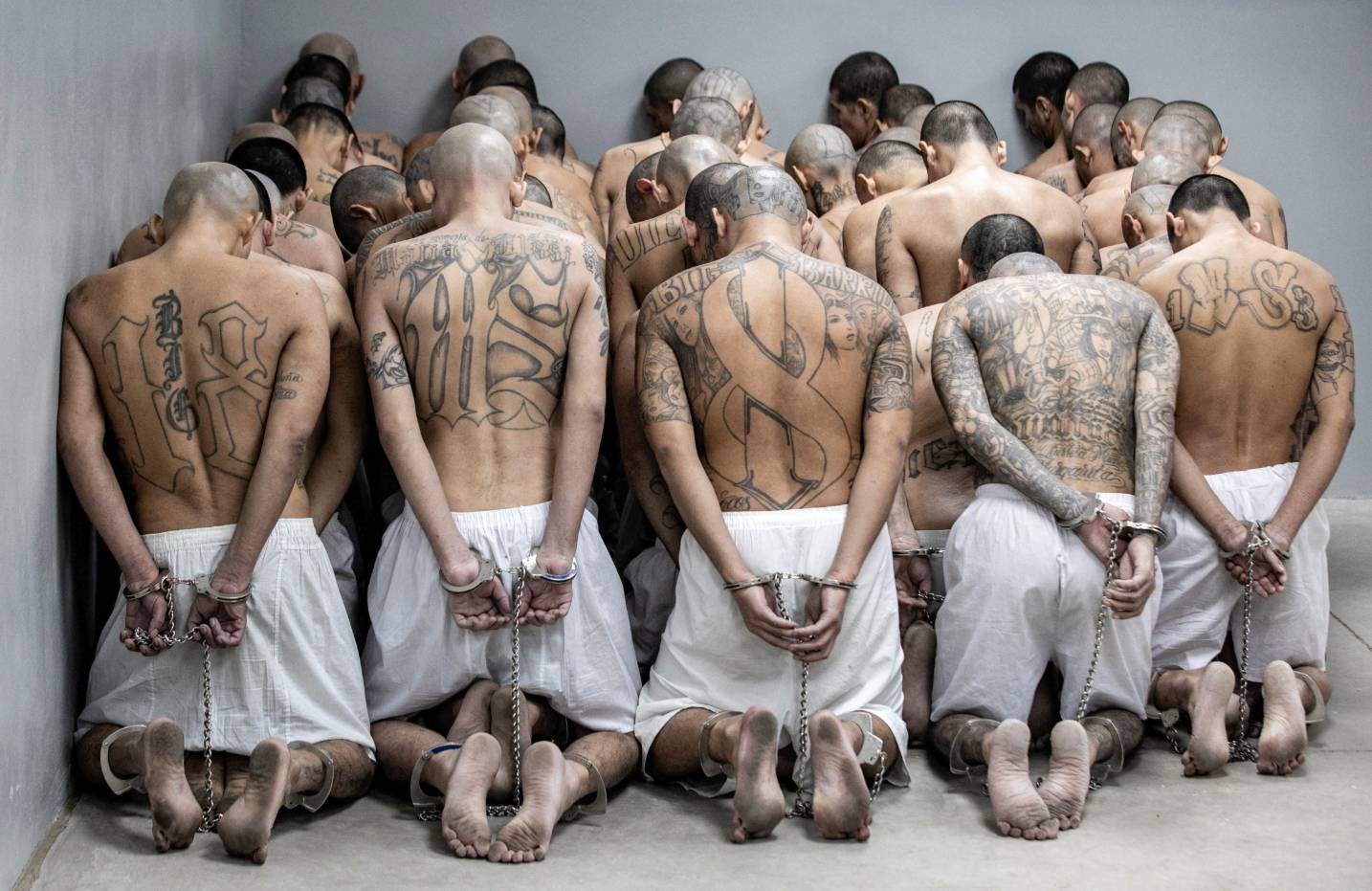
Still, the confusion may matter less than what it obscures. For four years, images of men packed into CECOT drew the world’s gaze while, out of shot, Bukele dismantled the courts, scrapped presidential term limits, and drove his critics into exile. The new show of mercy, however scaled back, deserves the same suspicion. It raises many questions the government has yet to answer: who is released, by whom, and in exchange for what.
Autor

PhD candidate in International Relations at the London School of Economics. She holds two master’s degrees from the University of Oxford, where she now works as a researcher. She is also an editor at the Latin America Bureau.