Three and a half decades of shared trade rules have not produced a common development trajectory: the gap between members widened during the 1990s and, thirty-five years later, remains open.
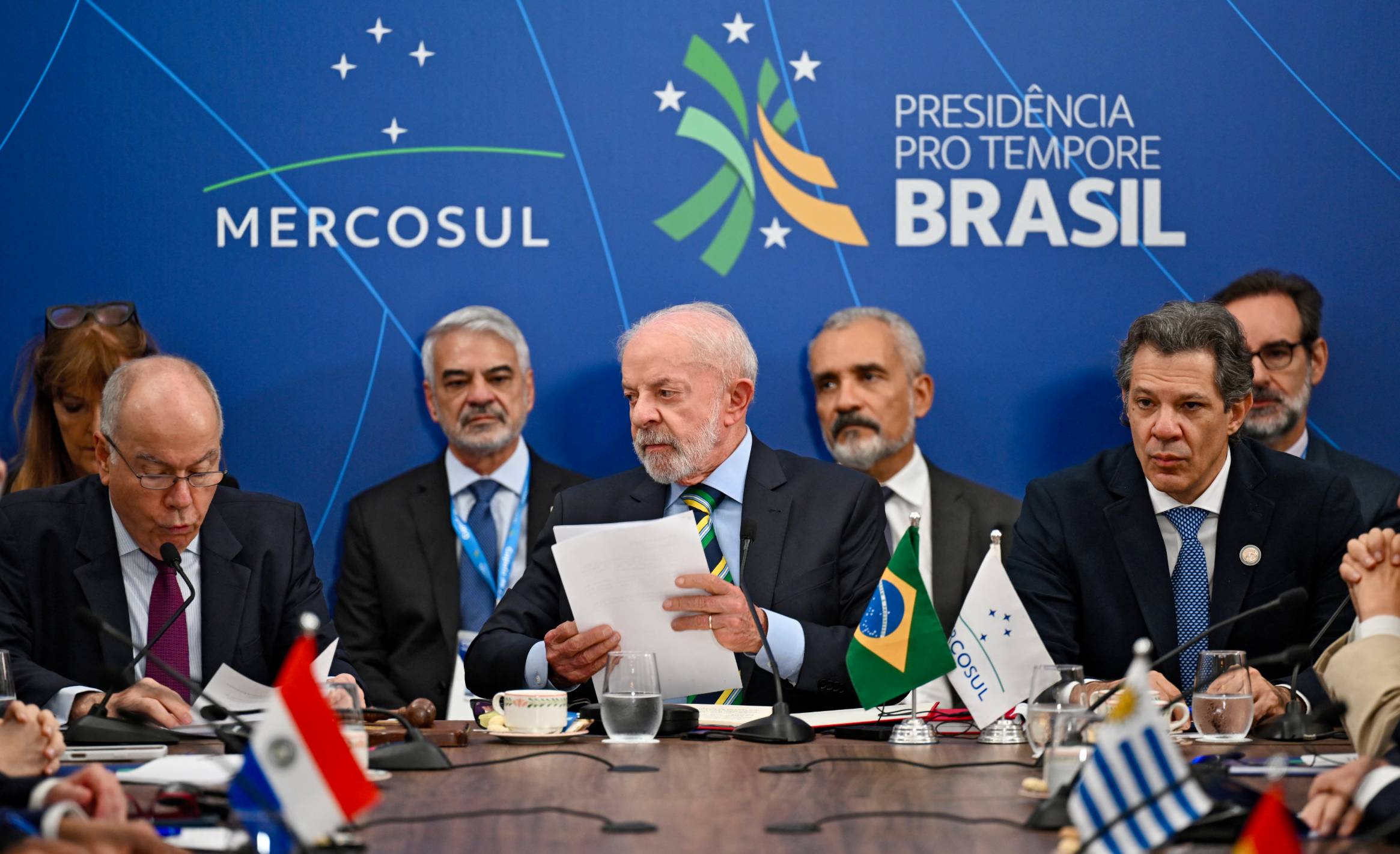
Thirty-five years after the Treaty of Asunción, the survival of Mercosur is in itself a noteworthy achievement, although it remains insufficient. Sharing trade rules was not enough to bring the income and production trajectories of its members closer together. As the bloc discusses the renewal of the Mercosur Structural Convergence Fund, or FOCEM, the facility created to reduce asymmetries among its members, a new stage in its trade relationship with the European Union is beginning.
Against this backdrop, the question arises: what does it mean for an integration process to be successful when the convergence that gives its main redistributive instrument its name has failed to materialize? Integration is often assessed through intraregional trade, institutional continuity, or the ability to avoid ruptures. These dimensions say little about another historic aspiration of regionalism: reducing asymmetries and fostering shared productive transformation.
Growth without convergence
Since Mercosur was established, all its members have grown, although their trajectories have differed. The gap in per capita output among the four partners is now wider than it was when the bloc was created. Divergence was concentrated in the first decade, coinciding with the period when intraregional trade accounted for a greater share of exports. Since then, the share of intra-bloc trade in the external sales of all four members has declined.
Argentina and Brazil, which account for around 96% of the bloc’s output and population, have maintained an almost unchanged ratio of per capita output, while Paraguay has slightly narrowed the gap with both economies. The divergence is mainly attributable to Uruguay, which started out virtually tied with Argentina at the top and widened its lead: it grew by 129% between 1990 and 2024, compared with between 56% and 64% for the other members.
The lack of convergence did not take the form of a generalized and sustained divergence over thirty-five years. It was an episode concentrated mainly in the 1990s and driven by one member, while the Argentine-Brazilian core remained stable over time. Trade integration, on its own, was not enough to produce convergence.
The productive paradox
Productive structures also changed in opposite directions. Paraguay was the only member where manufacturing increased its share of GDP, rising by 5.1 percentage points between the 1989–1991 average, around the time the Treaty was signed, and the 2022–2024 average. In Argentina, Brazil and Uruguay, its share declined.
The picture changes when we look at manufactured exports. Between 2020 and 2024, more than half of the manufactured exports of Argentina, Paraguay and Uruguay were destined for the bloc. For Brazil, the proportion was much lower, at around 20%. However, the regional market absorbed just 6% of its total sales, while the basket of goods sent to its partners was considerably more industrialized than that destined outside Mercosur.
That is the paradox. Mercosur sustained a valuable market for certain manufactured goods, but this function was not enough to generate convergence in indicators such as per capita output or productive capabilities.
The convergence still to come
The FOCEM finances infrastructure, competitiveness and social development projects aimed at reducing asymmetries. Its first phase was designed around annual contributions of $100 million. Taking the 2024 population of the four founding members, that amount is equivalent to less than 40 cents per person per year.
As the resources from that first phase approach exhaustion, the bloc is negotiating its relaunch through a second phase. In October 2025, Brazil presented a preliminary proposal that would have reduced the fund to one-third of its original size and modified the distribution of contributions and benefits among the members. The proposal allocated 57.1% of contributions to Brazil, compared with the 70% originally envisaged for the country, which would have put its contribution at around $17 million a year.
The proposal met strong resistance from Paraguay and Uruguay. Both countries challenged the cut, and Paraguay went so far as to publicly reject a fund of that size. Faced with this opposition, Brazil changed its strategy: in June, it announced that it was willing to contribute $100 million a year on its own for ten years, leaving the distribution of contributions and benefits among the members for a subsequent negotiation.
In eight months, Brazil went from an implicit contribution of around $17 million to an offer of $100 million annually. More than a change in the instrument itself, this trajectory shows how dependent its relaunch still is on political negotiations among the partners.
A new stage
The provisional application of the Interim Trade Agreement with the European Union now adds a new dimension. As of May 1, 2026, its trade provisions and the first tariff reductions began to apply. External opening, therefore, is no longer a possibility for the future.
The agreement begins to operate across four economies with different scales, productive structures and levels of competitiveness. At the same time, the regional market continues to absorb a central share of the manufactured exports of several members. Their ability to capitalize on new opportunities and face greater competition is not the same either.
Assessing Mercosur solely by its survival or its trade provides an incomplete measure. Over these decades, Argentina and Brazil have maintained an almost unchanged ratio of per capita output, while significant industrial relationships have continued to exist within the bloc. Neither of these developments translated into a common development trajectory.
National policies, recurring crises, commodity cycles and changes in the global economy explain much of these differences. The more limited conclusion is that sharing trade rules for thirty-five years was not enough to produce convergence.
That unfinished business ceases to be merely a matter of assessing the past now that external opening has begun. The discussion over FOCEM and the implementation of the agreement with the European Union will test the bloc’s ability to reduce its asymmetries, as well as the ability of its members to take advantage of a new phase that finds them in unequal positions.
Autor

Master in International Studies at the University of CEMA (UCEMA). Researcher at UNQ and professor at the Universidad Argentina de la Empresa (UADE) and the Universidad de Ciencias Empresariales y Sociales (UCES).