Recently, the care agenda has ceased to be a sectoral demand of the feminist movement and has become one of the most relevant political debates in Latin America, in response to the profound inequalities that run through the region. However, its concrete progress remains limited and slow.
Countries such as Uruguay, with its National Integrated Care System, have shown that it is possible to build specific institutions, expand services, and recognize rights. In Argentina, Chile, Panama, Colombia, and Mexico, debates on care systems, national plans, and legal reforms reveal a significant cultural and political shift that gives us hope. Likewise, regional consensus promoted by ECLAC and other multilateral spaces has contributed to consolidating a common framework that recognizes care as a pillar of sustainable development.

However, these advances coexist with deep asymmetries, as coverage remains limited, service quality unequal, and financial sustainability fragile. The risk is that the care agenda becomes trapped in progressive declarations without the real capacity to transform the daily lives of millions of people.
From a feminist perspective, the obstacles facing this agenda are not design flaws or isolated implementation problems. Rather, they reflect an economic, social, and cultural model sustained by the invisible exploitation of care work, carried out mostly—and almost exclusively—by women.
Analyzing these obstacles is key to understanding why care, despite being indispensable for the sustainability of life and the economy, continues to occupy a marginal place in political priorities.
The fiscal obstacle
One of the main limits to the development of comprehensive care systems is the persistent fiscal constraint. In Latin America, budget debates often present care as a dispensable expense, especially in contexts of economic crisis or austerity. This perspective ignores the fact that care is already financed, but in an unequal manner.
Indeed, when the state does not invest, the cost is directly transferred to households and, within them, to women. As Oxfam warns in the report Time to Care (2020), this combination of extreme inequality and regressive tax systems structurally limits the state’s capacity to guarantee the right to care.
The institutional obstacle
Another structural brake is the institutional fragmentation of care policies. In many countries in the region, these policies are dispersed among different ministries, programs, and levels of government, without a clear governing authority or a comprehensive strategy. This fragmentation weakens the state’s ability to guarantee the right to care and generates strong territorial inequalities. Without solid institutional frameworks, the care agenda risks reproducing the very inequalities it seeks to combat.
The cultural obstacle
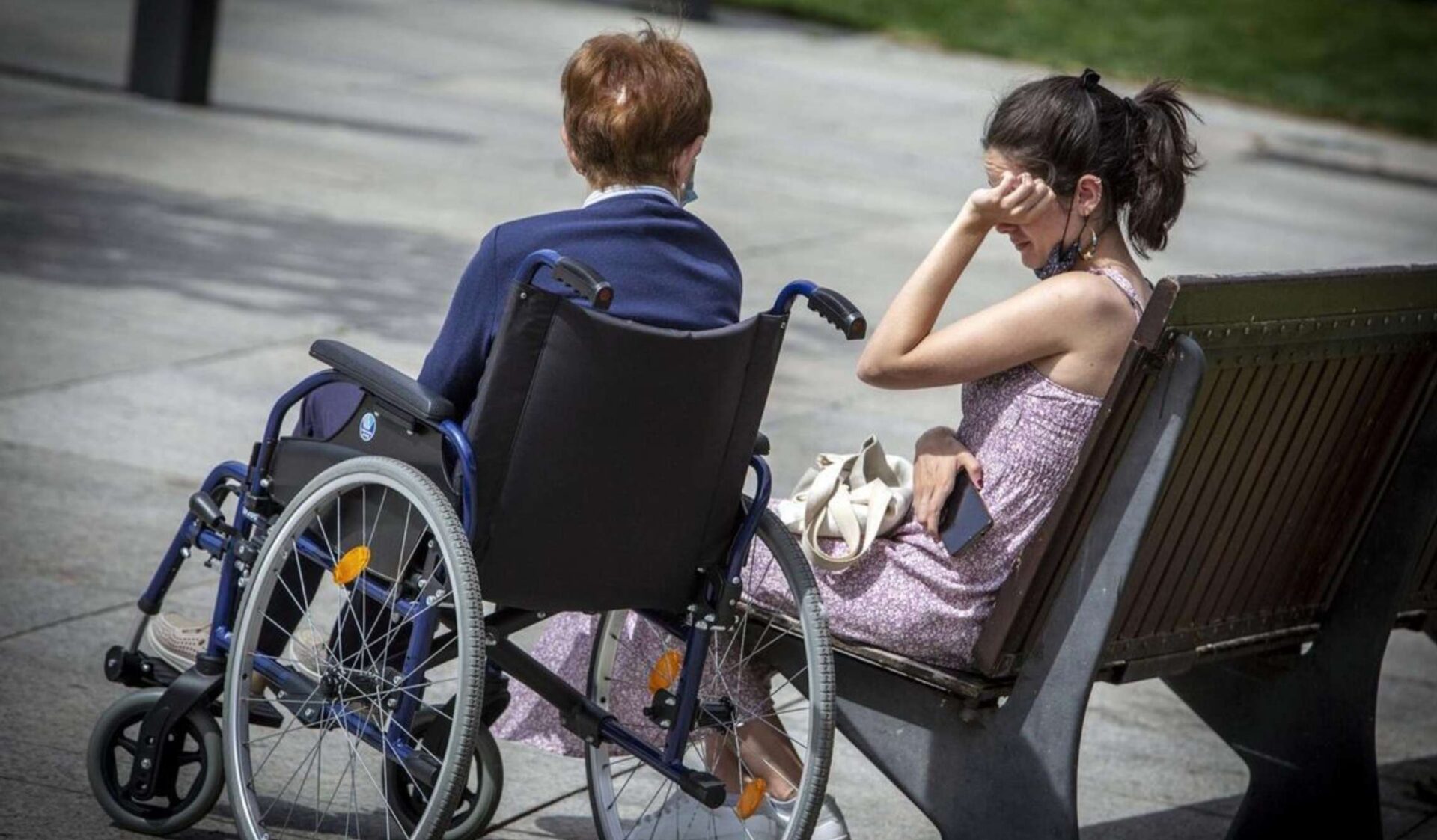
One of the most persistent obstacles is the patriarchal cultural order that naturalizes care as a female responsibility. Oxfam reports show that women perform more than 75% of unpaid care work and two-thirds of paid care work, and that this burden limits their access to employment and well-being.
This deeply rooted idea continues to shape both social expectations and political decisions. Care is presented as a “natural” extension of women’s roles rather than as socially necessary work that must be recognized, redistributed, and valued. This naturalization has material consequences: it limits women’s economic autonomy, conditions their participation in the labor market, and reinforces cycles of poverty and dependency.
As long as care continues to be seen as a private and feminine matter, social and gender co-responsibility (a central pillar of the regional agenda) will remain more discourse than reality.
The labor obstacle
When care is remunerated, it is mostly under precarious conditions. Paid care work in households, community centers, or institutions is marked by low wages, informality, limited social protection, and weak professional recognition. This precariousness particularly affects poor, migrant, and racialized women, reproducing inequalities within the sector itself.
This is not a secondary problem. Without decent working conditions, the expansion of care services becomes a new niche of exploitation. The care agenda will only be transformative if it includes labor rights, training, stability, and social protection for caregivers.
The political obstacle
Finally, the regional care agenda faces as a central political obstacle the lack of sustained political will and conservative resistance. Although care appears in some official speeches and international commitments, it often loses priority to agendas considered more productive or strategic. In contexts marked by the advance of neoconservative and anti-feminist forces—such as the one we are currently experiencing—care is even delegitimized as an ideological demand.
This lack of will translates into insufficient budgets, weak institutional frameworks, and an absence of political leadership. Without an explicit dispute over the meaning of care as a right and as social infrastructure, the agenda risks remaining trapped in symbolic declarations without real transformative capacity.
Care as a feminist struggle for equality
The regional care agenda proposes recognizing care as a human right (the right to care, to be cared for, and to self-care) and as a shared social responsibility. This implies breaking with the idea that care is a private, feminine, and unpaid obligation, confined to households and sustained mostly by women, especially those living in poverty, racialized, and migrant women.
The obstacles facing the regional care agenda are not accidental. All those described here express a model that continues to rest on the unequal distribution of time, work, and power. From a feminist perspective, advancing this agenda means far more than creating new services; it involves questioning economic priorities, redistributing resources, transforming cultural norms, and contesting power.
Placing care at the center is neither a concession nor a luxury in times of crisis. It is a necessary condition for building more egalitarian, democratic, and sustainable societies. For this reason, the care agenda is, in essence, a feminist struggle for life, and confronting its obstacles is a fundamental part of the fight against structural inequalities in Latin America.
Autor

Psicóloga. Master en Políticas Públicas con enfoque de género. Especialista en Transformación Cultural y Coaching Ontológico. Directora de FeminismoINC. Autora de "Incomodar para Transformar" y "Atrevidas: Manual de trabajo personal por el activismo feminista".