The analysis of the 2026 World Drug Report by the United Nations Office on Drugs and Crime, devoted to the impact of drug use on security, comes at a particularly sensitive moment for Latin America. The region remains trapped between expanding illegal markets, overcrowded prisons, neighborhoods dominated by criminal economies, weakened states, and governments that promise to regain control through more police, more soldiers, more operations, and more imprisonment.
This analysis has an undeniable strength: it acknowledges that the relationship between drugs, crime, and violence is neither simple nor automatic. It moves away, at least in part, from the old notion that drug use inevitably leads to crime. It recognizes that individual, social, economic, territorial, and political factors all play a role, beyond the effects that certain substances may have on behavior, the violence associated with sustaining problematic drug use, or the violence generated by illegal markets. This nuance matters. For decades, drug policy has been built on dangerous oversimplifications rooted in fear and social control.

Yet the problem begins with the very framing of the report: the “impact of drug use” on security. That formulation may sound technical, but it is far from neutral. It places the primary focus on the user rather than on the conditions that turn certain forms of drug use into settings of harm, exploitation, or violence. In Latin America, that distinction is fundamental. Much of the insecurity associated with drugs stems not from drug use itself, but from the illegality of the market, the criminalization of poor users, the absence of public services, urban inequality, police violence, institutional corruption, and territorial disputes among armed actors.
It is not enough to ask how drugs affect security. We must also ask how drug policies produce insecurity.
The image of the drug user as impaired, violent, and dangerous has done more to fuel moral panics than to inspire effective public policies. The deadliest violence is usually found elsewhere: in the control of trafficking routes, ports, neighborhoods, prisons, borders, and illegal economies; in the struggle over profits created by prohibition; in the capture of public institutions; in extortion; in the recruitment of young people with no opportunities; and in the pacts between organized crime, politicians, and security forces.
For this reason, it is insufficient to analyze insecurity as a direct consequence of “drug use.” Drugs do not operate in a vacuum. They generate greater harm in territories marked by segregation, informality, poverty, racism, inadequate housing, unemployment, school dropout, trauma, domestic violence, lack of care, and institutional weakness. Where there are care networks, housing, treatment, harm reduction, employment, community presence, and institutional trust, drugs remain present but the risks decline. Where only the police, punishment, or abandonment arrive, the harms multiply. Displacing people through police operations merely shifts the problem from one street to another, from one neighborhood to another, from one statistic to another.
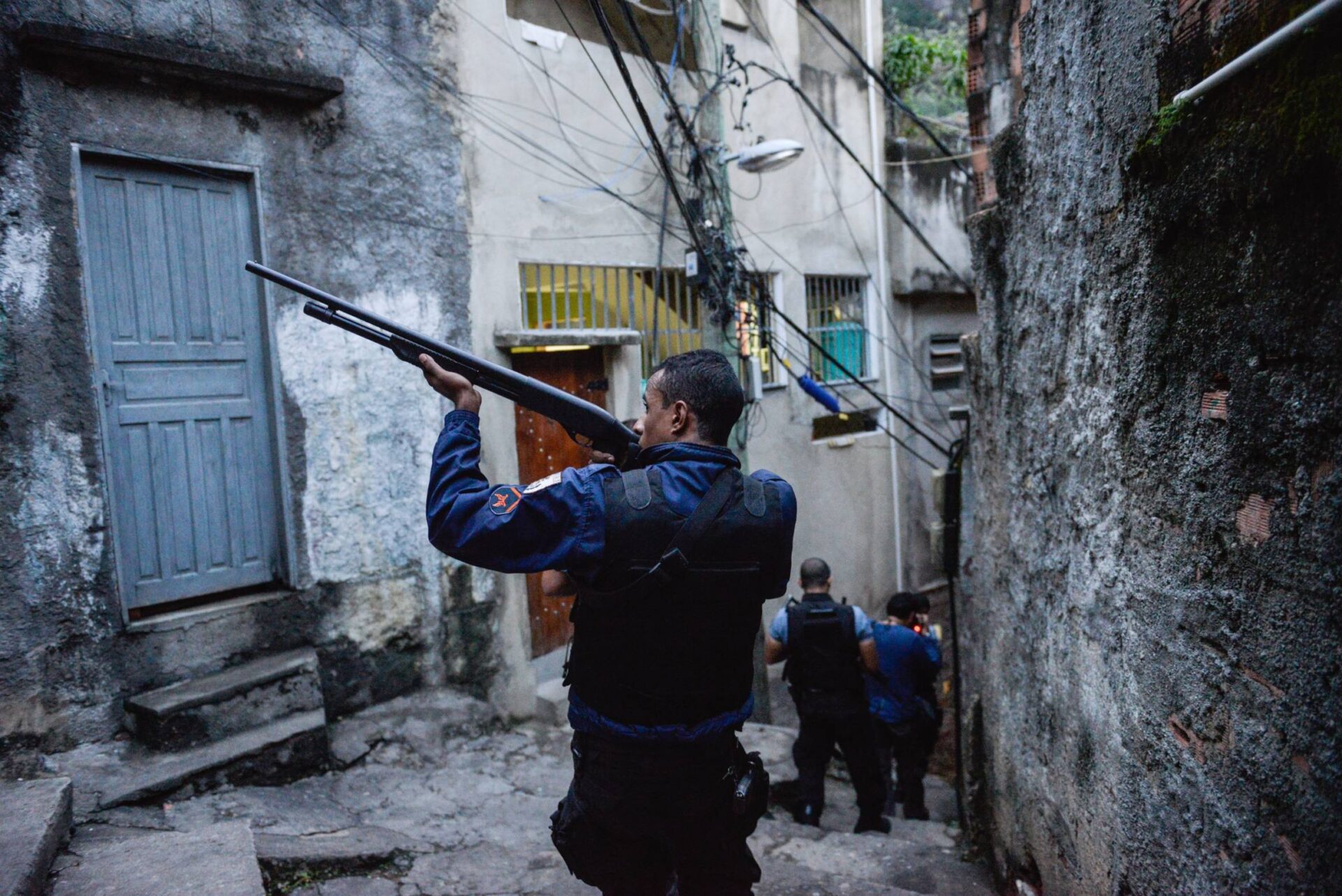
Latin America knows this logic all too well. The “recovery” of territories lasts only as long as media attention does, while “justifying” enormous abuses, such as those committed in October in the Alemão and Penha communities of Rio de Janeiro. Drug seizures are presented as victories even though the market immediately recovers; mass arrests overcrowd prisons where the state loses control and criminal organizations gain new recruits.
Today, under military supervision, Ecuador’s prisons are recording three times as many deaths as during the worst years of prison riots. Campaigns against “street-level drug dealing” ultimately target the weakest links in the chain: poor young people, women used as drug couriers, people with problematic drug use, or individuals selling drugs simply to survive. Meanwhile, the financial, logistical, institutional, and political structures that sustain the drug trade remain far better protected.
The report acknowledges that imprisoning people who use drugs, when not accompanied by treatment, social support, and genuine alternatives, can worsen the very problems it seeks to solve. But this recognition should be at the center of the discussion, not relegated to a passing warning. Prisons provide a stark snapshot of the failure of prohibitionist policies: they do not rehabilitate; they deepen criminal trajectories, sever family ties, destroy opportunities, expose inmates to extreme violence, and strengthen criminal governance behind bars.
For this reason, any serious agenda on security and drugs should radically change its measures of success. Instead of counting tons of drugs seized, hectares of crops eradicated, people arrested, or cumulative years of prison sentences imposed, it should measure how many people gain access to voluntary treatment, avoid incarceration through alternatives, reduce risks and harms, regain housing, employment, or family support networks; how many communities reduce homicides, extortion, and police violence; how many young people avoid recruitment into criminal organizations; and how many criminal assets are repurposed for social ends.
This is not a mere technical adjustment but a paradigm shift: away from a policy obsessed with pursuing substances and punishing vulnerable bodies, toward one focused on reducing harm, violence, and exclusion. Public security is not achieved by multiplying criminal cases, but by strengthening social bonds, public services, economic opportunities, community health, restorative justice, and local governments capable of lifting up their communities.
The report falls short by overlooking the role of prohibition, criminalization, and illegal markets. For Latin America, prohibition is not a legal abstraction; it is an everyday architecture of violence. It determines who can become wealthy, who can be imprisoned, who may die, who can buy protection, and who remains exposed to punishment.
This does not mean denying the harms associated with drug use. Problematic drug use destroys lives, families, and communities. Local drug markets generate fear, degrade public spaces, and foster exploitation. Increasingly potent substances pose new challenges. That is precisely why we need better policies, not punitive reflexes. Confusing care with control, treatment with coercion, or prevention with surveillance only makes matters worse.
The region needs to innovate more boldly: effective decriminalization of drug use and possession for personal consumption; responsible regulation and public oversight of certain markets; effective alternatives to incarceration for minor offenses; harm reduction; voluntary, high-quality treatment; mental health care; access to housing; economic inclusion for young people; restorative justice; effective action against criminal finances; democratic oversight of security forces; and genuine community participation.
The challenge for Latin America is not to incorporate public health into the old paradigm of the war on drugs. It is to move beyond that paradigm altogether. The question is no longer how to reduce the impact of drug use on security, but how to reduce the impact of failed drug policies on people’s lives, democracy, and development.
After decades of prohibition, Latin America does not need more diagnoses that confuse symptoms with causes. It needs a drug policy willing to look where it is most uncomfortable: not only at drug use itself, but also at the harm produced by illegality, exclusion, and the state itself when it responds too late, too poorly, and with violence.
Autor

Founder and director of D2 INNO-LAB, the Global Laboratory for Innovation in Drug Policy and Development. Research associate at the Center for Research in Global Governance (CIGG) of the University of Salamanca (Spain). He was director of the EU-Latin America and Caribbean drug policy cooperation program (COPOLAD III).