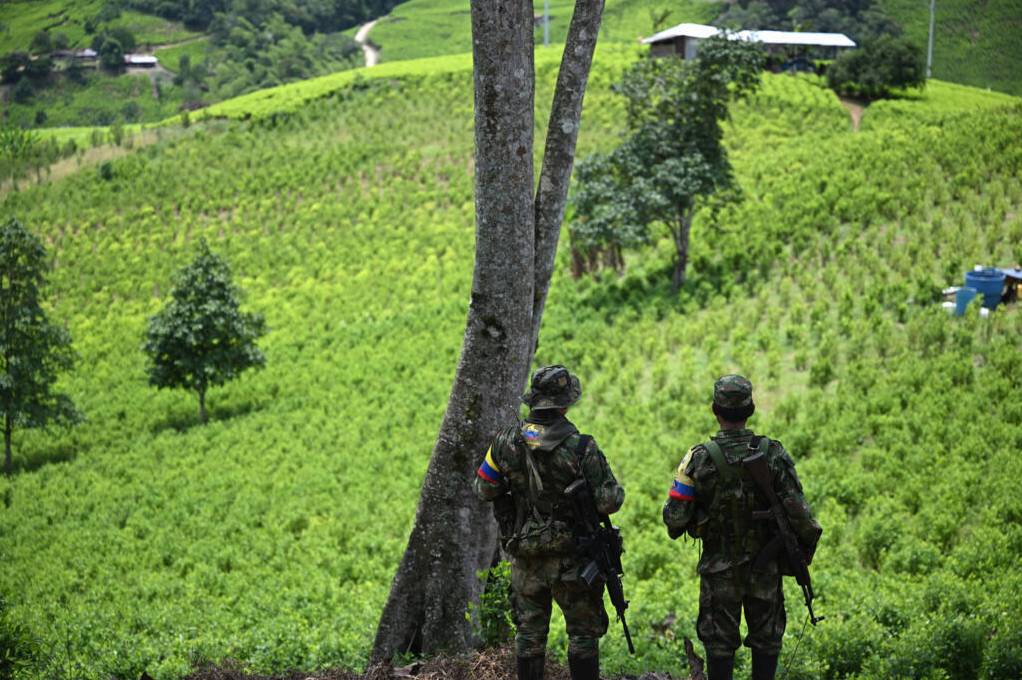
The recent release of the new U.S. drug strategy and the European Union’s updated Drug Strategy and Action Plan Against Drug Trafficking feels like much more than a routine policy update. It signals the return of an old mindset many believed was beginning to fade: the idea that drugs are fundamentally a war problem, to be addressed mainly through repression, interdiction, surveillance, and stronger security powers.
The language differs on each side of the Atlantic. Washington openly talks about “war,” “chemical assault,” and “hunting cartels,” while again merging drug policy with counterterrorism logic by classifying cartels as “Foreign Terrorist Organizations” and fentanyl as a “Weapon of Mass Destruction.” The European Commission uses softer terms such as “security,” “resilience,” and “protecting logistical chains,” but it is also rapidly expanding surveillance systems, predictive policing tools, intelligence-sharing mechanisms, and digital monitoring capacities. Underneath the different tones, both strategies are moving in the same direction: drug policy is once again being framed primarily as a security issue centered on border control, intelligence systems, and pressure on third countries.

This shift comes at a particularly sensitive moment for Latin America and the Caribbean. The new UNDP Report on Democracy and Development in Latin America and the Caribbean 2026 warns that democracies across the region are under growing pressure from organized crime, insecurity, inequality, political polarization, and weak institutions. The report correctly identifies that organized crime is no longer simply a criminal issue; in many countries it has become a governance problem capable of influencing politics, capturing institutions, distorting democratic processes, and eroding public trust.
Yet there is a contradiction at the center of this debate. Western governments increasingly recognize organized crime as a major threat to democracy while simultaneously reinforcing many of the prohibitionist policies that helped criminal economies become so powerful in the first place. For decades, prohibition transformed certain markets into extraordinarily profitable illegal businesses. Organized crime expanded not only because of corruption or weak states, but also because global drug control systems created massive underground economies operating outside legal regulation. And yet this discussion remains largely absent from both the new U.S. and EU strategies.
Instead, both documents portray organized crime almost as an external threat attacking democratic societies from the outside. The United States directly blames foreign countries for failing to stop the “poisoning” of Americans, while Latin America once again appears mainly as a territory associated with trafficking, production, and instability. Europe uses less aggressive language but reproduces many of the same dynamics by orienting cooperation with Latin America, Africa, and Asia increasingly around interdiction, intelligence-sharing, and logistical control.
The colonial undertones here are difficult to ignore. International cooperation risks becoming less about shared development and more about protecting Northern security interests through the externalization of enforcement, often with little attention paid to the social costs, democratic consequences, or human rights impacts in the countries most affected. For decades, some of the poorest communities in Latin America have paid the highest price for the global war on drugs: violence, militarization, corruption, overcrowded prisons, fragmented territories, and weakened democracies. Yet much of the response coming from the Global North still focuses mainly on containment instead of questioning whether prohibition itself may be part of the problem.
One of the most important ideas in the new UNDP report is the notion that many democracies in the region are trapped in “low-performance equilibria” — situations where violence, inequality, fragile institutions, and weak state presence constantly reinforce each other. Criminal economies flourish precisely where states fail to provide security, opportunities, infrastructure, and legitimacy.
This raises an uncomfortable but unavoidable question: if organized crime derives much of its power from controlling prohibited markets, is it really possible to weaken these organizations in the long term without discussing alternative forms of regulation?
One of the bravest aspects of another recent UNDP report, Development Dimensions of Drug Policy (2025), was precisely its willingness to move beyond the traditional limits of international drug policy debates and openly recognize that punitive approaches have often been ineffective or even counterproductive for development, governance, public health, human rights, and environmental sustainability. The report did not stop at criticizing prohibition. It also explored the idea of a “just transition” from illicit to regulated economies, arguing that communities historically dependent on illegal drug markets should not simply be abandoned during reform processes. Its emphasis on sustainable livelihoods, social justice, equity-based regulation, harm reduction, Indigenous rights, and the integration of marginalized producers into legal markets represented one of the most forward-looking positions ever adopted within the UN system on drug policy.
Precisely for that reason, it is striking that the 2026 UNDP report on democracy and development ignores this transformative dimension. The possibility that democratic strengthening in Latin America may also require fair transitions between illicit and licit economies capable of reducing violence, weakening organized crime, expanding rights, and creating new forms of inclusive development deserved a much more central place in the discussion.
Meanwhile, the cycle repeats itself: more surveillance, more interdiction, more intelligence systems, and more pressure on producing and transit countries. Yet illegal markets continue adapting incredibly fast. Routes change, new actors emerge, production shifts elsewhere, and synthetic drugs evolve faster than enforcement systems can react. Ironically, both the U.S. and EU strategies openly acknowledge this adaptability while still doubling down on the same enforcement-heavy approach.
The U.S. strategy a bizarre addition on the “importance of faith,” where the document argues that “adding God into the equation brings in a special power” in addressing addiction. After decades of failing to eliminate drugs through punishment and militarization, the narrative starts shifting toward moral redemption narratives, replacing one dependency with another and substituting evidence-based and rights-based approaches with moralized visions of divine salvation. A narrative that a growing (and politically important) conservative religious community in the region would be dangerously happy to adopt and help expand, in an addiction treatment scenario already dominated by faith-based organizations.
The democratic risks of this securitized turn are becoming increasingly visible. The real challenge, therefore, is not simply how to contain criminal organizations. It is how to build democracies capable of governing complex economies and deeply unequal societies without becoming trapped between criminal violence, authoritarian temptations, and prohibitionist inertia.
Drug policy can no longer be treated merely as a technical or public security issue. It has become a central question about democracy and sustainable development itself. Social innovation and reform are essential to move beyond the false choice between prohibition and chaos and to build more humane, democratic, and effective futures.
Autor

Founder and director of D2 INNO-LAB, the Global Laboratory for Innovation in Drug Policy and Development. Research associate at the Center for Research in Global Governance (CIGG) of the University of Salamanca (Spain). He was director of the EU-Latin America and Caribbean drug policy cooperation program (COPOLAD III).