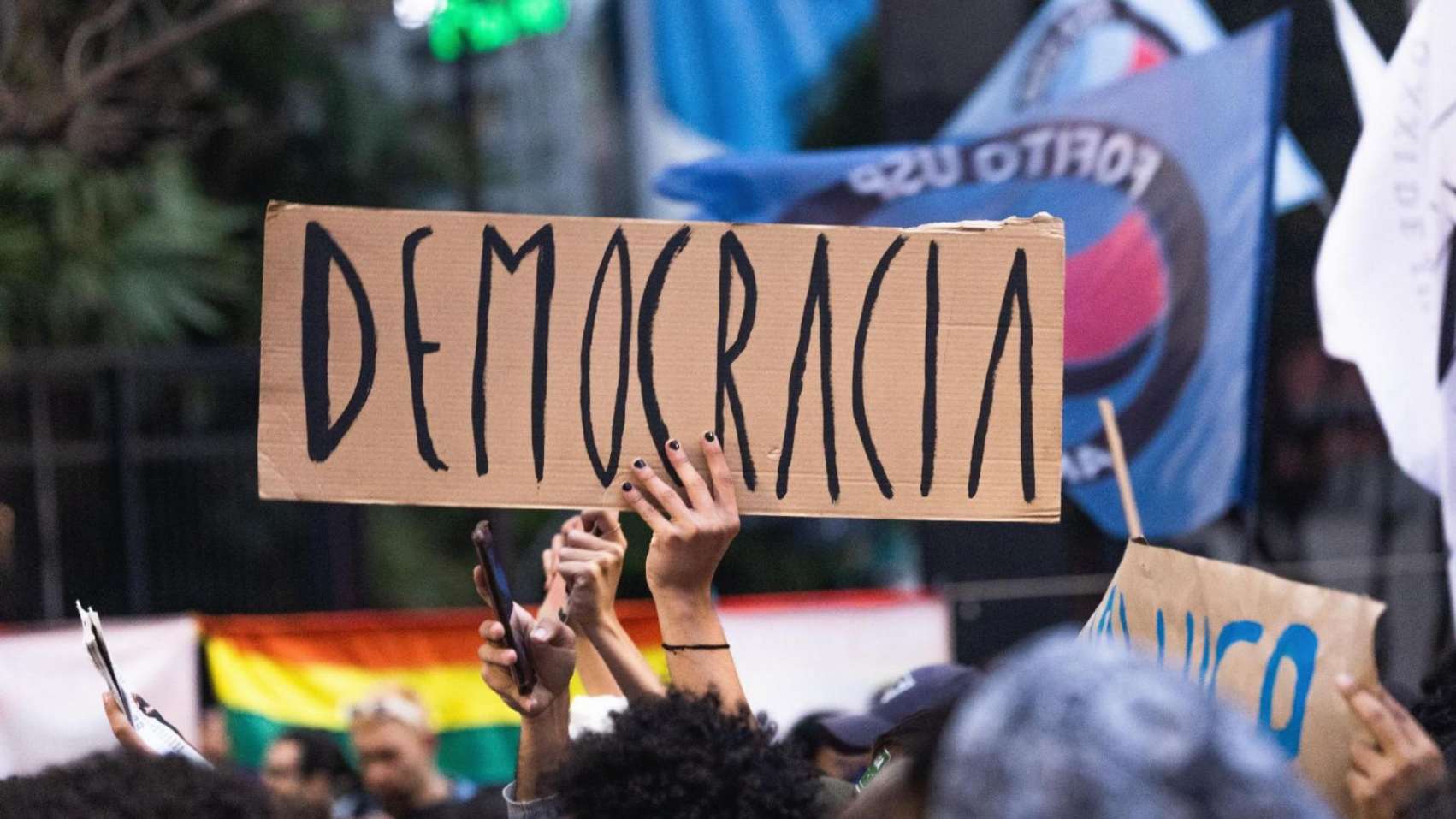
If the system does not guarantee freedoms, justice, participation and equality, other actors, often authoritarian and populist, will fill that void.
In Latin America, there is a troubling paradox: democratically elected leaders have concentrated power, weakened institutions, and restricted freedoms while maintaining high levels of popular support. From Bukele to Chávez, and from López Obrador to Bolsonaro. At the same time, countries with consolidated democratic institutions, such as Chile, are experiencing profound crises of dissatisfaction with democracy. How can we understand this disconnect between the institutional framework and citizen satisfaction?
Part of the answer lies in the expectations citizens have of democracy, as well as their understanding of it. A democracy can comply with electoral rules and still generate disillusionment if it fails to produce justice, inclusion, or more substantive aspects such as equality. Conversely, a government that violates constitutional limits can retain support if it promises order, protection, or redistribution.

This is revealed in a survey of 432 social and community leaders from ten countries in Latin America and the Amazon region, conducted by the Observatory for Democracy in Latin America, part of the Association of Jesuit Universities in Latin America (AUSJAL). The survey asked social leaders about their ideas, assessments, and expectations regarding democracy and its institutions, given their key role in mediating between citizens and institutions, and also because they tend to be among the first to perceive the fractures and possibilities within the political system.
Democracy: what is expected and what is achieved
Before assessing support for democracy, an inevitable question arises: what kind of democracy are we talking about? The term has multiple definitions, not always compatible with each other. Therefore, it is important to understand what leaders mean when they speak of democracy in order to know what they expect from it.
For social leaders, the first word associated with democracy offers a telling glimpse into its essence. Participation emerges as the core of democracy. But they also emphasize freedom, especially freedom of expression, as well as equality, justice, rights, the common good, and dialogue. In other words, for these leaders, democracy is a substantive arrangement that must guarantee rights, foster inclusion, and allow citizens to have a real influence on public decisions.
This conceptual map reveals a crucial point: Latin American social leaders have a demanding and substantive vision of democracy, one that goes beyond its electoral dimensions and measures its quality by the results it produces for society. Understanding this perspective is key to interpreting both the type of support and the criticisms they formulate regarding the functioning of democracies in the region. Citizens have not abandoned democracy. They have abandoned the belief that simply voting is enough.
The most valued dimension is also the most neglected.
The emphasis on substantive aspects such as participation, justice, freedoms, and equality contrasts with the dominant approach in much of the academic literature and political discourse, which tends to define democracy as electoral competition. Among social leaders, however, more institutional notions have a minimal presence. For example, only 13% of respondents mentioned “free and fair elections” as the best description of a “true democracy.” However, when asked what type of democracy exists in their countries, the responses are contrasting: 63% consider that they live in a primarily electoral democracy. Only 16.5% believe it is a participatory democracy. Eight percent are highly critical and state that their country is neither. This last point was particularly true for Venezuela and El Salvador.
From these findings, a troubling conclusion emerges: in much of the region, democracies adhere to electoral procedures to a certain extent but fail to deliver on their substantive promises . These are democracies that uphold elections but do not guarantee rights, that recognize citizens in law but not in everyday experience. Thus, the majority (63.7%) of the social leaders surveyed state that the democracies in their countries are “democracies with major problems,” while almost a quarter (23%) assert that “it is not really a democracy.”
These “unmet” assessments and expectations of democracy become fertile ground for authoritarian seduction, which promises quick solutions where democratic institutions seem to have failed to respond.
Closing the gap: an agenda from the citizens
If the current process of democratic erosion in Latin America is to be reversed, citizens’ expectations must be taken seriously. Electoral democracy is essential, but it is not enough. If democracy does not guarantee freedoms, justice, participation, and equality, other actors—often authoritarian and populist—will fill that void, promising to fulfill those demands. The social leaders interviewed are not calling for a return to populist models or a break with the constitutional order. They are calling for a more substantive democracy, one that is not limited to the competition for power, but rather is expressed in real access to rights and freedoms.
The defense of democracy can no longer rely solely on institutional design. It must connect with the expectations and daily practices of those who sustain social life. Rebuilding democratic trust requires strengthening channels for genuine participation, guaranteeing accessible and equitable justice, protecting freedoms in contexts of insecurity and polarization, and building states capable of responding effectively. This is the democracy that social leaders defend. This is the democracy that the region still needs to achieve.
*Text originally published in Diálogo Político
Autor

President of the Mexican Association of Political Science. PhD in Political Science from the University of Florence, Italy. She is a professor in the Department of Sociopolitical and Legal Studies at ITESO and a professor at the University of Guadalajara, Mexico.