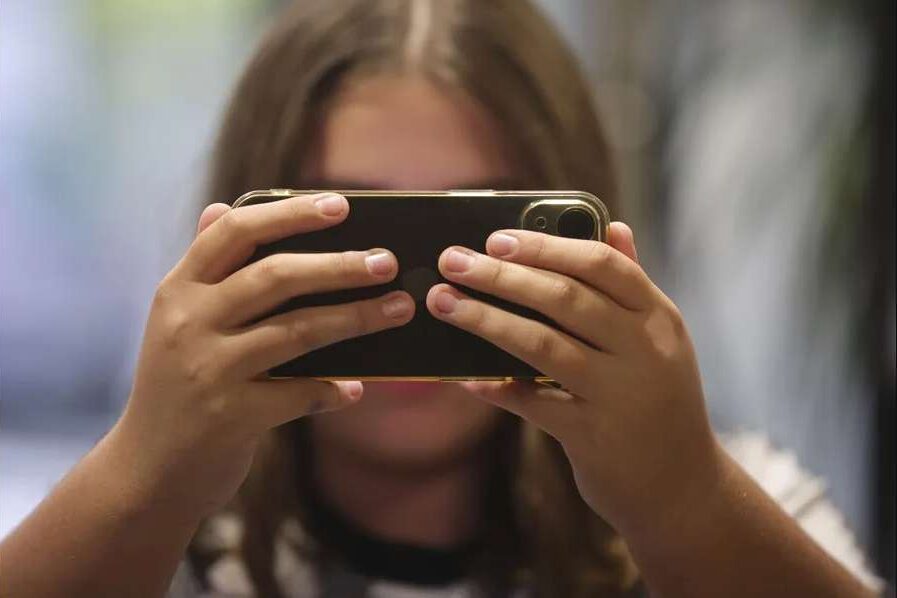
The scene repeats itself in every household: a pre-teen, teenager, or child who has not even completed their first decade of life spending minutes that turn into hours, that stretch across several days a week—if not every day—without taking their eyes off their phone screens while they browse social media.
The excuses are many: educational assignments, socializing with friends, recreational breaks, a respite for parents. At first glance, social media could become an instrumental ally to supposedly optimize daily life. But the consequences did not take long to appear: addiction and excess in access to and use of social media; an increase in cases of depression and negative self-image; rising violence; self-absorption and the atrophy of social skills; an increase in self-harm; hypersexualization; and the enthronement of prematurely adult and eroticized behavioral models among children and adolescents.

In Brazil, reactions to this excess constitute one of the great consensuses that transcends partisan or religious divisions and lifestyle differences, as it has become a problem that troubles nearly everyone equally, without distinction. Perhaps that is why the trial currently taking place in California against social media platforms for generating addiction among children and harmful effects on their health is being followed so closely and has achieved such broad coverage in local media.
Mothers and fathers of all political leanings and social strata converge in supporting strong government restrictions on social media use to guarantee the mental and physical health of children and adolescents. The Australian “Enough is enough!”, as stated by its Prime Minister, Anthony Albanese, when proclaiming the new ban on social media for minors under 16 in December 2025, echoes in our region.
According to a recent study by the consultancy Market Analysis conducted with more than 1,000 adults, three out of four Brazilians (72%) approve of the recent Australian legislation that restricts access to social media for minors under 16. This percentage is similar to that recorded in Australia itself. Brazilian support for regulation is broad and cross-cutting, and manifests consistently among men and women, people with and without children, across different partisan affiliations, and among diverse digital usage profiles. Even so, among those with minor children, support jumps to 83.1%, which—in an election year in which divisions of opinion are once again amplified by different campaigns—could become a winning rallying point.
Polarization, so often associated with the use of social media, fades when it comes to controlling real problems arising from its everyday use. Such strong support grants full social legitimacy to the proposal, countering part of the criticism of regulation anchored in the claim that it would discriminate against the freedom of expression of a majority or that it would constitute an agenda restricted to specific groups.
Triggers of support for regulation
As occurred in Australia, where the government justified the ban by prioritizing minors’ well-being over the profits of tech giants, support for regulation in our region is directly related to the perceived impact of social media on children and adolescents.
In general, nearly six out of ten respondents believe that social media cause more harm than benefits to young people. This opinion is a majority both among those without children and among mothers and fathers, and is associated with greater support for regulatory measures. The result coincides with a 2024 report by Instituto Alana, an organization that defends children’s rights, which indicated that three out of four Brazilians perceive that children and adolescents spend too much time online.
Individual experiences of digital exhaustion also reinforce the demand for restrictive regulatory solutions from the government.
Responsibility and expectations for solutions
The Australian law was publicly defended by attributing responsibility to “big tech” companies and their algorithms for their omissions in protecting children. The same logic is now inspiring Spain, the United Kingdom, and France to propose similar legislation. The restriction affects all social media platforms, including Instagram, Facebook, TikTok, X, Snapchat, and YouTube, which—under the measure—must verify users’ ages, facing multimillion-dollar fines if they fail to comply. Blame is clearly projected onto the companies.
However, the majority of Brazilians who support the restriction do not point to the platforms as the main parties responsible. Only two out of ten believe that companies should resolve excessive use and its harmful effects, and 14.6% point to the Government. In contrast, a broad majority (61.2%) considers that the primary responsibility lies with parents and caregivers.
This bias appears to translate the problems minors face with social media not as the result of mechanisms designed to addict them (algorithms), but rather as the product of a lack of willpower or judgment on the part of those responsible for children. The need to shift the axis of the problem’s nature is key—even to neutralize the effectiveness of “big tech” communication campaigns in transferring the burden to third parties, as they have sabotaged previous attempts to limit their actions under the discourse of freedom of expression and family sovereignty over state interference.
This excessive self-blame also reflects the absence of a critical and realistic reflection on the effective means parents would have to protect their children from the hidden risks of excessive social media use. This remains a perverse diagnosis, as it points to those who suffer most from the negative consequences of social media (after their children) as the main responsible parties.
Within this framework, the trial in California against major technology companies could tilt the balance in favor of the mental health of children and adolescents, with repercussions for legislation in our region and in the focal points of this year’s electoral battles.
Autor

Fabián Echegaray es director de Market Analysis, consultora de opinión pública con sede en Brasil, y actual presidente de WAPOR Latinoamérica, capítulo regional de la asociación mundial de estudios de opinión pública: www.waporlatinoamerica.org.