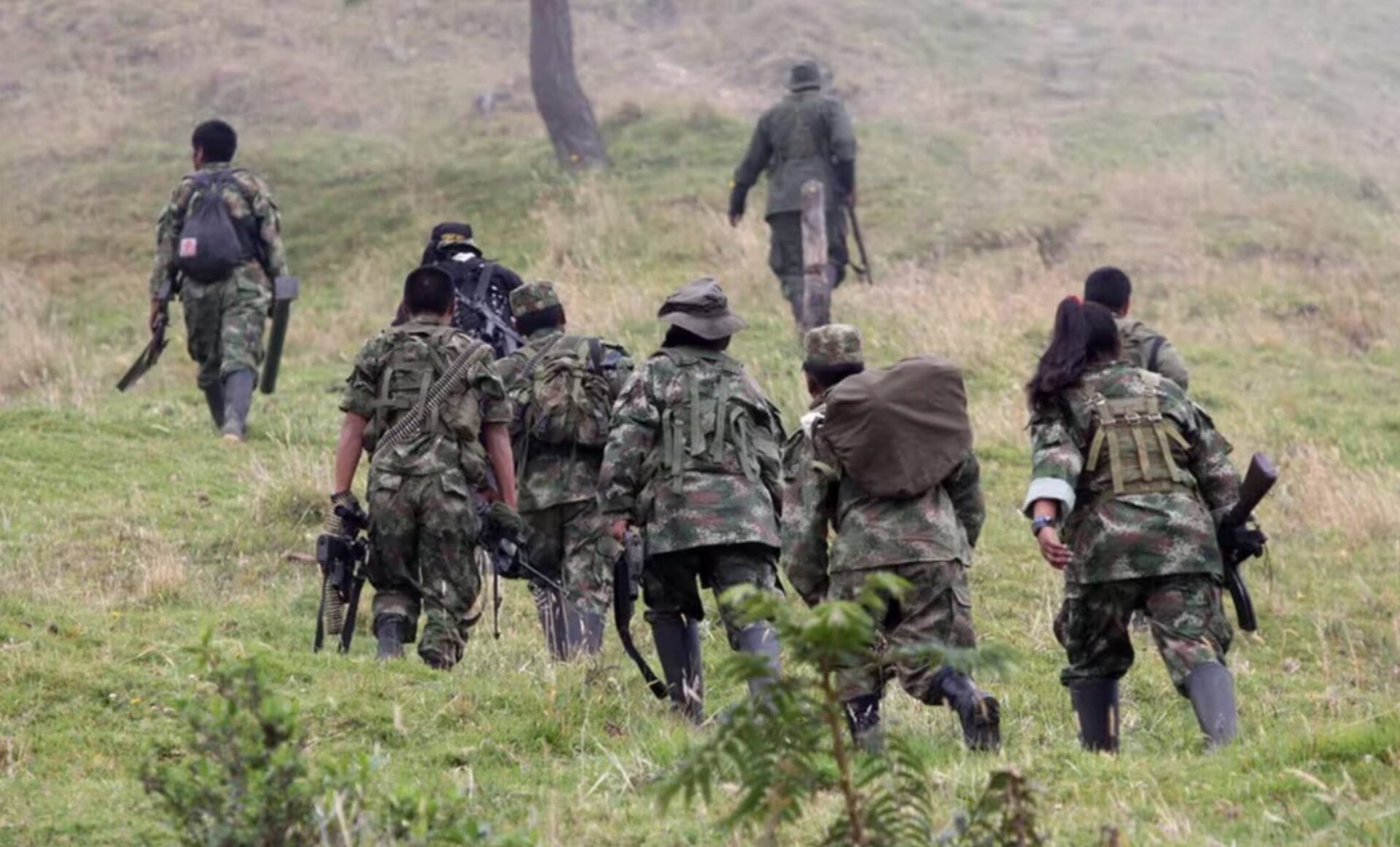
Twenty-five years ago, many analysts feared that Colombia was on the verge of state collapse. Guerrilla groups controlled large areas of the territory, drug trafficking financed violence, and the State appeared incapable of regaining control. Today, the reality is very different. But as Colombia approaches the 2026 presidential elections, the debate on security, territorial control, and organized crime has returned to the center of national politics.
That transformation did not happen by accident. It was the result of the efforts of millions of Colombians, supported by one of the most ambitious international cooperation initiatives of recent decades: the Plan Colombia. The historical balance is clear. Plan Colombia helped save the country.

Violence declined significantly from the extreme levels of the early 2000s. The State regained territorial control in many regions. And the FARC, which for decades represented the main insurgent threat to the Colombian State, eventually signed a peace agreement in 2016.
But the success of a strategy does not mean that the same strategy can respond to today’s challenges. The debate has intensified under the government of Gustavo Petro around his “Total Peace” policy, which has sought to negotiate simultaneously with multiple armed and criminal actors. Supporters argue that Colombia needs a less militarized strategy, while critics contend that some illegal groups have used the process to expand territorial control and strengthen illicit economies.
The threats facing Colombia today are different from those of the late 20th century. They are no longer defined primarily by ideological insurgencies seeking to take control of the State. Instead, the country faces highly adaptive transnational criminal networks operating across multiple illicit economies.
Drug trafficking remains a major challenge, but it is no longer the only driver of violence nor necessarily the most profitable. Illegal mining, smuggling, human trafficking, and other illicit activities generate enormous profits for criminal organizations that operate across borders and often penetrate local institutions.
These criminal networks are not only a threat to Colombia. Their effects are felt throughout the region and have direct impacts on international markets for drugs, minerals, and other illicit goods. For this reason, international cooperation remains important, although it must also evolve.
Plan Colombia was, to a large extent, a security-centered strategy. That priority reflected the reality of its time. However, today’s challenges require a broader approach that combines security with territorial governance, sustainable economic development, and institutional strengthening.
In many rural regions of Colombia, the historical absence of the State remains the factor that enables the expansion of illicit economies. When communities lack access to infrastructure, legal markets, or basic public services, illegal alternatives tend to fill that void.
Therefore, any future strategy must focus not only on combating criminal organizations, but also on consolidating the effective presence of the State across the territory. This implies investing in infrastructure, strengthening local justice systems, improving access to education and healthcare, and creating legitimate economic opportunities for rural communities.
The next president of Colombia will inherit a far more complex national context regarding security, state presence, and territorial governance. In this framework, the upcoming elections will likely mark a turning point in how the country addresses these threats over the next decade.
Colombia is no longer the country it was when Plan Colombia began. Today it is a much stronger partner, with greater institutional capacity and regional influence. That new reality should be reflected in stronger international ties. Instead of continuing to rely mainly on an assistance-centered model, Colombia’s future could be built around a strategic partnership with countries that share interests in regional security, economic development, and democratic stability.
Transnational criminal networks operating in Latin America represent challenges that no country can face alone. Renewed cooperation could focus on areas such as combating transnational organized crime, strengthening judicial institutions, promoting sustainable rural development, and protecting natural resources from illegal exploitation.
Colombia has demonstrated remarkable resilience. As Gabriel García Márquez once wrote, “Colombia is a country where extraordinary things happen every day.” That capacity for reinvention has been a constant in its modern history.
The success of Plan Colombia has shown that bold strategies can change a country’s destiny. But it also shows that each generation must design its own responses to the challenges of its time.
Colombia has already proven it can avoid collapse. The challenge now is to demonstrate that it can also build sustainable security for the 21st century.
*Machine translated, proofread by Ricardo Aceves
Autor

A lawyer and former high-ranking U.S. government official with decades of experience in Latin America. He was a senior advisor for South America at the United States Agency for International Development (USAID).