Religion is often assumed to be a natural ally of conservatism, but Latin American Catholicism has repeatedly provided a basis for radical and anti-colonial politics, from Bartolomé de las Casas’s defense of Indigenous peoples in the sixteenth century to Camilo Torres Restrepo, the Colombian priest who was killed in 1966 after joining an armed popular insurgency.
Liberation Theology, which emerged in the 1960s and 1970s through figures such as Gustavo Gutiérrez and Leonardo Boff, held that Christians should confront the structures that produced poverty rather than limit themselves to alleviating it through devotion. Progressive priests and religious figures in El Salvador, Bolivia, Nicaragua, Ecuador and Mexico adopted these ideas, but nowhere did they have consequences as profound as in Brazil. Under the military dictatorship, Basic Ecclesial Communities (CEBs) and bishops such as Hélder Câmara, Paulo Evaristo Arns and Pedro Casaldáliga built grassroots networks that offered workers and peasants a space to organize against a brutal regime installed with CIA backing in 1964. As democratization advanced, these networks converged with the Workers’ Party (PT), the Landless Rural Workers’ Movement (MST) and the labor movement more broadly.

A 2026 study published in the American Political Science Review by Guadalupe Tuñón directly tests this causal relationship: in 1978, John Paul II began replacing Brazil’s progressive bishops, but canon law stipulated that bishops remained in office until their death or until they reached the age of 75, meaning that the timing of their departure varied according to their year of birth and was unrelated to local politics, creating the conditions for a natural experiment. Tuñón found that the PT’s vote share was approximately 3 percentage points higher in 1989 in dioceses that retained a progressive bishop after 1985, an effect that persisted until 2002, when the PT reached the presidency. The effect was greatest precisely where secular unions were weakest, suggesting that the Church provided organizational infrastructure that unions supplied elsewhere. The Brazilian left may be the principal political descendant of Liberation Theology precisely because the movement ceased to be primarily ecclesiastical: as sociologist Cecília Mariz observed, when political opening began in the 1980s, many participants in the CEBs moved directly into the new parties and social movements. Its greatest legacy may have been to transform religious commitment into secular organization.
John Paul II’s distrust of the Marxist currents within Liberation Theology drove an institutional hardening against the centrifugal forces represented by the movement. Tuñón’s data make it possible to measure its cost: priest turnover increased when conservative bishops arrived, with greater intensity where progressive priests had previously been more active, and the PT found it more difficult to take root in those places.
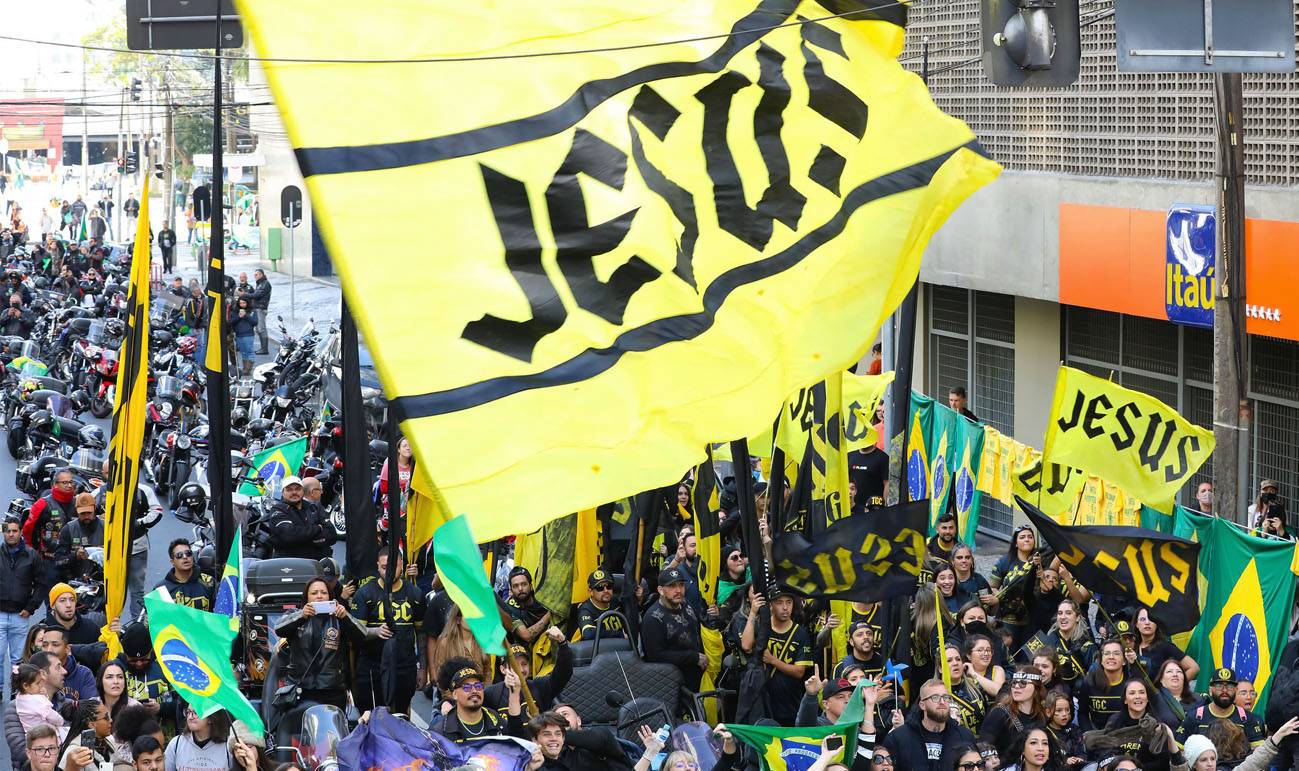
This transformation, however, coincided with the rapid expansion of Pentecostalism among the urban poor, the traditional social base of the Brazilian left. While Liberation Theology called for collective confrontation with unjust structures, Pentecostal churches offered individualized responses centered on conversion, discipline and material advancement. Even so, it is worth noting that a comparable proportion of people came to identify with no religion, and that the Catholic Church’s own abuse crisis was an independent factor.
Meanwhile, Pentecostal churches built their own dense infrastructure of community, practical support, media and political networks in neighborhoods that the state often neglected. By the early 2020s, approximately three in ten Brazilians identified as evangelical, mobilized around family conservatism, anti-communism and opposition to abortion and LGBTQ rights. During Jair Bolsonaro’s years in office, some evangelical missions and organizations also converged with government policies hostile to Indigenous territorial rights and worldviews, particularly through an emphasis on Christian morality and on integrating Indigenous peoples into Brazil’s dominant social and economic order.
Pope Francis subsequently took Catholicism in a markedly different direction. His pontificate once again placed poverty, inequality, social exclusion, the dignity of work, solidarity and environmental destruction at the center of Catholic public discourse, and that emphasis has largely continued under Pope Leo. The rehabilitation of Gustavo Gutiérrez, author of the seminal 1971 work A Theology of Liberation, and of the liberationist tradition more broadly, together with the canonization of Óscar Romero, the outspoken critic of El Salvador’s dictatorship, represented a notable shift. Francis’s meeting with Evo Morales in 2015, when the Bolivian president presented the Pope with a crucifix mounted on a hammer and sickle in tribute to the Jesuit Luis Espinal, who was murdered by right-wing paramilitaries, offered an almost surreal symbol of Francis’s rehabilitation of Latin America’s radical Catholic tradition: a socialist president of Indigenous origin presenting a Pope with a symbol of the fusion of Christianity, Marxism and martyrdom characteristic of a persecuted tradition.
But Francis inherited a landscape that John Paul II and Pentecostalism had already durably reorganized. He could give the Catholic Church’s commitment to social justice renewed intellectual and moral force, but he could not simply recreate the infrastructure through which Liberation Theology had once penetrated Brazilian politics.
That divide now runs through Brazil’s 2026 elections. Lula, the PT’s progressive candidate seeking a fourth term, faces Flávio Bolsonaro, senator and son of ultraconservative former president Jair Bolsonaro, currently imprisoned and disqualified because of his involvement in the 2022 coup attempt, in an increasingly close contest. Flávio Bolsonaro won the first round with 47.03% of the vote, surpassing Lula’s 45.16%, and the two will now face each other in the runoff. The result gives renewed relevance to the analysis of Brazil’s religious right, as it demonstrates that its political momentum remains considerable.
Religion does not by itself determine political ideology, but neither is it politically neutral. Religious institutions can create solidarity and the capacity for collective action, but they can also legitimize hierarchies and discourses about race, xenophobia, misogyny and sexuality. Their political importance depends on how they organize people, how they explain poverty and insecurity, which interests they consider worthy of protection, and whether they channel grievances toward collective transformation or toward individual salvation and the preservation of the social order.
Brazil is particularly revealing: its Catholic tradition helped organize the poor around one of the world’s most important democratic lefts, while Pentecostalism subsequently became a fundamental pillar of its conservative resurgence. Whoever wins in October, Brazil’s internal debate over religion and politics is likely to remain highly contentious for some time.
Autor

Associate Research Fellow at ICAEPA, based in Sheffield, UK. Econometrician. Consultant in risk analysis, business intelligence, value chain analysis, and transfer pricing.