When we think about China’s presence in Latin America, the first things that come to mind are ships loaded with soybeans, massive ports, or investments in lithium and copper. Yet behind this trade lies a much subtler and quieter path: a step-by-step progression that begins in raw-material deposits and eventually makes its way into university corridors and academia.
The data from the China Index—a tool developed by Doublethink Lab that measures Beijing’s influence across nine different dimensions, ranging from the economy and technology to the media, society, and foreign policy—allows us to see this phenomenon in concrete numbers.

First, the material foothold
Far from being a spontaneous ideological landing, China’s strategy follows a highly methodical sequence. It all begins in the economic and technological spheres. The China Index figures show that Brazil leads by a wide margin in the technology subcomponent, with a striking 79.5%, backed by strong economic penetration of 60.0 in critical minerals and agribusiness. What this figure tells us is that Brazil’s measurable level of exposure, penetration, and active ties with China in this sector reaches nearly 80% of the total influence variables mapped by the index. Peru (54.5 in the economy and 52.3 in technology) and Chile (45.5 and 56.8) display a perfect symbiosis driven by copper and lithium mining. Along the same lines, Argentina stands out with 65.0 in technology and space, closely tied to its lithium reserves and energy projects.
Regional statistics confirm that trade and infrastructure financing serve as the structural platform that subsequently drives ties into other, more complex areas.
The surprise in the classroom
The interesting part emerges when this economic muscle is cross-referenced with the academic subcomponent. One might assume that countries with the greatest commercial footprint are the only centers of educational influence, but the data reveal some striking asymmetries.
Countries such as Uruguay and El Salvador show a notable divergence: although their overall China Index scores are moderate or low (28.8 and 11.4, respectively; these figures correspond exactly to their overall China Index scores, reflecting the percentage of general influence recorded for each Latin American country), their scores in the academic subcomponent rise disproportionately, exceeding 45.2 points in Uruguay’s case. This shows that, even without a massive commercial presence, Beijing’s channels of university cooperation, scholarships, and educational exchanges are operating at full capacity. At the other end of the spectrum, Chile has the highest dual exposure in the sample, leading both the overall index (57.1) and the academic sphere (61.4).
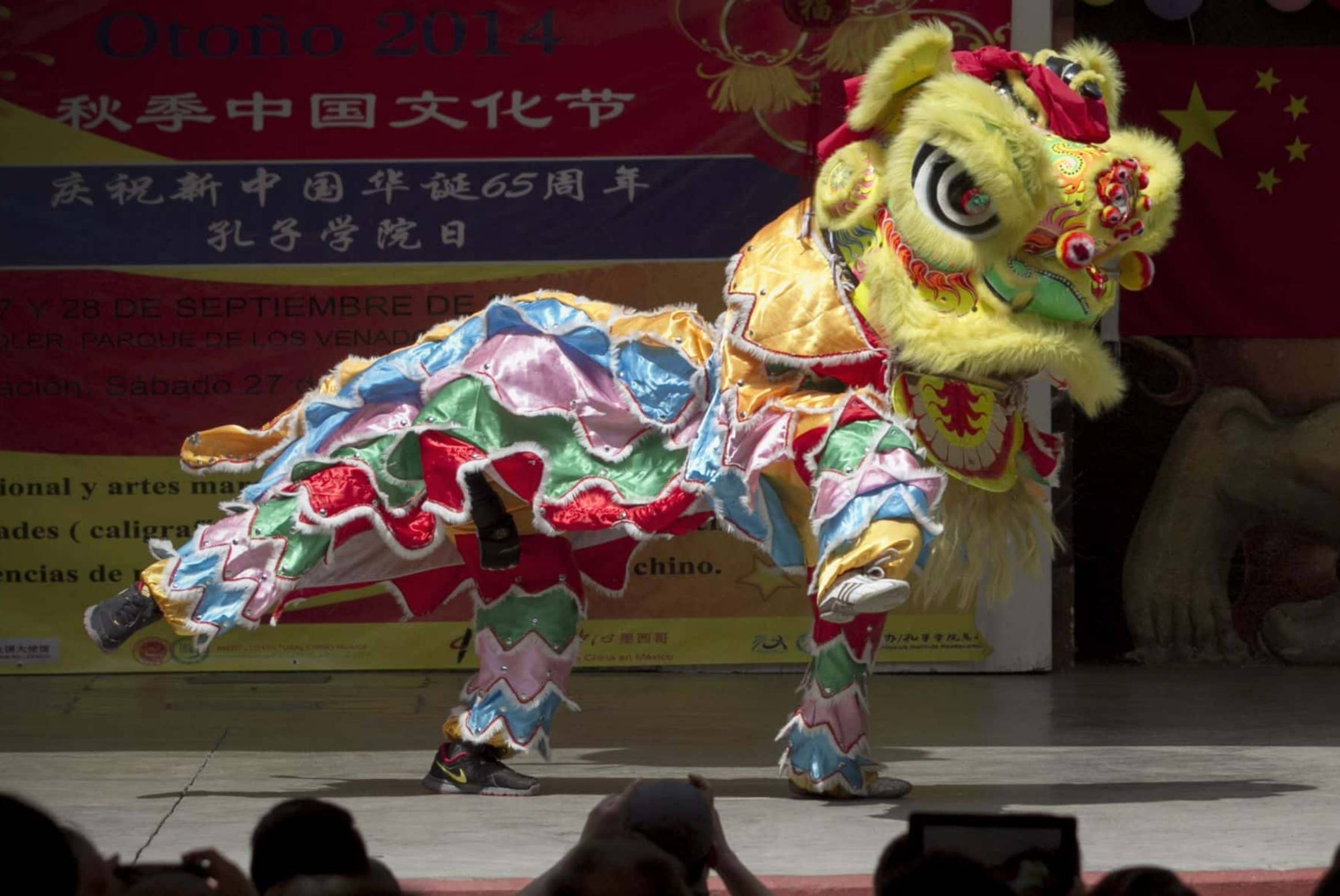
A clear example of this dynamic can be seen in recent regional debates driven by think tanks such as the Fundación Andrés Bello, which warn of the risks of aligning local academic agendas through financial dependence. In the face of chronic budget constraints at Latin American public universities, cooperation agreements, the proliferation of academic chairs, and the expansion of Confucius Institutes operate as tools of sharp power. Under the guise of harmless cultural exchange, preventive censorship is institutionalized, ruling out debate on Tibet, Taiwan, Xinjiang, or the repression of dissidents, effectively buying complicit silence within local academia.
This is compounded by the aggressive scholarship offerings of the Chinese Bridge program, as well as training programs for young leaders and government officials. The goal is not reciprocal scientific progress, but rather to build a network of ideological outposts and vested sympathies within Latin America’s future governing elites, normalizing the methods of an autocratic state capitalist system.
More influence or more transparency?
The results are counterintuitive: the data leave us with one final major methodological lesson so that we do not fall prey to illusions. The region’s open and transparent democracies (such as Chile, Argentina, and Uruguay) appear at the top of the visible influence rankings simply because their systems make it possible to audit, investigate, and document every agreement in broad daylight. By contrast, the region’s closed regimes remain artificially invisible because of their secrecy and lack of publicly available information. The variations observed in the influence indexes reflect not only differing levels of geopolitical pressure, but also the ability of open and transparent societies to audit and document these flows, in contrast to the informational opacity of the region’s closed autocratic regimes.
The challenge for Latin America, therefore, is not to build protectionist walls against the world, but to strengthen its own institutional antibodies. Because when the opacity of external agreements collides with weak domestic oversight, the risk translates into the silent erosion of academic freedom.
Autor

Director of the Bachelor's Degree in Political Science at the University of CEMA, Argentina. PhD in Political Science from the University of Cádiz, UCA. Postdoctoral studies in Latin American politics, IBEI Barcelona Institute of International Studies.