The revival and eventual implementation of the EU-Mercosur agreement should today be understood as an exercise in geopolitical damage control rather than as a conventional free trade treaty. It is not merely about reducing tariffs on primary goods, but about rebuilding a transatlantic bridge capable of counterbalancing the hegemony of an autocratic actor in the region: China.
For Europe and Latin America, this moment is not only a geopolitical crossroads but also an awakening of a shared memory. As in Tolkien’s ancient chronicles, when the shadow lengthens and dark powers seem to dominate the board of the world, salvation does not lie in new individual strategies, but in rekindling an old friendship that never truly ceased to exist.

The systematic postponement of the agreement between the European Union and Mercosur was not merely a missed commercial opportunity; it was, fundamentally, one of the greatest strategic miscalculations of postwar Europe. By treating Latin America as a predictable periphery—a repository of raw materials with which to negotiate from a position of bureaucratic condescension and asymmetric expectations—Brussels operated under the illusion that time was an infinite resource and that the region would wait indefinitely in its antechamber.
This indifference over recent decades represents both a tragic anomaly and an abdication of Europe’s own civilizational heritage. Unlike other regions of the world, where relations among global powers are often mediated by profound differences in language, tradition, and worldview, the transatlantic relationship rests upon a shared foundation. When the European Union turned its back on Mercosur, it was not ignoring a distant actor, but rather its own institutional and cultural extension in the Western Hemisphere.
It is crucial to understand that this shortsightedness does not concern only the internal dynamics of Mercosur; it reflects, in truth, a deeper and more structural crisis throughout the relationship between Europe and Latin America. Mercosur is the spearhead of a continental bond that the Southern Cone has historically embodied through the currents of Enlightenment thought, debates over republican constitutionalism, limits on power, and migratory flows that transformed its major cities into transatlantic reflections of European metropolises.
The institutions, legal traditions, university systems, and even the very conception of citizenship throughout the region are not foreign grafts, but chapters of the same intellectual history. By underestimating this continental affinity, EU diplomacy forgot that the values it now seeks to defend on a global scale—the rule of law, representative democracy, and individual freedoms—already had fertile and natural ground in Latin America. Far from narratives that seek to confine the region within collective and imprecise categories, the bloc shares a common destiny with the West, founded upon shared political principles.
This underestimation of the region’s autonomy and potential created a power vacuum that Beijing’s pragmatism did not hesitate to exploit. While the European Union became entangled in internal debates, agricultural protectionism disguised as environmental regulation, and an excessive professionalization of distrust, China deployed a quiet yet voracious strategy of expansion.
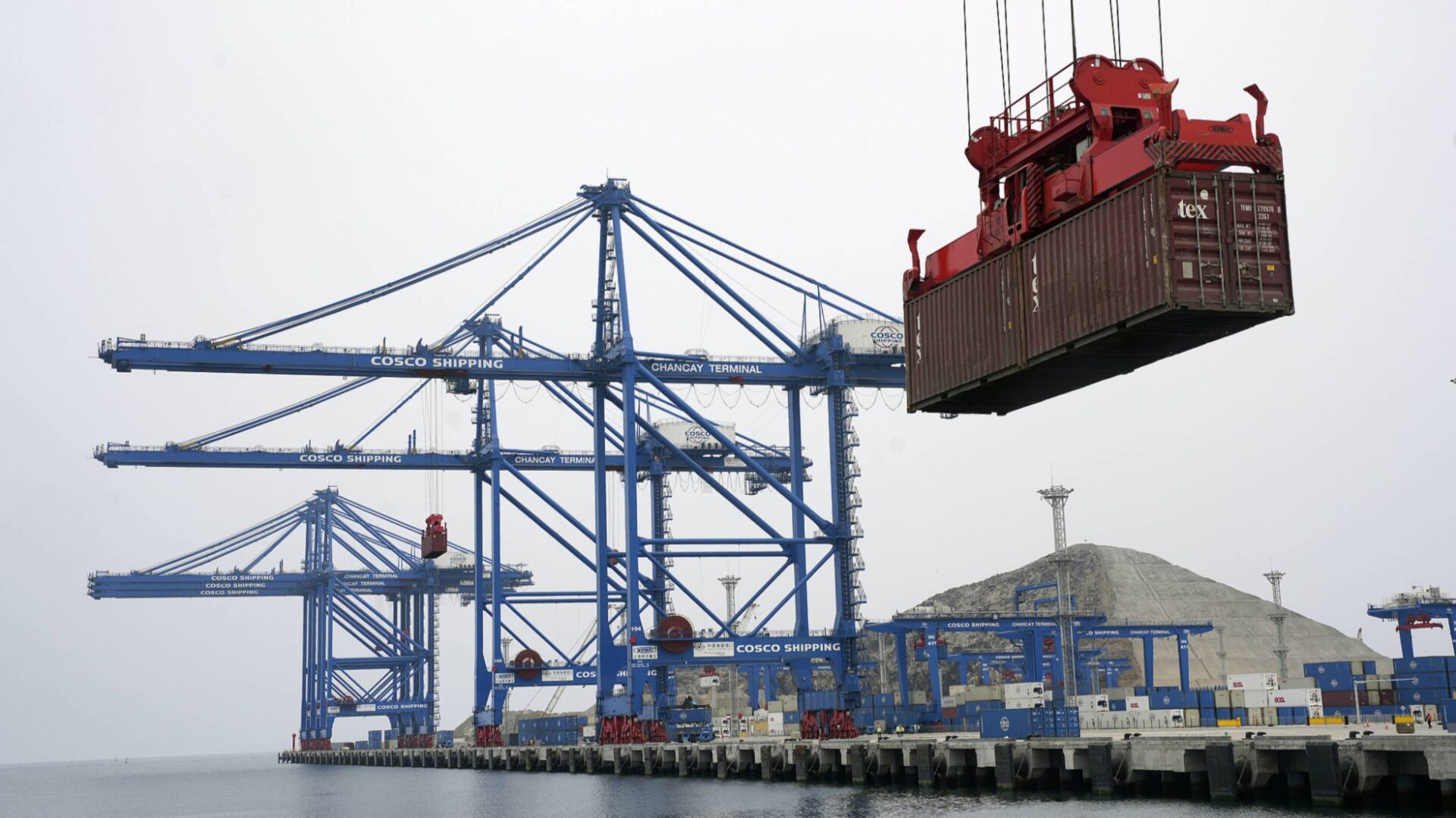
The contrast with Beijing’s rise makes this point unmistakable: China entered the region devoid of any claim to cultural affinity or shared values; its approach has been strictly transactional, guided by a cold logic of extraction and infrastructure development. It seeks neither to persuade nor to appeal to common principles, but to exert influence. When Europe finally rediscovered the strategic value of the region—driven by the need to diversify supply chains and secure access to critical minerals—it found itself facing a regional landscape in which the principal ports, railway networks, hydroelectric facilities, and lithium contracts were already being negotiated in Mandarin.
China’s advance into the Southern Cone lays bare the shortsightedness of Europe’s normative diplomacy. Beijing did not arrive demanding institutional reforms or Western governance standards; it arrived offering immediate financing, turnkey infrastructure projects, and a strategy of elite capture that neutralized political resistance. This penetration has not only displaced Europe in terms of trade volume, but has also begun to alter the geopolitical balance, depriving the West of a natural ally that shares its cultural roots, historical values, and convergent visions of the global order.
Faced with the furrow carved by the arrogance of a Europe that preferred lecturing to cooperating, Mercosur’s capitals found themselves compelled to accept the embrace of the Asian giant. Material pragmatism ultimately filled the vacuum left by the political retreat of the Old Continent.
Therefore, the revival and implementation of the EU-Mercosur agreement should not be read as a commercial transaction, but as the reaffirmation of a community of destiny united by deep roots. If we can look beyond the constraints of sectoral protectionism, we will rediscover that the Atlantic is not a distance that separates, but a bridge that connects. Political and strategic space still exists to mend every tear, recover lost time, and revive a natural alliance.
Transatlantic cooperation can and should become the cornerstone of a new global balance: our New Alliance for redefining the governance of the South Atlantic, founded upon strong institutions and the values of freedom that time has been unable to erode.
Autor

Director of the Bachelor's Degree in Political Science at the University of CEMA, Argentina. PhD in Political Science from the University of Cádiz, UCA. Postdoctoral studies in Latin American politics, IBEI Barcelona Institute of International Studies.

Economist and PhD in Political Economy from the LUISS Guido Carli International University, Italy. For over 20 years he has dedicated himself to international relations between Italy, Europe, and Latin America.