For decades, the prevailing discourse in our region’s international relations was shaped by commercial globalization and international cooperation. It was believed that economic interdependence would be enough to dissolve old power tensions. However, we are now witnessing the return of geopolitics in its purest form: competition among great powers for control over geographic spaces, strategic resources, and technological flows.
In this new international system, geography has once again become destiny. The strategic competition between the United States and the authoritarian axis led by China, Russia, and Iran has transformed Latin America from a zone of relative peace into a critical frontier. It is no longer just about doing business; every financed port, every 5G antenna, and every lithium contract is now a piece on a chessboard where the economy is no longer independent from national security.

The presence of this axis has been consolidated by exploiting “democratic fatigue” through tactical convergence. China acts as the indispensable “economic partner”; it has moved from purchasing raw materials to owning critical infrastructure, using financial dependence to neutralize political criticism. Russia, for its part, operates as the “agent of destabilization,” ensuring the survival of regimes in Cuba, Venezuela, and Nicaragua through intelligence and asymmetric warfare. Finally, Iran positions itself as the “security actor,” exporting social control tactics and drone technology.
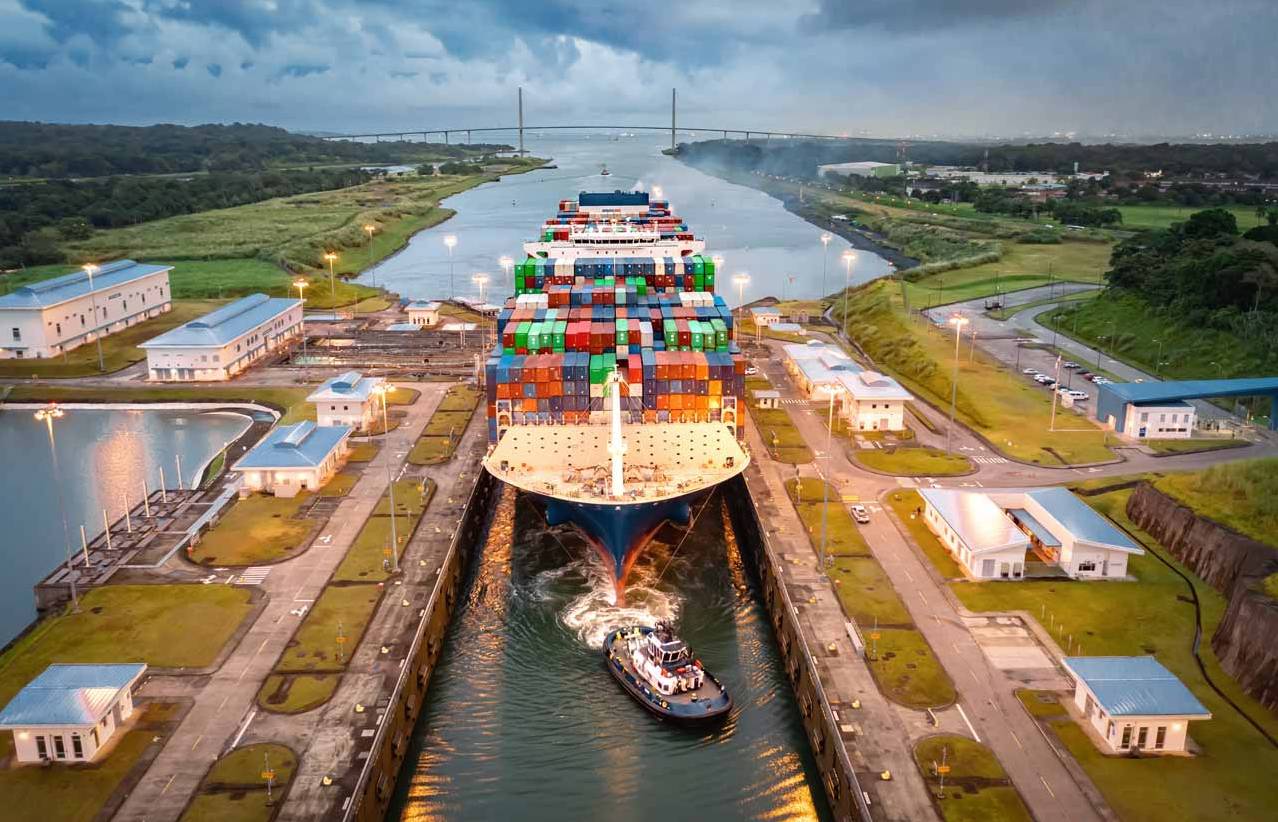
Today’s battle is fought in the Strait of Hormuz, but also in fiber-optic cables and logistical chokepoints. The export of “turnkey” surveillance systems enables local governments to monitor opposition movements in real time, eroding democracy from within. The real danger arises at the intersection of logistics and the digital world. With tools such as the LOGINK platform, Beijing gains visibility over every cargo movement in the region. If we add to this the fact that modern ports have dual-use capacity—civilian and military—the risk becomes evident: whoever controls a country’s main export port acquires a de facto veto power over its foreign policy through “technical delays” or tariff changes that can suffocate an economy in a matter of weeks.
This duality is not theoretical; it defines the current agenda of the Southern Cone. In Peru, the Chancay megaport represents a vital investment of 3.5 billion dollars, but with the risk of becoming a sovereign enclave of a Chinese state-owned enterprise. In Argentina, the tender for the Paraná–Paraguay Waterway—through which 80% of its agro-industrial exports flow—is not a technical matter, but a signal of alignment: accepting Chinese control of inland navigation is a “red line” for relations with the West.
Chile offers an interesting counterexample: faced with Huawei’s proposal for a submarine cable to Asia, Santiago opted for the Humboldt route via Australia and Japan. It prioritized data security and interoperability with democratic partners, paying an opportunity cost to remain within the Western security ecosystem.
Optionality—playing both sides—is the current strategy, but the room for maneuver is shrinking. The democratic offer from the United States and the European Union is often perceived as slow and bureaucratic compared to the authoritarian pragmatism that delivers immediate infrastructure without human rights conditions. To close this gap, Western partners must provide tangible results: competitive financing and real technological transfer.
The paradox of the Southern Cone is stark: strategic autonomy will depend on understanding that, with the return of geopolitics, there are no free credits, and that sovereignty is defended as much at borders as in data servers.
The consequences of ignoring this paradigm shift could be irreversible for the region’s institutional architecture. If Latin America fails to articulate a strategic response, it risks being reduced to a mere board of extraction and surveillance, where sovereignty fragments into logistical and digital enclaves beyond national control. The consolidation of this authoritarian “insurance policy” not only weakens the influence of liberal democracies, but also strips states of their ability to determine their own course without external tutelage. Ultimately, the true test for the nations of the Southern Cone will not be how much trade they can generate with the authoritarian axis, but how much of their own democratic integrity they are willing to sacrifice on the altar of immediate pragmatism. The era of comfortable neutrality is coming to an end; what is accepted today as a necessary investment may tomorrow become the very constraint that limits our freedom to choose.
Autor

Director of the Bachelor's Degree in Political Science at the University of CEMA, Argentina. PhD in Political Science from the University of Cádiz, UCA. Postdoctoral studies in Latin American politics, IBEI Barcelona Institute of International Studies.