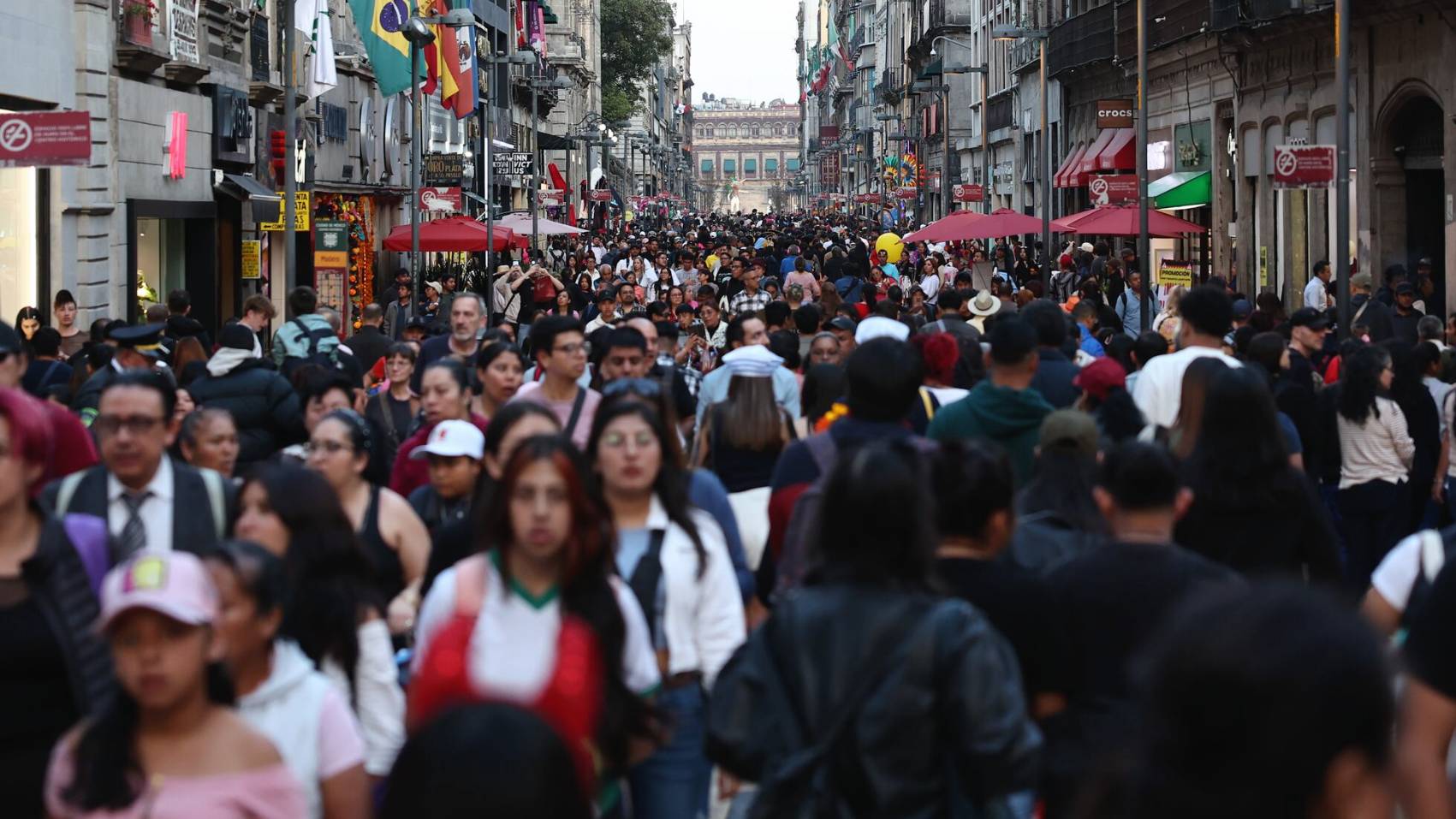
On the threshold of a new International Day of Democracy, which is commemorated every September 15, Latin America and the Caribbean faces a paradox: it is the most democratic developing region in the world, yet the most dissatisfied with the functioning of its institutions.
This tension points to something fundamental: democracy and development are deeply intertwined, and only through an analysis from the prism of democracy and regional development, as inseparable phenomena, is it possible to explore how the complex pressures of our time can be turned into an impetus for full and resilient human development.

Independent of the trajectories of each country, the capacity of people to have a voice in the decisions that affect their lives, act collectively, strengthen their institutions, and renew their social pacts is one of the main drivers of human development.
Democracy matters precisely because it creates the conditions to exercise that capacity: so that societies can influence how they are governed and actively participate in the construction of their own future.
Pressures that put the region to the test
Neither democracy nor development are, therefore, conquests that are achieved once and for all. Both are processes in permanent construction, susceptible to advancing or regressing regardless of the level of progress previously achieved. No institutional system is permanently shielded, but neither do definitive crises exist.
What is decisive is preserving the capacity of societies to influence their course, adapt their institutions, and build new responses when existing ones cease to respond to their needs.
No country is exempt from the complex pressures of our time. The perception of insecurity, the expansion of organized crime, disinformation, and the climate crisis intertwine with persistent inequalities, vulnerability to poverty, and high informality.
These pressures do not act in isolation: they interact and mutually reinforce one another, stressing the development and democratization trajectories of the region. They challenge both the capacity of States to respond and that of societies to build collective responses.
A report to rebuild bridges
Faced with a regional landscape where nuances seem to have vanished from the public debate and political antagonisms threaten to paralyze agendas for progress, at the UNDP we assume the responsibility of reactivating an indispensable debate for the regional future: the intrinsic link between democracy and development.
Reopening this discussion at a time when political polarization in Latin America and the Caribbean has reached historic levels was not an easy decision; however, the demands of the current context made it unpostponable.
Thus emerges Democracies Under Pressure, an honest, rigorous, and politically unbiased mirror that, instead of dividing, provides a technical basis upon which to build consensus, placing at the service of the region the trajectory and impartiality that define the mandate of the UNDP.
The spirit of this report is not to judge, rank, or audit, but rather to serve as a space for social reconnection. It is an indispensable tool that reminds us that democracy does not belong to any ideology, but is rather the umbrella under which all can coexist and process their differences peacefully; that institutions and the effectiveness of the political system are not measured by their promises, but by their concrete results; and that it is not possible to achieve full human development without freedom, nor sustain a democracy without well-being.
The process of drafting the report has left us with an encouraging realization: Latin America and the Caribbean maintains a profound democratic vocation. None of the political leaders, academics, members of civil society, and citizens invited to participate thought twice about accepting.
Dissatisfaction is not a rejection of democracy; it is a legitimate demand for results. When people feel that their voice counts, they participate. This should inspire us to ensure that institutions open real spaces for participation, respond effectively to the demands of citizens, and generate tangible results that contribute to more resilient human development.
Multilateralism to sustain dialogue
In the context of the International Day of Democracy, this reflection acquires greater relevance. With more than six decades of presence and uninterrupted work on the ground, at the UNDP we reaffirm our commitment to continue accompanying the countries of Latin America and the Caribbean in the transformations they decide to promote to shape the future their societies desire.
Faithful to our multilateral mandate and always in line with the national development priorities of each State, we make available our global experience, our regional cooperation platform, and our capacities on the ground to ensure that multilateral cooperation is a link that unites and never a barrier that isolates.
The universal presence of the UNDP on the ground, far from validating or substituting the legitimacy granted only by the internal and sovereign political processes of each country, places us in a unique position to keep the channels of technical dialogue open when political avenues close, helping to promote transparency, accountability, and best practices for the benefit of the people.
That is what true multilateralism is about: acting as a bridge that sustains dialogue and offers a safety net for the most vulnerable, especially in times of greatest adversity and fragmentation. For this reason, we will continue to accompany nations, with strict independence, impartiality, and integrity, on their path toward sustainable development and the reduction of inequalities, strengthening their institutional capacities without judging their ideological directions.
In the end, the true richness of reflecting on democracy beyond its imperfections lies in renewing the commitment to its perfectibility. The challenge of Latin America and the Caribbean is not resolved by abandoning democratic tools, but by deepening and renewing them so that they impact the daily lives of people.
Because, independent of the path each country chooses to take, its greatest asset for moving forward will continue to be the capacity of its society to participate decisively in the construction of its own future. Therein lies the strength of democracy. And therein also lies one of the most powerful drivers of human development.
As the UNDP Regional Director for Latin America and the Caribbean, if there is one thing I am sure of, it is that the path toward resilient development through democracy remains within our region’s reach.
Autor

UN Assistant Secretary-General, Assistant Administrator and Director of the Regional Bureau for Latin America and the Caribbean of the United Nations Development Programme (UNDP).