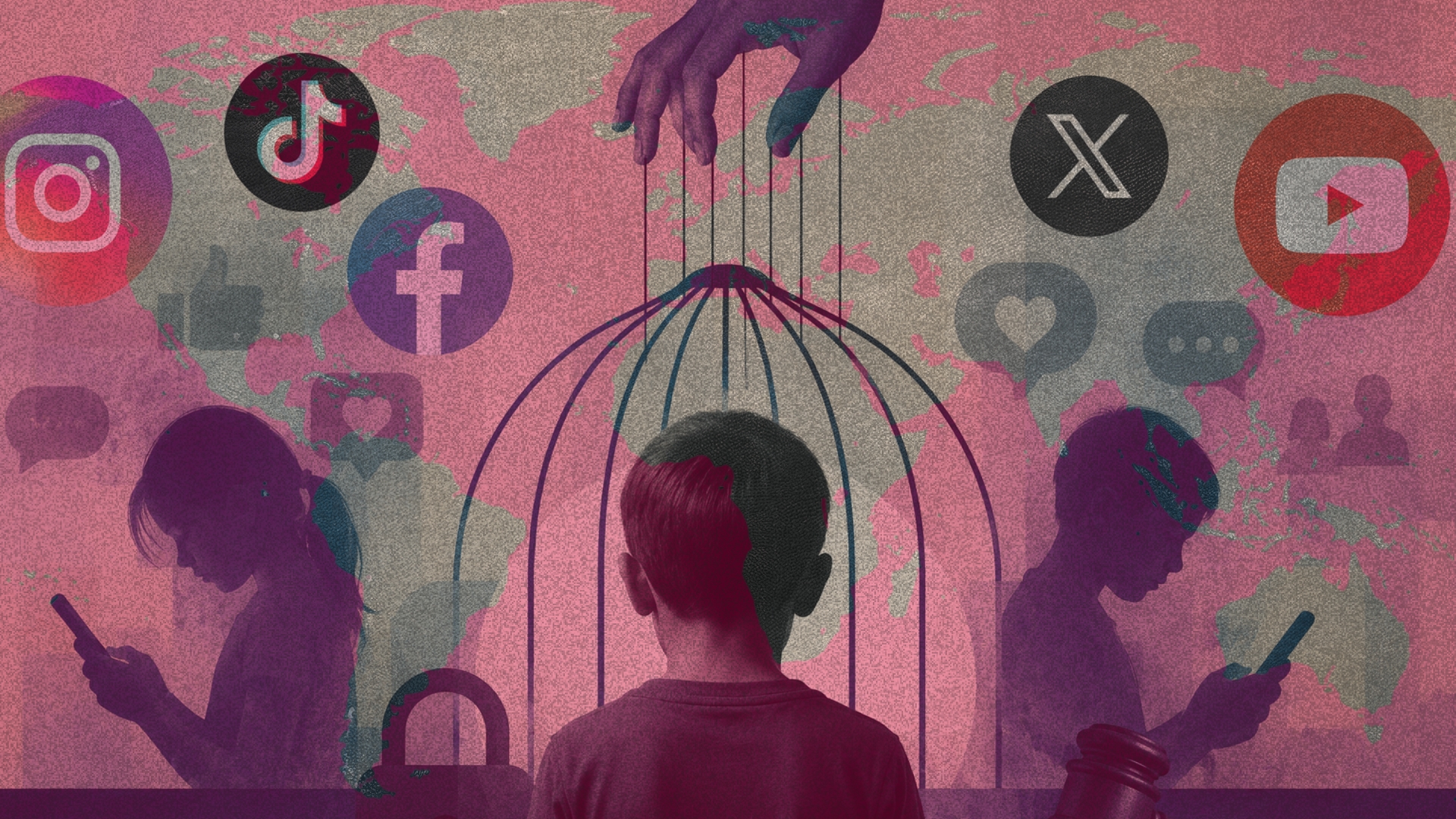
The political novelty is no longer that states want to protect minors online; the novelty is that they are beginning to treat social media as a regulated space, comparable to alcohol, gambling, or school.
France has just marked the latest milestone: Parliament definitively approved on July 21, 2026, a ban on social media access for those under 15. Implementation is planned from September 1 for new accounts and from January 1, 2027, for existing accounts, although the Constitutional Council must still rule before the measure can take effect.

Is restriction the norm?
The category of total restriction is no longer exceptional. Australia led the way with a minimum age of 16 as of December 10, 2025. Specifically, social media companies must prevent minors from creating accounts, deactivate existing profiles, and verify users’ ages. The sanctions fall on companies, not on children or parents.
Indonesia approved Regulation No. 9 of 2026, which prohibits minors under 16 from accessing social platforms and online systems, with age-verification and parental-control obligations. Malaysia has enforced since June 1, 2026, a ban on social media for those under 16 on licensed platforms, requiring official documents and imposing fines of up to 10 million ringgit.
The United Arab Emirates also falls into this category, setting the minimum age at 15 and excluding parental consent as an exception to the ban. Turkey, whose Parliament approved restrictions for those under 15, with age verification and parental controls. Andorra approved a reform to prevent minors under 16 from accessing networks considered to pose risks to development and mental health.
In the state of Florida in the United States, the Online Protections for Minors Act (HB 3) prohibits accounts for children under 14 and requires verifiable parental consent for users aged 14 and 15, although the constitutional litigation remains ongoing.
Regulate, but do not ban
The moderate-restriction approach is the most widespread and perhaps the most legally stable model. Brazil approved Law 15,211 of 2025, in force since March 17, 2026, which requires the accounts of children and adolescents up to age 16 to be linked to a legal guardian, mandates age-verification mechanisms and parental-supervision tools, and provides for fines of up to 50 million reais.
The European Union, through the Digital Services Act and its 2025 guidelines, requires private accounts by default, changes to recommendation systems, limits on features that encourage excessive use, and effective age-assurance methods where appropriate. The United Kingdom does not yet have a general ban in force, but the Online Safety Act has imposed child-protection and age assurance duties since 2025 to prevent access to seriously harmful content.
The United States offers the most fragmented regulatory laboratory: the federal COPPA protects the privacy of children under 13 through parental consent. New York State regulates addictive feeds and nighttime notifications for minors. Texas passed the SCOPE Act, with age registration, parental tools, data limitations, and controls on harmful content.
In Asia, China has had rules in place since January 2024 to protect minors in cyberspace, focusing on data, cyberbullying, and addiction prevention. India notified its data-protection rules in 2025, requiring verifiable parental consent for those under 18. Finally, Singapore has enforced a binding code for major social services since 2023, with enhanced protections for children’s accounts.
Caution and litigation
The global pattern is clear: liberal democracies are moving cautiously because of privacy, freedom of expression, and litigation concerns. More interventionist states prefer direct age limits, while emerging economies combine child protection with digital sovereignty. Latin America is not yet a regulatory bloc, but Brazil is already serving as a regional reference point. Uruguay presents an innovative model that could serve as a template for future regulations, closer to deliberation than prohibition. Since June 2026, a public consultation has been open on children and adolescents, digital environments, and artificial intelligence, with the aim of developing regulation adapted to the new times.
The fundamental dilemma is not whether to regulate, but how to do so without turning protection into surveillance. Good regulation should not mean expelling adolescents from the digital public sphere, but rather requiring platforms to design environments that are less addictive, more verifiable, more transparent, and more accountable. The trend in 2026 suggests that digital childhood is no longer a private matter for families: it has become a frontier of sovereignty, public health, and rights.
*Text originally published in Diálogo Político
Autor

Journalist. Doctor in Political Science from the University of the Republic (Uruguay). Project coordinator in the Regional Program Political Parties and Democracy in Latin America of the Konrad Adenauer Foundation. Coordinator of the Political Dialogue platform.