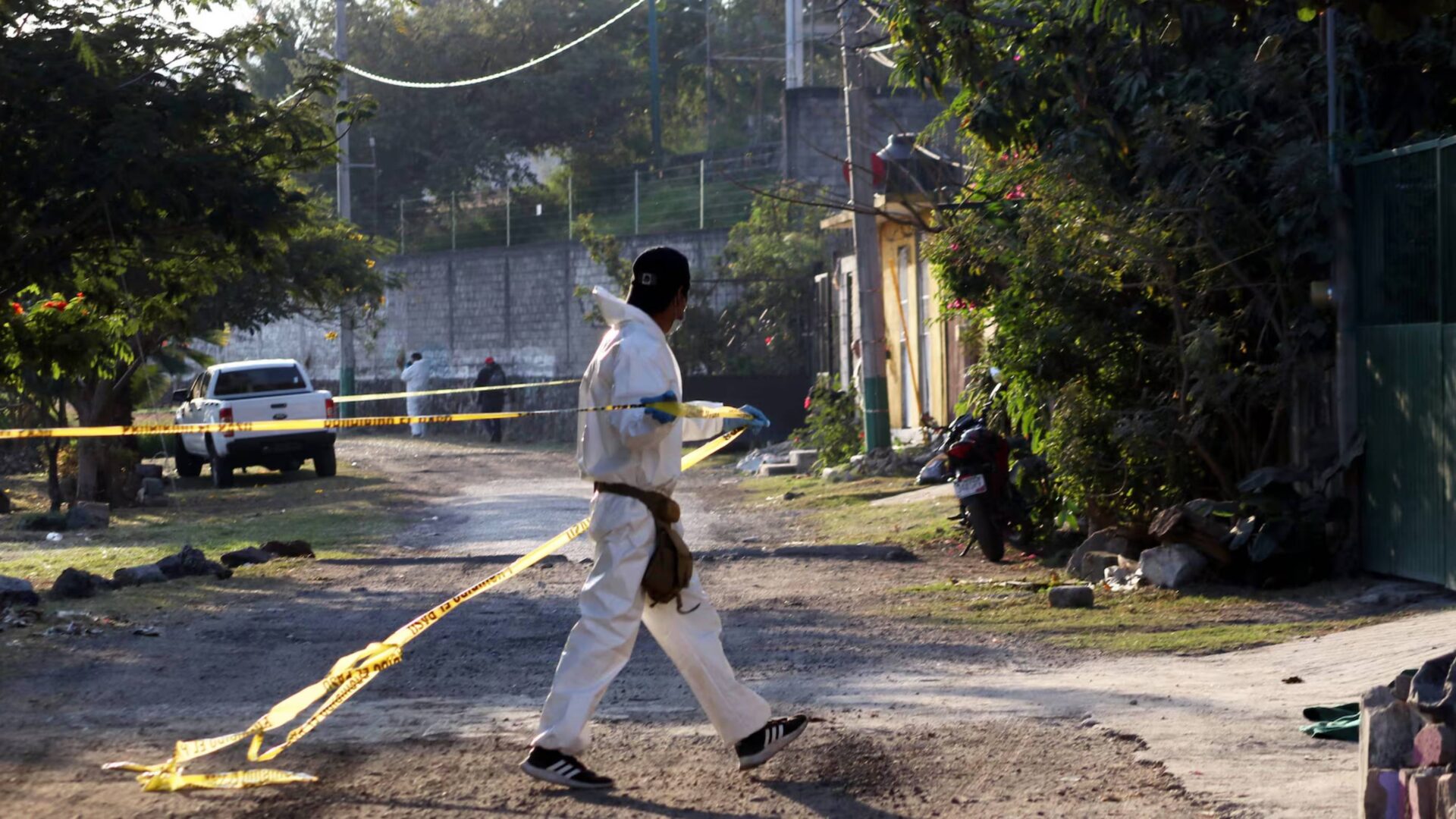
Local and national governments across the region often present statistical reductions in crime as an absolute victory over criminal dynamics. They highlight percentage declines in homicide, theft, or street-level drug trafficking rates as irrefutable proof of effective institutional management. Yet, in the neighborhoods, communities, and peripheral areas most affected by violence, public perception rarely aligns with the optimistic figures produced by government offices. The social control exercised by organized gangs and the dynamics of illicit economies remain alarmingly visible, demonstrating an adaptive capacity that challenges official reports.
In this context, the evident disconnect between desk-based data and the factual reality on the streets raises a fundamental question for public policy design: are state institutions measuring what truly matters for social well-being, or are they simply rewarding the blind achievement of numerical targets? This is the result of a management model that prioritizes measurable figures over criminal governance, social cohesion, and long-term institutional governance.

The core of the problem: Perverse incentives and institutional behavior
Excessive political pressure to meet established targets ultimately transforms statistical measurement—originally intended as a diagnostic tool—into the supreme objective of state activity. Under this bureaucratic imperative, police units and territorial commands face a system of incentives that distorts both their operational conduct and doctrinal orientation.
As legal scholar Gabriel Ignacio Anitua notes in Criminology of Management and the Selectivity of the Penal System, one of the most common dysfunctional practices is the prioritization of mass arrests targeting the weakest links in street-level drug trafficking networks. This approach overwhelms the criminal justice system and artificially inflates arrest and seizure statistics without affecting the financial structure or criminal resilience of the phenomenon in the slightest.
Consequently, the state apparatus tends to favor reactive and highly visible operations over complex, long-term investigations, because media-oriented operations generate immediate headlines for public consumption, whereas dismantling money-laundering networks requires specialized expertise and extended timelines that do not align with the urgencies of the electoral calendar.
These dynamics can be explained through the sociological principles known as Goodhart’s Law and Campbell’s Law, both of which warn that when a quantitative indicator becomes the objective of a policy, it loses its informational value and corrupts the social processes it was intended to measure, thereby facilitating scenarios of institutional capture by purely bureaucratic logics.
A Doctrinal Perspective: Between the Box-Ticking Administrator and the Social Guarantor
The introduction of Anglo-Saxon managerial models into Latin American police forces, inspired by systems such as CompStat and their local variants, transferred the corporate logic of boardrooms into police stations, imposing strict targets, performance dashboards, and hierarchical accountability meetings. This transition has generated a profound doctrinal dilemma regarding the very nature of the security function.
According to law professor Francesc Guillén Lasierra, the question remains whether the modern police officer should act as an administrator tasked with filling boxes in a spreadsheet or as a genuine guarantor of social cohesion, citizens’ rights, and public order. Blind faith in algorithmic models and predictive crime analysis often reproduces historical biases and creates automated feedback loops that systematically criminalize environments marked by structural vulnerability.
The Results-Based Management model, actively promoted by multilateral organizations, has undergone a troubling conceptual distortion in its implementation within the security sector. Rather than strengthening governance, it generates external, top-down pressure that alters the core mission of police institutions. Research on the subject shows that uniformed personnel themselves warn of this dynamic, arguing that it stifles prevention efforts and encourages the proliferation of bureaucratic “micro false results”: subtle distortions that, under the pressure to improve performance dashboards, profoundly undermine the quality of public service delivery.
Likewise, in the northern part of the region, the highly publicized capture of major criminal leaders—such as the arrest of high-profile kingpins in affluent areas—is often presented as definitive evidence of success by security cabinets, particularly in the lead-up to international events such as the 2026 World Cup. However, prospective technical analysis demonstrates that such actions frequently trigger violent succession struggles within criminal factions and peripheral disputes over river routes and transnational synthetic drug markets, ultimately worsening security conditions on the ground. This challenges the popular narrative that equates the capture of an individual with the dismantling of organized crime.
State policy proposals for a systemic evaluation framework
Against this backdrop, it is imperative to design and implement a roadmap aimed at the profound reengineering of public security evaluation systems across the region. First, institutional objectives must be redefined by shifting from the measurement of operational outputs—such as the gross number of arrests made—to the assessment of real impacts on citizens’ well-being and security outcomes.
At the same time, a second step should involve establishing measurement frameworks grounded in criminal intelligence and forensic network analysis, developing indicators of systemic impact that assess the weakening of organized crime’s financial structures and the traceability of its capital flows, rather than merely accumulating arrests of low-level actors who can be easily replaced within illicit markets. To achieve this, national governments must strengthen the technical capacities of their police units, drawing on international standards provided by specialized global agencies.
Third, the sustainability of this reform requires the creation of oversight and governance mechanisms for performance metrics that prevent the political manipulation of official statistics. This entails establishing mixed panels of independent auditors composed of academics and civil society organizations, a model that would ensure transparency through the mandatory publication of methodological guidelines and disaggregated datasets, emulating the good practices developed by local technical security observatories such as the Bogotá Observatory.
If public security continues to be assessed solely through simple indicators that are easy for institutions to produce, state policies will continue to favor short-term cosmetic results at the expense of the structural changes Latin America requires to consolidate legitimate civilian control and effectively protect human dignity.
Autor

PhD in Public Policy from IEXE University (Mexico). Master's degree in Public Security. Academic researcher. Organizational advisor to Mexican police forces and consultant in public and private security.