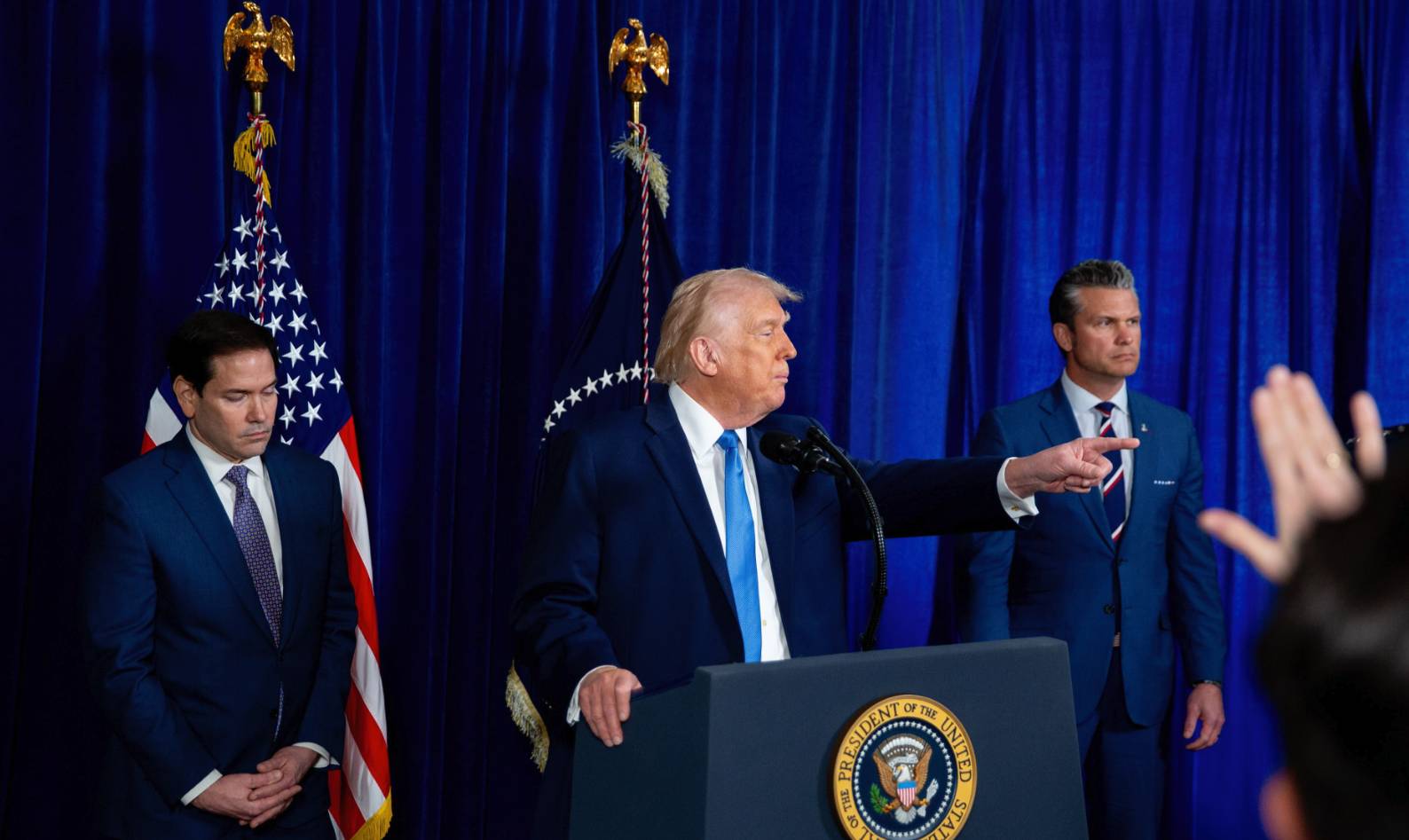
On November 13, 2025, the White House announced, through the publication of four statements, the successful conclusion of bilateral trade negotiations with Argentina, Ecuador, El Salvador, and Guatemala. The respective “reciprocal trade” agreements were ultimately signed during the first quarter of the current year. Beyond the particularities of the concessions granted in each case, the agreements contain numerous recurring trade and economic policy clauses. Initially, these texts received little publicity, as only official English-language versions circulated, presumably pending a favorable opportunity to promote their legislative consideration in each country.
These agreements should be read in light of the turbulent international context, marked by the United States’ rejection of the multilateral order, the consequent imposition of tariff surcharges, and the coercive offer to exempt countries from such surcharges if they agreed to conclude arrangements aligned with U.S. demands.

In this regard, the most significant aspect of these commitments lies not in the exchange of trade preferences, but in certain obligations that these four countries in the region would be undertaking and that reflect some of the United States’ strategic objectives. The administration of Joe Biden had focused its bilateral relations with Latin America on creating favorable conditions for trusted corporations to gain access to the exploitation of critical minerals for information and communications technologies (ICTs), developing supply chains based on enclave economies. By contrast, Donald Trump’s administration is determined to legitimize, through compulsory agreements, the appropriation of Latin American digital services markets.
Present and future of U.S. impositions
The accession commitments undertaken by the aforementioned Latin American countries include the obligation to unconditionally join trade reprisals adopted by the United States against third countries, provide unrestricted access (without exceptions) to their domestic services markets—with particular emphasis on digital services—accept only digital technologies deemed trustworthy by the United States, and allow the unconditional export of data, including personal data.
Under these circumstances, it is legitimate to ask: how viable is this modus operandi? Are there conditions for it to continue indefinitely? Or should we assume that it will soon run its course?
A transitional phase
The multilateral order has been overtaken by transformations in the international economic system, affecting the United States’ driving role. This prominence had been reinforced through control of the world’s leading reserve currency, a privilege commonly referred to as seigniorage. Faced with accumulated strains—productive disinvestment, public indebtedness, and trade deficits—the United States has responded by using all available resources to restore its predominance.
However, the continuation of seigniorage depends on international credibility. It will therefore become unviable if international commitments continue to be undermined. This is the first reason why the United States repudiates the multilateral economic order while stopping short of breaking with it entirely.
At the same time, ICTs affect all forms of productive activity and are irreversibly displacing analog technologies. As is well known, leadership in this global diffusion is currently contested between the United States and the People’s Republic of China, in a dynamic further shaped by the decisive intervention of transnational corporations whose loyalty can never be taken for granted.
It is difficult to imagine a geopolitical fracture leading to a stable division of markets based on unresolved technological incompatibilities. Regardless of their affinities with one power center or another, corporations have demonstrated that they are unwilling to accept the devastation or segmentation of contested markets.
Yet the challenge is not merely one of making systems, models, languages, and electronic devices compatible in order to achieve interoperability. In the struggle for the global market, both big tech companies and states themselves are encountering increasing fragmentation and loss of control in the management of cyber resources.
This situation affects global public goods: the saturation of outer space amid competition over the allocation of frequencies and satellite orbits; the lack of transparency and predictability in the deployment and management of transoceanic fiber-optic cables; and the difficulties faced by the International Seabed Authority in protecting ecosystems from the frenzied search for critical minerals.
Attention should also be paid to cyber espionage, profit-driven irresponsibility, and the proliferation of transnational economic crimes. Projected into the near future, these threats suggest that, without multilateral negotiations, the development of the digital economy and generative AI on a global scale could quickly be jeopardized.
Latin America should get involved
Assuming a future restoration of the multilateral economic order, it would be advisable to take note of Latin America’s priorities.
It is necessary to reaffirm the special and differential treatment won by developing countries in order to extend deadlines and provide greater flexibility in complying with various multilateral provisions. Yet even more urgent is the need to reassert the fundamental principles that define multilateralism itself.
To begin with, the principle of non-discrimination should be guaranteed in both its quantitative and qualitative dimensions. In the latter respect, and using the terminology of the agreements of the World Trade Organization (WTO), this would mean enshrining treatment that is “impartial, uniform, and reasonable.” Reasonableness, in fact, is the criterion that WTO Dispute Settlement System (DSS) arbitrators have consistently applied when examining measures and practices brought before them.
Multilateral support
The four “reciprocal trade” agreements with the United States highlight the absence of an effective multilateral framework. A few examples illustrate this point:
- The WTO only recognizes integration arrangements between developing and developed countries when the negotiated concessions cover substantially all trade between the parties—that is, arrangements classified at least as “free trade agreements” (FTAs). The agreements with the United States, by contrast, are sector-specific and respond to U.S. demands, limiting the possibility of renegotiating compensation in the event of the degradation or violation of agreed concessions.
- FTAs refer to multilateral disciplines—fair trade practices, safeguards, customs valuation, sanitary and phytosanitary measures, and technical regulations—which minimizes the possibility of incorporating provisions incompatible with those rules. By contrast, the agreements with the United States include, for example, requirements to eliminate subsidies that might affect the United States under definitions considerably more flexible than those established multilaterally.
- FTAs include a “forum selection” clause (absent from the agreements with the United States) that allows disputes to be brought before the WTO’s DSS arbitration mechanism, thereby enabling the application of multilateral rules.
- Peripheral countries would be particularly defenseless if the interpretive criterion of reasonableness used in DSS arbitration were delegitimized whenever the United States invoked exceptions such as “national security” or “public morality,” as it has done systematically. By justifying controversial measures and practices on grounds of “reasons of state,” the United States also disregards the principle of non-discrimination.
Peripheral countries are especially vulnerable to the power of big tech companies. This underscores the importance of aligning their legislation with the regulatory frameworks in force in developed countries and then relying on the WTO Agreement on Technical Barriers to Trade to apply them in the ICT sector. This would make it possible to use conformity assessment procedures based on compatible regulations and to coordinate responses to undesirable practices by corporations operating “in the cloud.” The agreements with the United States ignore these instruments, exposing Latin American residents to unpredictable risks.
Autor

Sociologist. PhD from the National University of Córdoba (Argentina). Consultant for international integration and cooperation organizations. Researcher and teacher at the Institute of Latin American Integration of the National University of La Plata.