While George W. Bush made repeated genuflections trying to invent reasons that were at least moderately acceptable or compatible with international law to justify the invasion of Iraq or Afghanistan, Donald Trump did not even feign the gesture. That is a difference. But I do not think it qualifies as marking the distinction between one world order and another. The world order, since there has been order and when there is order, has always been the order of the strongest. International legality has always served as a largely disregarded excuse.
That does not mean that force can afford to dispense with legitimations. All power requires them, even the most despotic. The Venezuelan regime offered ample reasons to make itself hated by the world and by its neighbors. It is an abject regime which, however, is not the most abject that has ever confronted imperial power. The Taliban in Afghanistan were far worse. Saddam Hussein was a criminal far more dangerous and despicable than Nicolás Maduro. In my view, not even in those extreme cases are U.S. police operations justified, because accepting their role as world police means submitting ourselves to the whims of U.S. politicians’ judgment as to who does and does not deserve justice.

The Kurds deserve it against Saddam and against ISIS, but the Palestinians do not deserve it against Israel—another well-known example of a country that never invokes any legality to justify its police operations or openly genocidal ones. Ethically defensible social experiments such as Allende’s Chile or early Sandinismo deserved treachery and betrayal without the slightest consideration for any international law. We are far from an acceptable world order. The central issue, of course, is not what I think, but that the Venezuelan regime was sufficiently discredited worldwide to serve as a moral umbrella for an intervention that also used the excuse of drug trafficking, even though there was not much defensible evidence to incriminate the accused. All force relies on a certain indispensable consensus.
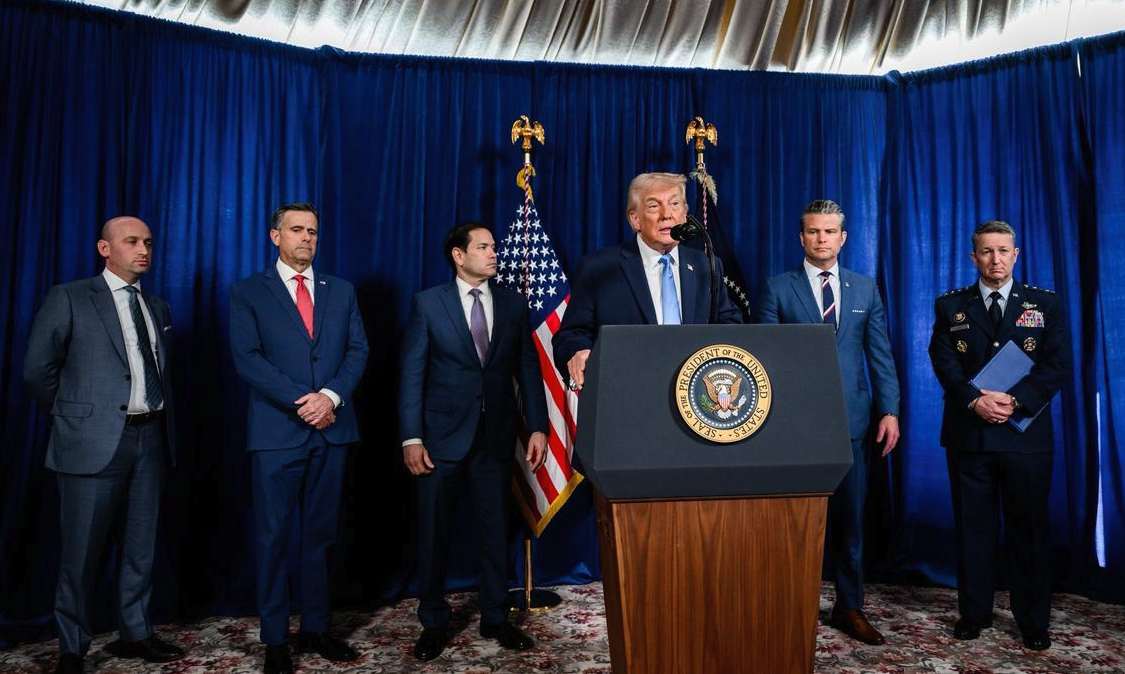
That is why it is incomparably more difficult for Donald Trump to carry out a police operation in Greenland than in Venezuela. He has the same force and the same geopolitical interest. He lacks a minimum threshold of legitimacy. This type of limit has always existed in the world order of the strongest. What is truly new for the world order is the doctrine that each power has an unrestricted right to its areas of influence; that Europe has to fend for itself; that Ukraine is not the responsibility of the United States; that Venezuela cannot decide to become the spearhead of Chinese, Russian, or Iranian influence in the Western Hemisphere. The backyard—“our backyard”—was explicitly invoked by Marco Rubio. Does this really mean that the United States is renouncing its global hegemony in order to accept a hemispheric hegemony from which it could negotiate with other regional powers of equivalent weight?
We do not know whether this change—which, if confirmed, is incomparably more important than contempt for a despicable excuse—will be a permanent policy beyond Donald Trump. We also know that, as always, these policies are the aggregate result of balances of influence and power among different currents of opinion and diverse interests within U.S. politics. And this is a major shift that requires a realignment of very powerful forces. John Bolton found it unacceptable to have to deal with the isolationism that Trump’s character naturally brought with it. Apparently, J.D. Vance is the standard-bearer of the anti-interventionist current, while Marco Rubio seems to want to take the doctrine of the monopoly of force in the Western Hemisphere to its known limits—that is, to Cuba and Nicaragua.
Bolton would be the expression of a neoconservative line that, as far as can be understood, is dominant among foreign policy specialists, centered on debating various options aimed at maintaining U.S. global hegemony against the threats of China and Russia. Bolton considers Trump’s strategy of approaching Putin in order to pull him away from China—something like a re-edition of Nixon’s strategy with Mao in 1973—naïve. His option is to take intervention in Venezuela, and in Iran, to its logical conclusion in regime change.
Beyond visible figures and speculation, what will be central are the various interests of the different collective actors behind each of these figures. What we can say with certainty is that the original isolationism of the MAGA doctrine has been transfigured into a policy of configuring complete imperial hemispheric sovereignty, which once again places Latin America at the center of U.S. strategy for the first time since the fall of the Twin Towers. Whether it will remain stable or prevail within the complex forces of U.S. politics, we do not know.
Is this a new world order? The cries of pain we hear everywhere may be labor pains. Or perhaps they are the traditional victims of the old order, which still refuses to yield.
Autor

Historian. PhD in Humanities from the Centre for Latin American Research and Documentation (CEDLA), Amsterdam. Professor at Universidad Andina Simón Bolívar and member of the Comisión de Vivencia, Fe y Política.