There are stories that, on their own, explain the magnitude of the institutional tragedy a country is experiencing. Not because they are exceptional, but precisely because they reveal what has become routine under a political regime like Venezuela’s.
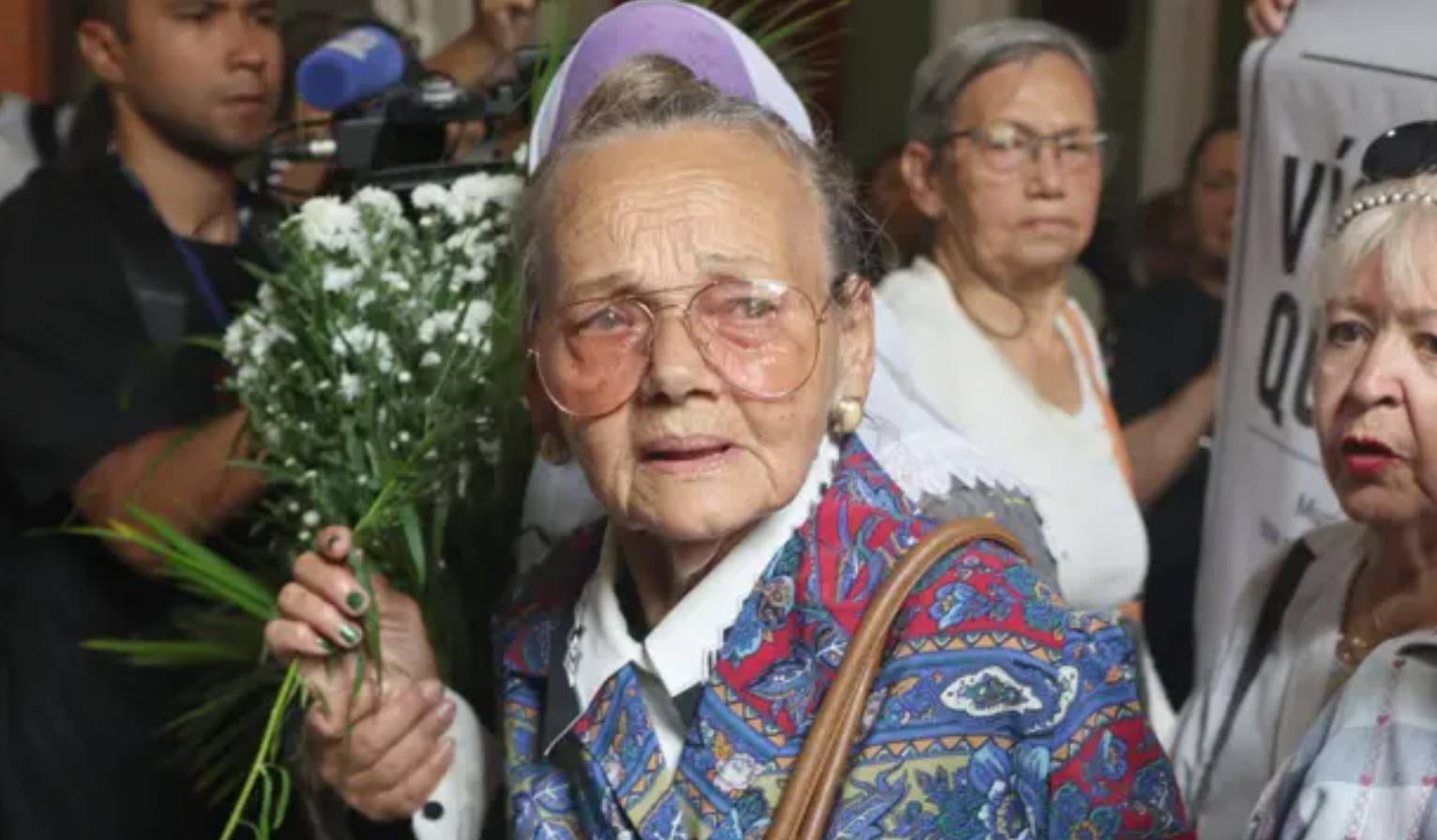
The story of Victor Hugo Quero Navas and his mother, Carmen Navas, is one of those stories. Over the past month, few news stories have had as much human impact in Venezuela as this one. Not only because of the death of a political prisoner while in state custody (something that, unfortunately, no longer surprises many Venezuelans), but because of the silent cruelty of everything that happened afterward.

Because this is not only the story of an imprisoned man. It is the story of an elderly mother who spent months searching for a son whom the authorities already knew was dead.
Victor Hugo Quero Navas was a widowed father who worked as a merchant. According to relatives and people close to him, he did not belong to any political party nor did he actively participate in partisan organizations. Nevertheless, on January 3, 2025, he was arrested on charges of treason, conspiracy, and terrorism, and from that moment onward he spent months disappeared within Venezuela’s repressive system. His family did not know for certain where he was, could not maintain contact with him, and had no information about his health condition. They also lacked clear and consistent information regarding his legal status or even the detention facility where he was being held.
From the moment of his arrest, the family entered a labyrinth of contradictory information, denials, conflicting accounts, and institutional silence. At times, authorities indicated a possible location; at others, they provided no confirmation at all. There was never any real certainty about where Victor Hugo was, under what conditions he was being held, or what was actually happening. It was then that Carmen Navas’s long pilgrimage began.
At 81 years old, Mrs. Carmen did what any mother would do: she refused to accept the silence. She visited detention centers in Caracas, persisted before authorities, and sought answers wherever someone was willing—or pretended to be willing—to listen. She went to prisons such as El Rodeo I, knocked on doors, made public complaints, spoke to journalists, and sought assistance from civil society organizations.
In return, she received evasions, indifference, and, according to public complaints, even intimidation by colectivos (organizations, some of them armed, created by Chavismo to defend its political project and exert social control over Venezuela’s working-class neighborhoods).
“He’s not here.” “Why do you keep insisting?” Imagine, for a moment, what it means to hear those words repeatedly while searching for an imprisoned child. Now imagine something even worse: doing all of that without knowing that the state already knew the answer.
On May 7, an official statement from the Ministry for the Penitentiary Service revealed that Victor Hugo Quero had died on July 23, 2025—that is, nearly ten months before the family was notified—and that he had been buried in a cemetery near Caracas.
The official explanation borders on the unbelievable: Victor Hugo allegedly failed to provide adequate information regarding his family background. An explanation that is difficult to sustain given the public attention the case had attracted for months thanks to Carmen’s tireless efforts, supported by the independent press and human rights organizations.
And there is an even more disturbing detail in this story. Weeks before the confirmation of his death, Mrs. Carmen requested that her son be granted the benefits of the so-called Law of Amnesty for Democratic Coexistence, approved by the Chavista-controlled Parliament in February. The request was denied because, according to the authorities, Victor Hugo did not meet the legal criteria. Yet at that time, according to the official timeline later released, the State already knew he was dead.
How does one explain that to a mother? How can it be institutionally justified that an amnesty request is denied for someone who has already died, while the family continues desperately searching for answers?
This is not merely a matter of state inefficiency. It is not simple bureaucracy. What this story reveals is something much deeper: the moral deterioration of Venezuela’s institutions.
Because there is something particularly devastating when a State ceases to treat citizens as human beings and instead manages them through silence, opacity, and fear.
And then came an even more painful ending. On May 17, ten days after the announcement of Victor Hugo’s death, Venezuelans learned of the death of Carmen Navas. Relatives report that she initially had no particularly serious medical condition. But those who followed her journey say that after Victor Hugo’s second burial, Mrs. Carmen gradually faded away.
The tip of the iceberg
Victor Hugo Quero’s case is not an isolated episode. Nor is it an exception within Venezuela’s repressive system. It is, in fact, merely the tip of a much deeper, darker, and more painful iceberg.
According to figures from the human rights organization PROVEA, Victor Hugo became the 27th political prisoner to die while in Venezuelan state custody since 2024. Twenty-seven lives cut short while under the direct responsibility of the state. Twenty-seven families marked by pain, impunity, and the absence of answers.
And like Carmen Navas, many Venezuelan families today continue searching for news about detained relatives, deeply alarmed by the possibility that Victor Hugo’s story may not be an exception, but rather a warning of what could happen.
According to data from the organization Foro Penal, more than 14,000 people have been detained in Venezuela for political reasons since 2014. Of that total, as of May 19, at least 429 remained deprived of their liberty.
These are people trapped in uncertainty, unsure whether they will ever leave detention centers, despite repeated announcements made in recent days by interim dictator Delcy Rodríguez.
An uncertainty produced by a justice system that, for decades, has been undermined by the Chavista regime and instrumentalized to subjugate, torture, and, in many cases, eliminate innocent citizens. A system in which the fate of political prisoners, depending on their public profile, has come under the control of certain high-ranking Chavista officials. A system in which many relatives have refrained from making public complaints or seeking support from human rights organizations out of fear of retaliation.
Beyond all of this, it is also important to remember those who do not have family members like Mrs. Carmen capable of making their situations public. People who died in prisons overwhelmed by overcrowding, unsanitary conditions, disease, and hunger.
And that uncertainty persists even amid contradictions in the behavior of Chavista leaders. While state security apparatuses continue to be used to contain protests by the elderly, students, and workers, journalists continue to be intimidated, and prominent Chavista figures continue publicly expressing their determination to remain in power despite the country’s growing economic, institutional, and social deterioration. All of this unfolds before the eyes of the international community.
Carmen’s Legacy
It is difficult to know how many people will still remember Carmen Navas’s name a few months from now. But I believe Venezuelans should not forget her.
Because her story says a great deal about the country Venezuela has become: a place where an 81-year-old mother had to turn the final months of her life into a desperate pilgrimage in search of her son, unaware that he was no longer among the living.
But the story of Carmen Navas and Victor Hugo Quero also leaves us with another reminder—perhaps the most important one in such difficult times: that courage and love continue to possess extraordinary mobilizing power in the struggle against injustice, even when they come from the most defenseless among us.
Mrs. Carmen did not resign herself to silence. She did not accept indifference. She did not stop searching for answers when so many others would already have lost the strength to continue. Her voice became, albeit unintentionally, the voice of many others in Venezuela who continue searching for their children, their truth, and their dignity.
May the memory of Carmen Navas serve not only as a denunciation of the cruelty that has marked Venezuela’s recent years, but also as an inspiration to rebuild a country where so much suffering is never again required to demand justice.
Because Venezuela will need more people like Carmen Navas: people with the courage to confront fear, insist on the truth, and fight for justice and democracy, even when everything seems impossible.
Autor

PhD in Public Policy, Strategies, and Development from the Federal University of Rio de Janeiro (UFRJ). He is the founder and president of the NGO Venezuela Global, based in Rio de Janeiro, Brazil.