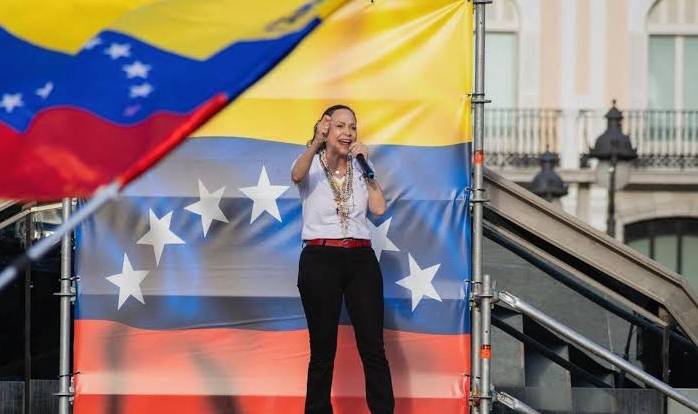
Amid Venezuela’s complex political reality, there is one voice that can no longer remain on the margins of discussions about the country’s future: that of the diaspora. More than 8 million Venezuelans are now scattered across the globe, forming one of the largest migrations in contemporary Latin American history. They seek to exercise their legitimate right to participate in Venezuela’s democratic reconstruction.
The path to including the diaspora in the political process
According to a comparative analysis of the institutional frameworks governing the representation of other diasporas in the region, a fundamental step toward ensuring effective parliamentary representation for the Venezuelan diaspora would be to implement a constitutional reform through an amendment.

A reform based on a minimum principle of proportional representation should recognize the right to elect a specified number of members of parliament. To achieve this, an overseas electoral district would need to be established. This district should be precisely defined, considering the size of the Venezuelan population living abroad. If such a constituency were created, it would be larger than any electoral district within Venezuela. For this reason, it would be necessary to establish criteria guaranteeing proportional voting. In fact, the current legal framework already supports external voting, as set out in the Organic Law on Electoral Processes (LOPRE).
Therefore, a proposal of this nature would not require a full constitutional reform, since it would not alter the Constitution’s fundamental principles, but rather a constitutional amendment modifying specific articles to include the right to representation in the National Assembly. Nevertheless, this alone would not be sufficient, and the right would need to be explicitly developed through an organic law.
To ensure the effective participation of diaspora representatives in the legislature, the Rules of Procedure and Debate of the National Assembly should also be amended to allow remote participation and the integration of the new lawmakers representing the overseas constituency.
Registering the diaspora
In addition, the Organic Law on Identification should be amended to allow for the identification of Venezuelan citizens residing abroad, as well as the issuance of documents enabling them to regularize their status. The law already establishes that the passport is the document through which Venezuelans abroad are identified, meaning it would be sufficient for voting from overseas.
Within the framework of the Organic Law on Electoral Power, the powers of the National Electoral Council (CNE) should be expanded to guarantee the election of representatives of Venezuelans abroad, and a Regional Electoral Office Abroad should be created for each overseas constituency.
It would also be necessary to amend the Organic Law on Electoral Processes to allow Venezuelans living abroad to run for elected office, specifically for seats in the National Assembly. At present, the Organic Law on Electoral Processes contains a legal gap, as it grants the CNE the authority to issue regulations governing elections abroad. However, it does not provide for a special overseas constituency, nor does it establish an electoral board that should be represented by the diplomatic corps.
The diaspora in the National Assembly
The representation of the Venezuelan diaspora in the National Assembly would entail changes to the country’s political composition. This would require not only a cultural shift within the internal structures of political parties but also institutional reforms. Accordingly, amendments to the Law on Political Parties, Public Meetings, and Demonstrations would also be necessary, as the current legislation limits the presence of political parties to the national territory.
Although these reforms are closely linked to the National Electoral Council, they should also involve other institutions, including the Office of the Comptroller General of the Republic, the Office of the Attorney General of the Republic, and the Administrative Chamber of the Supreme Court of Justice. Likewise, overseas representation would require changes to the internal organizational structures of political parties.
Ultimately, the most viable proposal for ensuring the representation of the Venezuelan diaspora in the National Assembly would be a constitutional amendment explicitly establishing both the right to vote from abroad and the creation of special overseas constituencies for National Assembly elections.
To make this proposal a reality, the study outlines five key recommendations that civil society and political parties should promote. First, forge a political agreement on integration and political participation. Second, establish an advisory council on migration and refugees recognized by the Venezuelan state. Third, create a Special Commission within the National Assembly to address issues concerning the diaspora. Fourth, encourage voter registration. And fifth, promote the renewal of international agreements that facilitate regular, orderly, and safe migration.
The sheer size of the Venezuelan diaspora makes it imperative for the state to develop policies with clear steps and procedures to ensure this population’s effective participation in a democratic transition. Such measures could also contribute to rebuilding the country’s institutions after decades of institutional deterioration.
Autor

Journalist

Lawyer, specialist in constitutional law and administrative function and specializing in human rights and international protection, combines experience in advising on international and national processes, democracy and leadership training.