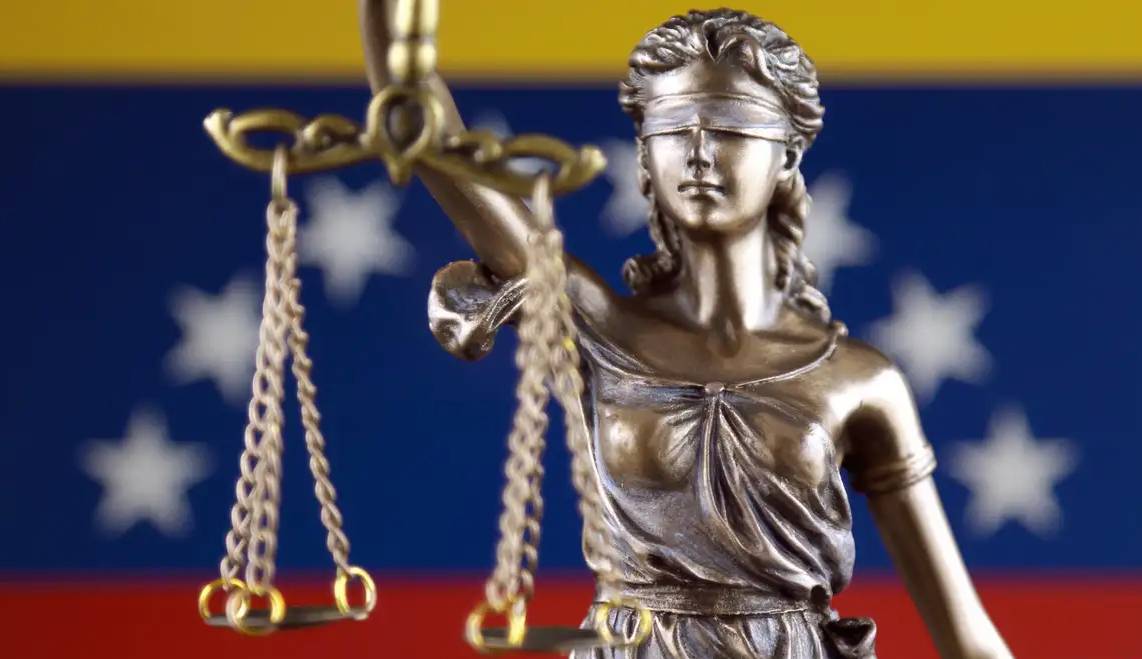
On August 12, the negotiating table agreed—and made it public—to move forward with the transformation of Venezuela’s justice system. Since then, we have taken concrete steps to turn that commitment into an institutional reality. The recent reform of Article 65 of the Organic Law of the Supreme Court of Justice is one of them: the Judicial Nominations Committee will consist of 23 members, 12 representatives of civil society and 11 members of the National Assembly. This is no minor change. Civil society is now taking a central role in a decisive process for Venezuelan justice. If for years we demanded that the selection of justices cease to be a closed process subject to political control, now that it is beginning to open up, we must participate. The time has come for the rule-of-law country and civil society.
Greater citizen participation must translate into less partisan control. One of the greatest harms inflicted on our judicial system has been the political appropriation of its institutions. The selection of justices came to be perceived as a matter reserved for those in power, rather than as an institutional responsibility subject to the Constitution. Reversing that situation requires changing the rules, but also recovering a legal culture grounded in independence, merit, integrity, and service to the Republic.

That is why what is happening matters. The negotiations are beginning to produce concrete and verifiable institutional and legal changes. These are not merely statements of intent. We are creating the conditions for a new, open and credible nominations process that can pave the way for the renewal of the Supreme Court of Justice.
But no legal reform can, by itself, produce the justice Venezuela needs. Institutions are also defined by the people who embody them. And our country retains, both within and beyond its borders, an extraordinary reservoir of legal professionals: in universities, bar associations, academies, law firms, and courts. Also among the many Venezuelans in the diaspora who have continued to study, teach, and practice law with excellence. We must call upon all of them.
We want those who have the credentials to serve as justices to consider putting themselves forward. We need universities, bar associations, and academies to get involved; to help identify candidates and examine their records; for civic organizations to observe the process; for professors, lawyers, judges, and law students to participate in the discussion. What is at stake is far too important to leave exclusively in the hands of those of us sitting at a negotiating table.
There is, moreover, one non-negotiable requirement: strict compliance with the Constitution. Article 263 cannot be reduced to a mere formality. Integrity, recognized legal expertise, professional experience, and the other constitutional and legal requirements must be examined rigorously. Venezuela does not simply need to replace some justices with others. It needs to restore the judiciary as a republican institution. And to achieve that, we have a very concrete task ahead of us. At the end of the day, we need to compile a list of at least two hundred men and women capable of assuming the highest judicial responsibilities of the Republic. Two hundred true jurists. Men and women in robes, with competence, experience, and integrity, but, above all, inwardly free. People who do not owe their conscience to a political party, an economic group, or any other power. People who understand that a justice does not serve a faction: a justice serves the Constitution and the people of Venezuela.
We have to find them. In Caracas and throughout the regions. In public and private universities. Among those who have served as judges with dignity and those who have built respectable professional careers. Within Venezuela and in the diaspora. I am convinced that this moral and legal reserve exists. We must bring it to light.
Of course, all of this requires transparency. The country must know who seeks to represent civil society on the Nominations Committee, what their credentials are, and how they were selected. And it must subsequently know who seeks to serve on the Supreme Court of Justice, what their professional record has been, and why they meet the requirements of the Constitution and the law. Public scrutiny must accompany the process.
What has been achieved so far is only a first step. The objective is much greater: to renew the Supreme Court of Justice and move toward an independent judicial system capable of protecting citizens’ rights, guaranteeing electoral integrity, and once again serving as an effective check on power.
That task, I insist, does not belong to a delegation or a negotiating table. It belongs to the country. We can help open paths and change the rules. But now it is up to the rule-of-law country and civil society to walk through those doors, participate, and assume their responsibility.
Bolívar understood that republican institutions cannot be sustained without citizens capable of embodying their principles. Ultimately, there is no Republic without republicans. Nor will there be a new justice system without true justices: free men and women, clothed in the dignity of the judicial robe, servants of the Constitution and the people of Venezuela.
The rules are beginning to change. Now we need the republicans capable of bringing them to life.
Autor
Deputy of the Venezuelan National Assembly elected in 2015. Member of the negotiating delegation in the process promoted by Secretary of State Marco Rubio.