The political events of early 2026 in Venezuela gave Venezuelans back the hope of living in a democracy again and recovering the living conditions of a country that, a few decades ago, was considered one of the most prosperous in Latin America.
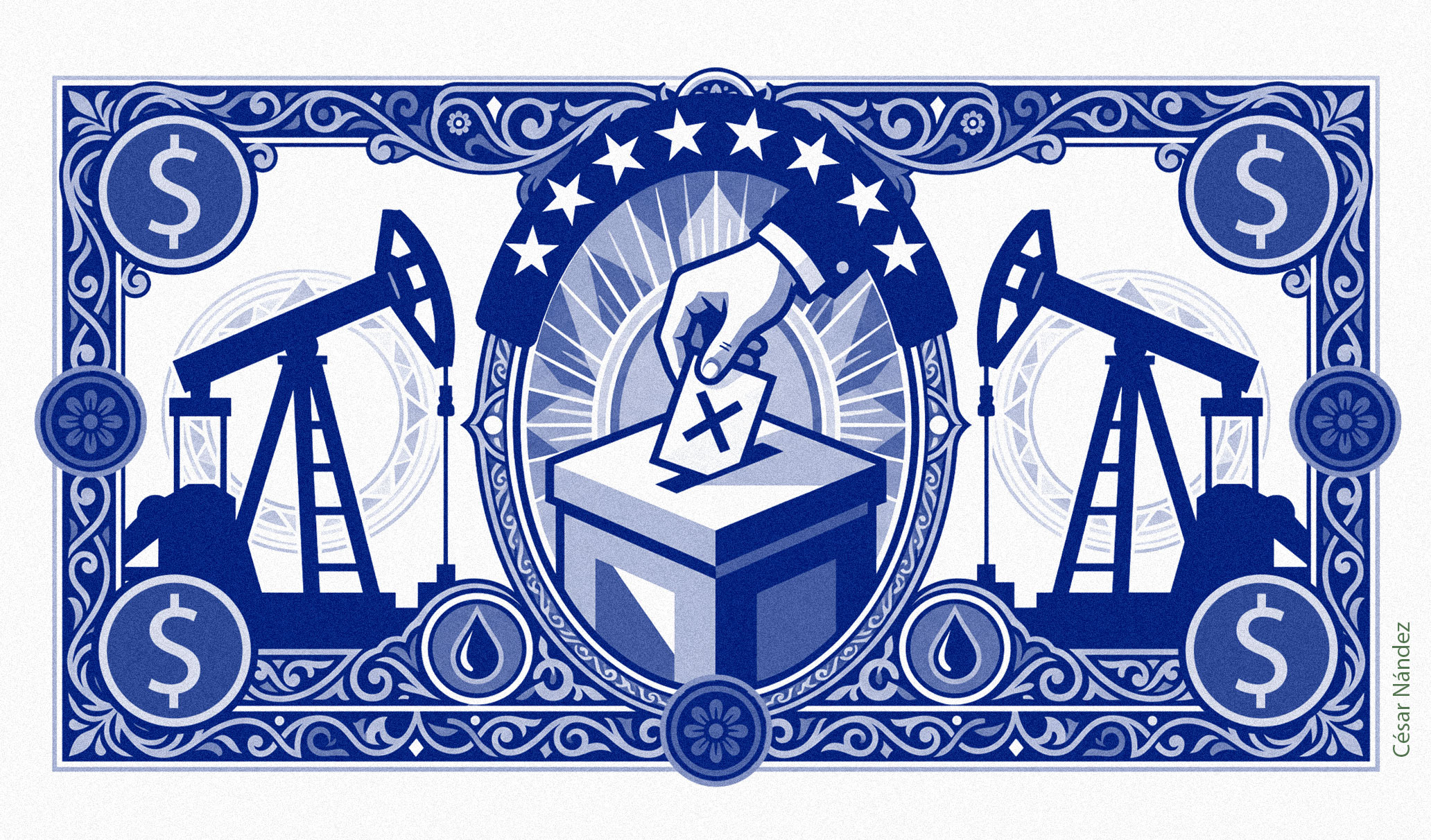
In the economic sphere, this expectation seems to find support in a favorable disposition of society toward the transformation of the productive model. As confirmed by the latest IPSE Institute survey, conducted between June and July 2026, the majority of Venezuelans support reforms that allow for greater private participation in the oil industry, the country’s main economic activity. According to the study, the majority does not identify relevant risks in this opening and believes it could increase State revenues, expand transparency, and reduce corruption.

In the international arena, this disposition finds a particularly relevant opportunity. The growing instability of energy geopolitics and the United States’ concern for its long-term energy security coincide with Venezuela’s need to attract capital, technology, and entrepreneurial capacity to rebuild its oil and gas industry. After decades of deterioration of PDVSA and policies that compromised the sector’s productive capacity, the participation of large international companies will be fundamental to recover hydrocarbon production in the country.
The problem is that this opportunity presents itself in a country marked by a profound institutional, economic, and political legacy of Chavismo.
A past that cannot be erased
Venezuela accumulates decades of complex institutional deterioration, a prolonged socioeconomic and political crisis, as well as the general collapse of public services. In the oil sector, a collapse in production occurred after years of disinvestment, highly deficient management, the deterioration of infrastructure, and the deterioration of the investment climate.
In the euphoria of the oil nationalism of Hugo Chávez’s governments, it is impossible to forget how the contribution of multinational companies to the recovery of hydrocarbon production in the country and to the viability of production in highly complex areas, such as the “Orinoco Belt,” was disincentivized.
The impact that the unilateral breach of already signed and operating contracts, as well as the expropriation of the assets of companies such as ExxonMobil and ConocoPhillips, would generate on the trust in Venezuelan institutions was also ignored.
The projects developed by these companies involved high capital costs, long maturation periods, and technical capacities that, in some cases, were advanced for the sector’s standards at that time.
The result is an unattractive business environment for private investors, mainly due to the perception that there is no legal certainty in the country to invest in long-term projects.
Reforms in a context of opacity and without legitimate authorities
Venezuela is attractive because it has a lot of oil, of course. The country possesses the largest proven reserves in the world and enormous volumes of known resources that, with appropriate regulatory incentives, could attract various companies in the sector.
However, the way in which the interim regime, in close coordination with the United States, has managed the reforms has generated great concern and questioning about the measures adopted.
The reform of the Organic Hydrocarbons Law opened an unprecedented window for private participation, but left concerning elements due to the preservation of broad decision-making prerogatives of the State.
Although the reform established general parameters for the fiscal regime, it also preserved a margin for certain economic and contractual conditions to be defined or adjusted according to the characteristics and viability of each project. This flexibility may be necessary to make investments viable in areas with different levels of risk and complexity, but it also increases the importance of predictability for investors.
A relevant part of the negotiations for the assignment of assets and areas has been carried out bilaterally, with little public information on the criteria established for the selection of partners and the agreed terms, without, in practice, a competitive and publicly transparent process being systematically observed.
The legitimacy of the actors carrying out the reforms continues to generate uncertainty among analysts and investors. The presence, as advisors or interlocutors, of business figures who were at the center of investigations and controversies related to corruption, as well as the participation of little-known companies or those without a consolidated track record in the sector, also fuels concerns about the governance standards that will accompany the industry’s opening.
On the other hand, distrust persists regarding the true intentions of Delcy and the other leaders of the authoritarian regime after decades of persecution and stigmatization of the private sector.
For these reasons, the most recognized companies in the oil sector still remain cautious, evaluating the risks of entering or expanding their operations in the country. The contrast between the announcements of new investments and their effective formalization also deserves attention. Up to the moment this column was written, only one new Productive Participation Contract (CPP) has been formalized under the new legal framework.
Added to this are the announcements of an agreement that would grant the United States majority control over more than 65 billion barrels of Venezuela’s proven oil reserves. Presented by the US Government as a partnership with private companies to develop 17 oil fields, the agreement still lacks detailed public information about its economic, legal, and operational terms.
The recovery of the oil industry cannot repeat the mistakes of the past
If the objective is truly to rebuild the Venezuelan oil industry on sustainable foundations and contribute to the energy security of the United States and the Western Hemisphere, the current situation demands that the actors involved prioritize the reinstitutionalization of the country, instead of accelerating reforms and concluding far-reaching agreements without the necessary institutional and legal bases to sustain them being fully established.
To achieve this, it is necessary to advance rapidly in the renewal of public powers and entrust the management of substantial reforms to authorities endowed with democratic legitimacy to carry out these initiatives.
Likewise, it is fundamental that policies of opening to private capital be conducted by competent institutions and in accordance with the sector’s best transparency practices. The experience of countries like Brazil and Colombia demonstrates the importance of having specialized regulatory institutions, endowed with autonomy and technical capacity, and guided by transparent procedures to implement oil policy guidelines.
Under the management of serious institutions, regulation must guarantee that the assignment of assets or new areas to the private sector is carried out through competitive processes, restricted to companies that demonstrate technical and financial capacity. The selection should privilege proposals capable of maximizing benefits for the country, through royalties and other forms of government participation, within a competitive fiscal regime.
Finally, the fundamental parameters of the fiscal regime and the other essential conditions of the contracts must be clearly defined, formalized, and known by investors prior to decision-making, minimizing the margin for subsequent discretionary interpretations.
If the objective is for Venezuela to once again become a relevant energy partner and recover its position in the international market, the reconstruction of its industry must start from a simple, yet fundamental lesson: without reliable institutions, there will be no sustainable investments. And, without democracy, legal certainty, and transparency, the recovery of oil production runs the risk of being run over by the resurgence of the ghosts of the past.