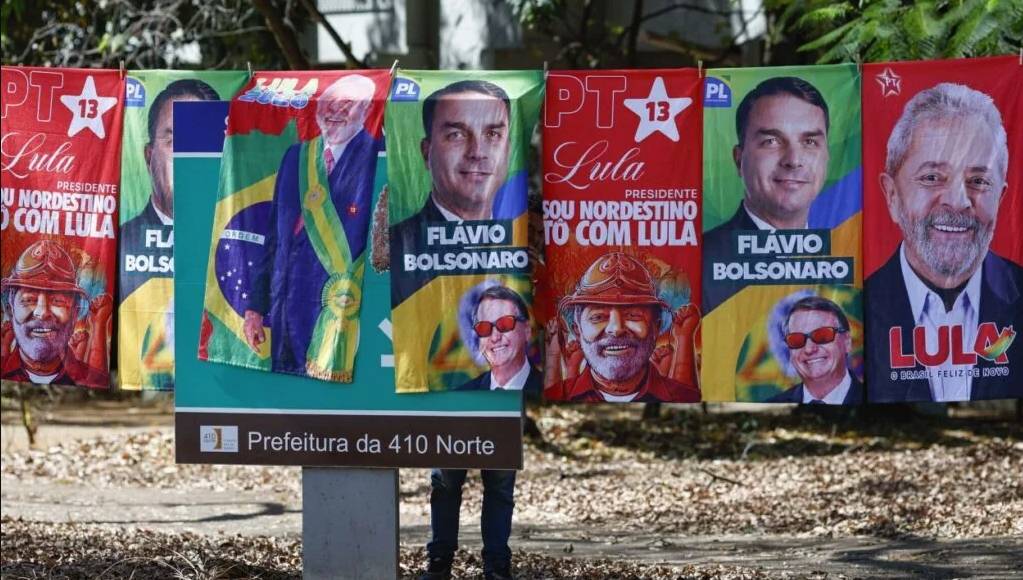
Few electoral events match the scale of Brazil’s general elections. On October 4, more than 158 million Brazilian women and men will be eligible to go to the polls. After all, Brazil has the largest electorate and economy in Latin America and one of the largest in the world, making the outcome crucial for the region’s democracy and geopolitics.
But beyond its scale, what Brazil will be putting to the test is something deeper. After several years of democratic erosion followed by a process of institutional recovery, what remains to be seen is whether a highly polarized democracy can preserve the integrity of its institutions, process intense political conflicts through the ballot box, confront the challenges and onslaught of disinformation and, above all, maintain citizens’ trust in the rules governing democratic competition.

Ensuring electoral integrity requires ensuring the procedural quality of electoral processes in accordance with the most demanding international standards. But, as we have observed in elections around the world, rigorous compliance with every stage of the electoral cycle does not prevent unsubstantiated narratives of fraud from spreading or the electoral process and electoral authorities from coming under attack. Questioning the process and its results has become a recurring feature of political competition, deepening climates of distrust and undermining the legitimacy and acceptance of electoral outcomes.
Brazil has a political system with a highly institutionalized electoral justice system, decades of experience in administering elections, and an electronic voting system subject to multiple verification and auditing mechanisms. Yet public trust in this system is far from unanimous. In February 2026, the Genial/Quaest poll showed that 53% of Brazilians trusted electronic voting machines, while 43% said they did not. Transparency, accountability and strengthening public trust are therefore essential dimensions of protecting electoral integrity and Brazilian democracy itself.
A second challenge adds to this tension. Brazil is the Latin American country that has made the greatest progress in regulating the use of artificial intelligence in electoral processes. The rules adopted by the Superior Electoral Court establish transparency requirements for synthetic content, restrictions on the use of deepfakes, and specific responsibilities for political actors and digital platforms.
The 2026 elections will be the decisive moment when this regulatory leadership must translate into effective implementation. We will see to what extent these advances succeed in strengthening the capacity of authorities and platforms to meet their obligation to maintain a secure electoral-integrity ecosystem for candidates, political parties and citizens.
Brazil’s efforts to regulate politics in an era of digitalization, polarization and artificial intelligence have attracted the attention of the entire world. The Superior Electoral Court has reported that observers, experts and officials from more than 80 countries and multilateral organizations will participate in different stages of the process. The Organization of American States will deploy more than 90 observers from 23 nationalities across more than 20 states and the Federal District, providing an opportunity to understand how a large-scale country simultaneously confronts many of the dilemmas common to modern democracies, including toxic polarization, distrust, technological transformation, challenges to institutions, and the need to respond to social demands.
All of this is taking place, moreover, in an international context that is less favorable to democracy. International IDEA’s 2026 Global State of Democracy report records that, although stagnation is the prevailing trend, 98 countries experienced setbacks in at least one dimension of democratic performance between 2020 and 2025, while Credible Elections deteriorated in 32 countries. Against this backdrop of decline, Brazil stands out as an example of democratic recovery, with improvements in eight factors over the past five years, making it the country with the greatest progress in the report.
The way Brazil navigates this decisive test for democracy under the scrutiny of Latin America could become an important reference point for the region’s future. An election with integrity, whose results are recognized in accordance with constitutional rules by the competing actors, would provide important evidence that democratic recovery is possible and that processes of erosion are neither necessarily inevitable nor irreversible.
Autor

Secretary general of IDEA International since 2019, member of the Inter-American Dialogue, and expert in democratic governance. He was vice president of Costa Rica, minister, senior official of the OAS and academic. Abogado, held degrees of Essex and Oxford.

Regional Director for Latin America and the Caribbean at the International Institute for Democracy and Electoral Assistance (International IDEA). PhD in Political Science from the University of Wisconsin-Madison, United States. Former Minister of Justice and Human Rights of Chile.