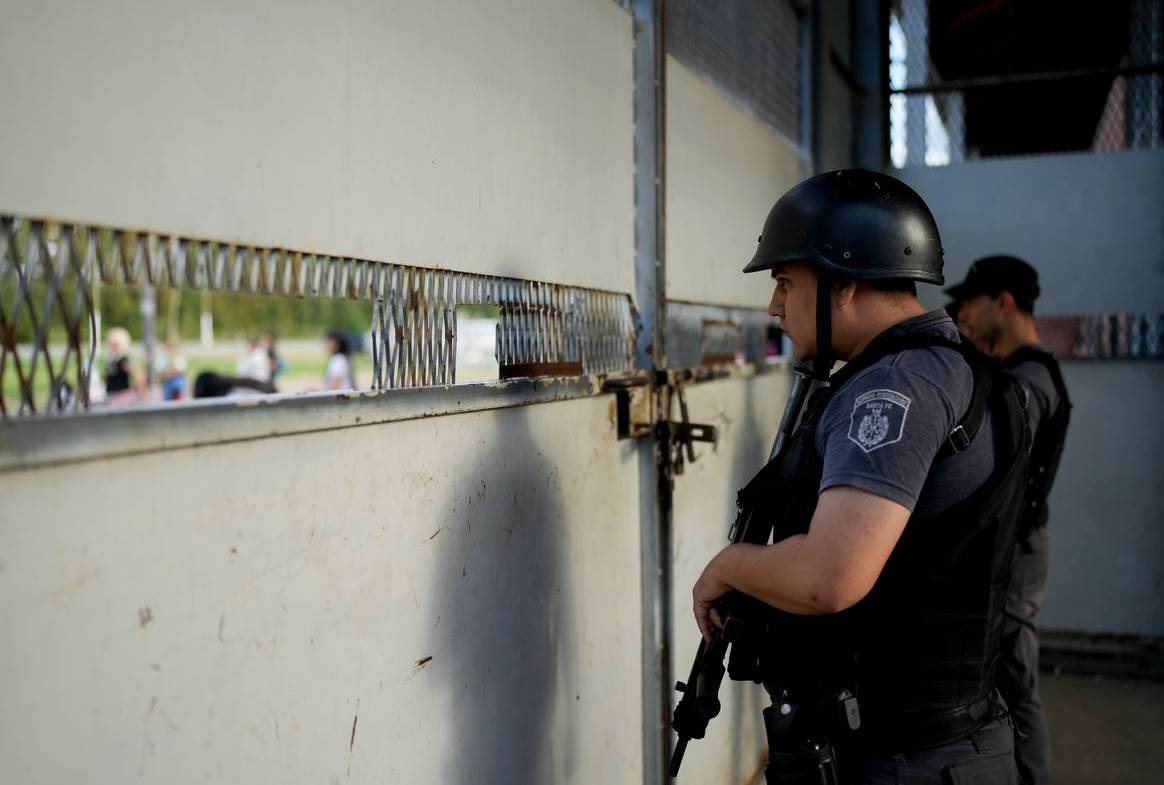
The dramatic assault and hostage-taking at a television channel in Guayaquil in 2024, the assassination of presidential candidates in Colombia and Ecuador, as well as prison riots and escalating homicidal violence, are among the most visible expressions of the impact of crime in Latin America. Yet alongside these manifestations that receive extensive media coverage, organized crime—and various forms of illegality—are also transforming, in more concealed ways, the social, economic, and political life of Latin American societies. What decades ago seemed like a peripheral phenomenon, confined to drug trafficking in geographically limited areas such as the Northern Triangle (Mexico and Central America), Colombia, and the Anglophone Caribbean, has now spread across dozens of illicit economic sectors—from human trafficking and illegal mining to cybercrime and corruption—reaching every corner of the continent.
According to recent estimates, more than 100 million people in the region live under systems of criminal governance, where illicit organizations seek to replace the state. These are geographic areas—including entire cities or sectors of large Latin American urban centers—where basic services, the maintenance of order, and the administration of justice are not under the control of state institutions, but of criminal groups. A phenomenon that does not always manifest in rising homicide rates; in fact, the recent report “Crime and Democracy in Latin America” by International IDEA warns that criminal enterprises often operate more effectively without visible violence, as it is more profitable.

Illicit and informal economies account for more than 20% of the region’s GDP, granting criminal groups economic and coercive power that directly competes with that of the state. This generates what researchers Juan Pablo Luna and Andreas Feldmann call “criminalized politics,” in which criminal organizations infiltrate and corrupt key institutions of the rule of law (such as police forces, courts, and prosecutors’ offices, among others) to secure their interests. This dynamic results in a profound deterioration of politics and democratic regimes.
This can be seen in the capture and penetration of campaigns, parties, and candidacies through the financing of political and electoral activity at both local and national levels. When crime fails to control politics through co-optation, it resorts to violence, persecution, intimidation, and even the assassination of candidates and authorities who attempt to confront it.
The expansion of criminality also weakens democracies when political actors and authorities attempt to combat it through the false and dangerous dichotomy between security and democracy. In the face of rising criminality, narratives emerge that promise quick—but authoritarian—solutions, undermining the institutions of the rule of law, the balance of powers, and access to justice.
The mantra of “iron-fist” policies sacrifices structural solutions—which require multidimensional approaches and must operate over the long term—in favor of immediate penal punitivism. It deploys law enforcement forces and states of emergency both to combat crime and insecurity and to persecute opponents, critics, and dissenters. It transforms extraordinary measures restricting freedoms and guarantees into permanent states of control, and electoral democracies into hybrid authoritarian regimes.
Thus, the real and urgent need for protection and security becomes the fuel that drives the rise of anti-system leaders—often populist—with limited commitment to democracy, the rule of law, and the protection of freedoms achieved over decades of democratic development. The example of the Salvadoran president is an icon of this trend, but his narrative and strategy are widely echoed among political leaders across the region.
In this way, the expansion of criminality in Latin America is not only a threat to security and economic development. Above all, it is a threat to the construction of prosperous and inclusive democratic communities. Hence the urgency of confronting criminality by strengthening state institutional capacities—particularly justice and penitentiary systems—alongside mechanisms for transparency, accountability, and the fight against corruption, tax evasion, and money laundering, among others.
However, these public policy agendas, no matter how robust and consistent, will be insufficient without simultaneously and equally protecting politics and electoral processes, as well as those who oversee elections, make decisions, and govern states, both from violence and from infiltration.
A democratic security agenda requires effective states and institutions. Yet effectiveness alone does not guarantee the survival of democratic processes and regimes. Beyond sectoral security agendas, democratic actors in Latin America must recognize the urgency of building alternatives to illiberal “iron-fist” approaches. This requires evidence-based policies and international cooperation. But above all, it demands the articulation of narratives that avoid the point of no return of false dichotomies that force citizens to trade democracy and the rule of law for security. Only in this way can we dismantle criminalized politics, protect the integrity of elections, and rebuild the bond between citizens and the state.
*This article is based on the findings of the report “Crime and Democracy in Latin America,” prepared by International IDEA.
Autor

Regional Director for Latin America and the Caribbean at the International Institute for Democracy and Electoral Assistance (International IDEA). PhD in Political Science from the University of Wisconsin-Madison, United States. Former Minister of Justice and Human Rights of Chile.