For a society that stands out regionally for its low levels of support for democracy, widespread distrust in the use of public resources, and a strong sense of political underrepresentation, Brazilians have shown that, despite everything, antidotes to institutional suicide can exist.
This affective alienation from the workings of liberal democracy, captured by public opinion surveys such as Latinobarómetro, might suggest that voters would be reluctant to turn out to vote, if not an implicit, more or less silent, majority endorsement of the breakdown of established rules of the game. One example might be the passivity in the face of public transportation boycotts targeting voters, promoted by business owners and mayors affiliated with the far right.

As political scientist Juan Linz warned in his study of the origins of twentieth-century dictatorships, and as his contemporary successors Steve Levitsky and Daniel Ziblatt argued in their analysis of the twenty-first century, democracies die above all because of the apathy and complicity of those who, while not advocating autocracy, do nothing to stop it.
Against this backdrop, emboldened by the tsunami of far-right parliamentarians set to take office in 2027, most governors aligned with his agenda, a discredited judiciary partially co-opted by sympathetic judges, and his electoral lead in the first round, Flavio Bolsonaro did not hesitate to air his plans publicly. These were based on revising the Constitution, cutting social spending, promoting his father’s policies of civilian rearmament and violent repression, and purging the judiciary of those who were not aligned with him. This is the playbook used, with varying degrees of success, by his partners in the neoconservative brotherhood in the United States, El Salvador, and Hungary.
This would not involve a coup d’état carried out by the military or violent revolutions, although Bolsonaro supporters attempted just that in January 2023 after losing the presidency. Rather, it would mean overthrowing democracy gradually, legally, and from within, by subverting the system using democracy’s own tools.
The clean-slate aesthetic, combined with the glamorization of Flavio Bolsonaro’s shock policies, seemed to resonate with the political cynicism, social disengagement, and cognitive suspension characteristic of his voters, whether fanatical supporters or those inclined to back his candidacy as a way of opposing Lula indefinitely. Undoubtedly, these proposals strike a chord amid Brazil’s prevailing anti-democratic leanings, which set the country apart from its neighbors, such as Argentina, Uruguay, and Chile.
However, in the second round, much of Brazilian society remembered that there is an actor that is generally disorganized, demobilized, and fragmented, yet essential to democratic resurgence or the neutralization of autocracies: civil society in action. The images of elderly people legally exempt from voting nevertheless arriving at polling stations; Indigenous people and riverside communities crossing rivers in precarious boats to exercise their right to vote; rural workers walking to towns; and buses and subway trains in major cities packed with citizens heading to cast their ballots captured this picture. Abstention and invalid ballots in the runoff were lower than in the first round, an unprecedented occurrence in the country and a key factor in Lula’s victory over Bolsonaro.
But the strength of civil society also manifested itself in other ways. On the one hand, there was an unexpected wave of digital mobilization for progressive forces, under the banner of the “Lula Army” (a convenient and troublingly militaristic label). This WhatsApp community managed to recruit more than ten million supporters in less than three weeks, educating them on how to use algorithms in favor of the candidate who had made the Constitution his standard-bearer.
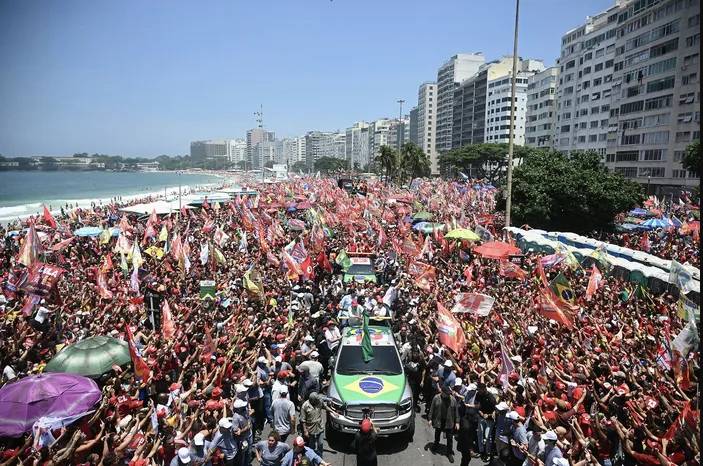
On the other hand, there was a massive, peaceful, festive, and sustained presence in the streets by PT supporters, but also by independents and people mobilized organically, going far beyond the ranks of the relatively few full-time activists nowadays and operating independently of any party discipline. Taking to the streets was the counterpart to occupying social media and, consequently, flooded the headlines of all media outlets, both online and traditional, generating a virtuous cycle of motivation and a sense of political efficacy.
Standing just meters from the civilizational abyss that democratic hollowing-out and the entrenchment of authoritarianism through the ballot box could represent, a mobilized civil society was the key to understanding how the political suicide of our systems can be avoided and an inclusive, pluralistic, nonviolent, and institutionalized order preserved.
Autor

Fabián Echegaray es director de Market Analysis, consultora de opinión pública con sede en Brasil, y actual presidente de WAPOR Latinoamérica, capítulo regional de la asociación mundial de estudios de opinión pública: www.waporlatinoamerica.org.