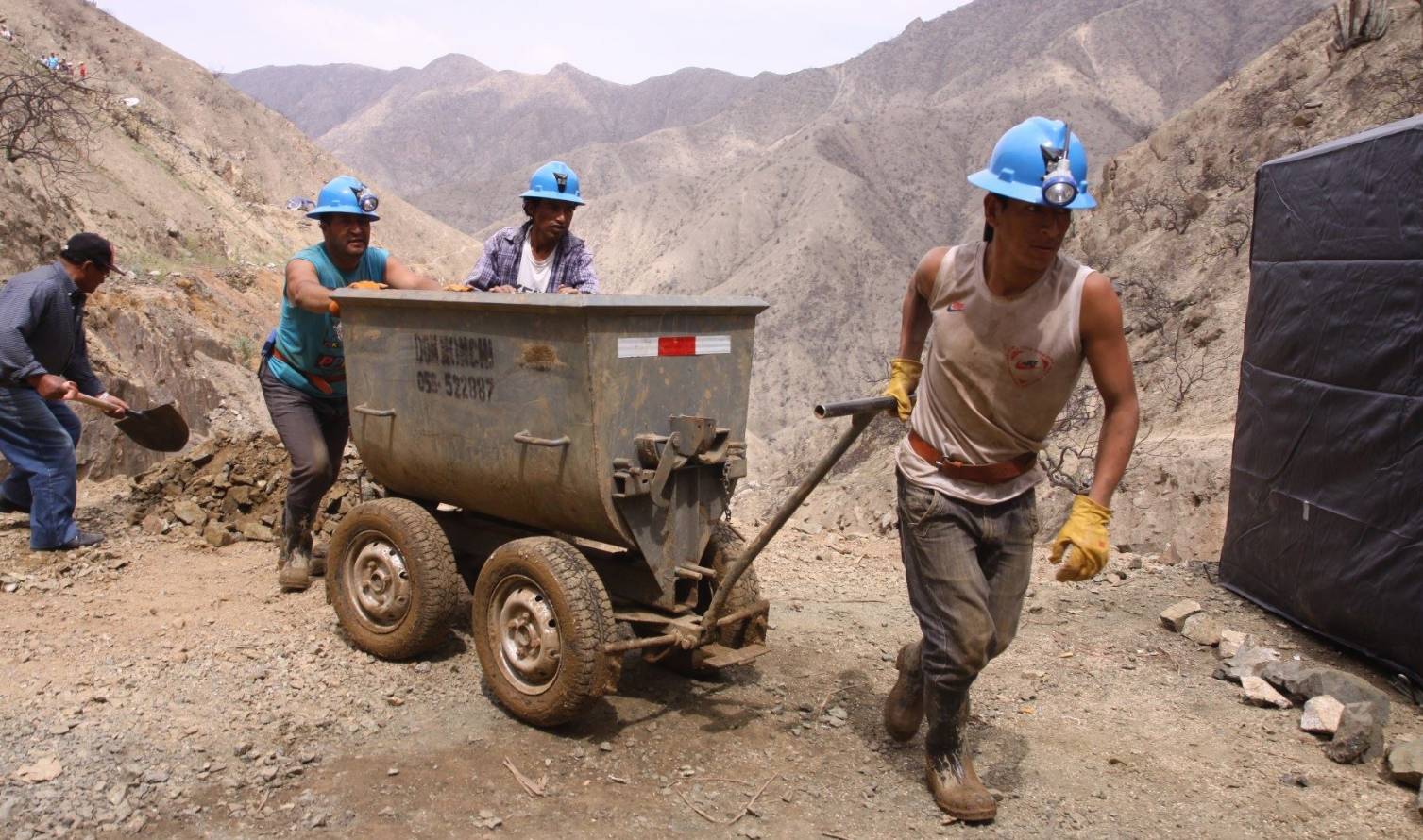
In the Peruvian department of Madre de Dios, deep in the Amazon, areas once covered by forest have been devastated by gold extraction. Artisanal and small-scale mining has displaced soils, altered waterways, and left territories contaminated by mercury. In many areas, environmental recovery will be slow. In others, it may not be possible in the short term.
Madre de Dios is not an exception. It illustrates what happens when a profitable activity grows for years under weak regulations, insufficient oversight, and formalization mechanisms incapable of distinguishing between those seeking to comply with the law and those using informality as a cover.

Against this backdrop, the Environmental Management Clinic of the University of the Pacific decided to intervene in Peru’s legislative debate. The Clinic is part of the Environmental Law Clinics Alliance of Latin America and the Caribbean, an organization that has brought together universities across the region since 2019 to promote environmental education and strengthen student training in the defense of the environment and human rights.
Its contribution is grounded in empirical evidence and technical analysis. The objective is to identify the shortcomings of the bill currently under discussion in the Peruvian Congress and propose measures that can organize the sector without repeating the mistakes of the past.
A key activity, but out of control
Artisanal and small-scale mining, known as MAPE (minería artesanal y de pequeña escala) accounts for between 20% and 30% of the gold produced in Peru. Between 300,000 and 500,000 people work directly in this activity, and nearly one million depend on it indirectly through commerce, services, and other local economic activities.
Regulating MAPE does not mean disregarding its economic significance or its importance to thousands of families. But neither can it justify allowing a high-impact activity to continue operating without adequate environmental and safety controls.
The problem is longstanding. The formalization process created in 2002 was designed as a transitional regime through which operators would gradually comply with their obligations. Yet what was meant to be temporary became permanent, and successive extensions allowed thousands of miners to continue operating without effective oversight.
Over time, formalization ceased to be a pathway toward legality and, in many cases, became an administrative shield that allowed operators to continue working outside meaningful controls.
When informality becomes the system
The gap in the gold supply chain reveals the scale of the challenge. In 2024, Peru exported around 200 tons of gold, yet only 90 tons were officially declared. More than 100 tons entered the market without a verifiable origin, fueling a parallel economy worth billions of dollars.
Illegal gold circulates throughout the entire supply chain. It moves through extraction, transportation, processing plants, and commercialization. If oversight fails at any stage, illegally sourced gold can be mixed with legally produced gold and reach international markets under the appearance of legitimacy.
For this reason, the problem cannot be solved simply through new registries or digital platforms. It requires full traceability, effective inspections, and coordination among state institutions. Without these measures, formality will remain a fiction.
The intervention of the Environmental Law Clinic
The Environmental Management Clinic of the University of the Pacific works from a central premise: regulating artisanal mining requires examining the entire gold production chain. It is not enough to focus on extraction sites. Authorities must also monitor land access, mercury use, mineral transportation, processing plants, and final sales.
This perspective is important because the most critical points often lie in the least visible links of the chain. Processing plants, for example, can receive legal, informal, and illegal ore. If oversight relies solely on declarations or paperwork, the system will continue allowing illegally sourced gold to be mixed with other production.
The Clinic’s intervention also demonstrates the value of academia in complex public policy debates. Its role is not to replace legislators, but rather to identify risks and translate technical problems into viable public policy proposals.
A new law with old risks
In principle, the discussion in the Peruvian Congress of a comprehensive law regulating artisanal and small-scale mining represents an opportunity. The current framework is insufficient, and the country needs clear rules. However, a poorly designed law could worsen the very problem it seeks to address.
According to the Clinic’s analysis, the bill retains troubling features of the previous model: declaratory registries, authorizations granted without prior verification, and controls focused more on paperwork than on territorial oversight. If these issues are not corrected, the law could create a new appearance of legality without real enforcement.
One of the most sensitive aspects of the bill is the possibility of allowing alluvial mining under a special regime. This form of mining has been restricted because of its severe impacts on rivers, soils, and Amazonian ecosystems. The experience of Madre de Dios demonstrates that permitting it in contexts of weak oversight can expand environmental degradation and generate liabilities that are difficult to reverse. A law intended to organize artisanal mining should not legitimize practices that have already proven their destructive potential.
The Environmental Management Clinic of the University of the Pacific proposes incorporating technical and territorial criteria into concession approvals, explicitly prohibiting alluvial mining, regulating mercury use, and strengthening oversight of processing plants.
The Clinic also proposes a traceability system that connects production, transportation, processing, commercialization, and export activities. Without such integration, any control mechanism will remain partial and vulnerable.
The most important change is one of approach. Formalization should become a verifiable pathway toward compliance. This means conducting checks before authorization, maintaining oversight during operations, and imposing sanctions when necessary.
A debate that goes beyond Peru
Across several Latin American countries, informal extractive activities have expanded in territories where the state has a limited presence, yet they remain connected to formal markets and global value chains. The outcome is familiar: local environmental damage combined with economic benefits that flow far from the affected communities.
Peru still has an opportunity to avoid this outcome. The new law could restore public authority and reduce accumulated environmental damage. But it could also repeat the same story under a different name. In Madre de Dios, the difference will be visible in the rivers, the soils, and the daily lives of communities that have spent years paying the price of informality.
This article is part of the compendium “Environmental Law Clinics in Latin America and the Caribbean: Education, Territory, and Environmental Justice,” published in May 2026 by the Peruvian Society for Environmental Law, the Environmental Law Clinics Alliance of Latin America and the Caribbean, and Latinoamérica21.
Machine translation, proofread by Ricardo Aceves.
Autor

Lawyer, professor and coordinator of the Environmental Management Clinic at the Universidad del Pacífico. LL.M. in Law and International Natural Resource Policy from the University of Dundee, United Kingdom.