Thirty-five years ago, the consolidation of electoral democracy in an overwhelming number of countries was regarded as the end of history in terms of how to organize conflict and collective interests in our complex societies. The democratic solution emerged as an unquestionable model and a prevailing aspiration in both the Global North and South, as well as in the East, following in the footsteps of the West.
In both form and norms, preference for the democratic method prevailed as a conceptual consensus and the preferred procedure in practice. For several intellectuals such as Francis Fukuyama, this represented the liquidation of the dispute among alternative systems of political legitimacy, public order, and the generation of well-being. The triumph of democracy symbolically represented the “end of history,” as all countries agreed on reaching the same destination.

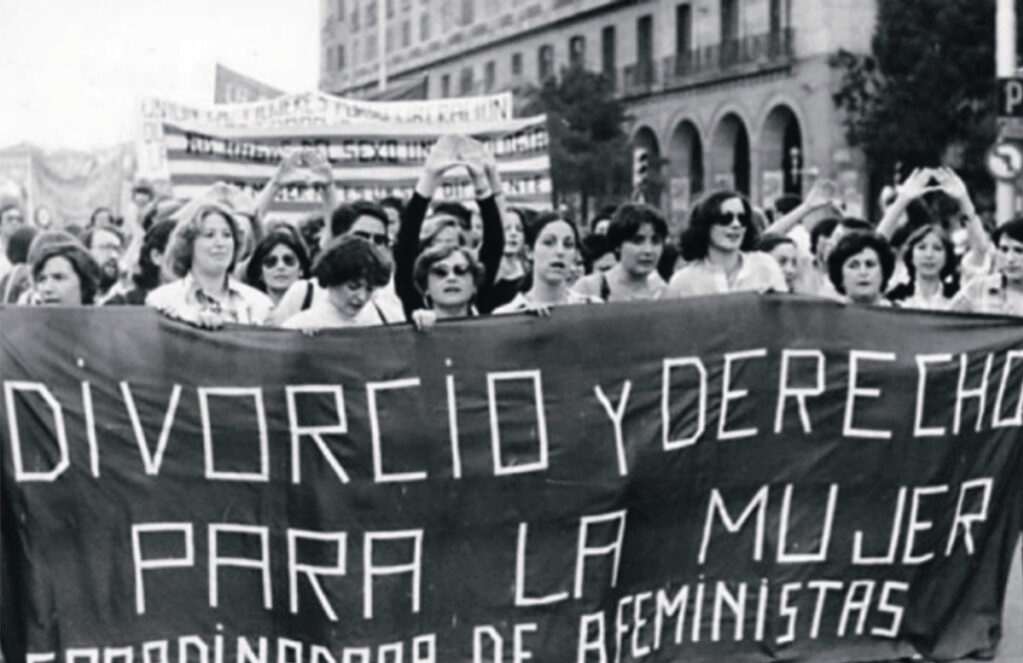
That narrative of enthroning a single path for all societies as a commonly agreed-upon objective stopped there, however, since that consensus coexisted with an infinity of less democratic anomalies at both the everyday and institutional levels. Perhaps the most widespread—and therefore most troubling—were the stark gender inequalities present in politics, work, and domestic life. No less challenging to the vitality and health of the democratic consensus was the persistence of a common sense that normalized such profound asymmetries between men and women in the opportunities and rewards each gender encountered across these spheres of life.
A half democracy
In fact, the popular and hopeful transitions to democracy in the last decade of the twentieth century were characterized by national parliaments devoid of women, provincial or municipal governments lacking female presence, a corporate world established as a male ghetto, and a domestic sphere that monopolized and exhausted women’s energies. These were societies in which women—always the majority of the population—were excluded from the highest levels of private and public decision-making and remained confined to everyday domestic life.
This phenomenon raised questions about the authenticity and legitimacy of the democratization process at the time. It also revealed the top-down nature of these transitions. Political democratization occurred less as an expression of prior equalization and empowerment of majorities in substantive areas and more as agreements among certain elites or as the result of the mobilization and articulation of specific minorities: essentially white men from upper-middle or upper classes.
The consolidation of these pro-democracy changes depended—no small part—on the capacity of the new regimes to expand representation and deliver tangible, meaningful results for majorities, including the female majority of the population. Paradoxically, more than three decades later, public opinion data suggest that while significant progress has been made toward gender equality, the popularity of democracy as a way of organizing political life and responding to societal problems has weakened.
Surveys conducted by the consultancy Market Analysis in Brazil and the WIN network (Worldwide Independent Network) in 40 other countries, covering nearly 44,000 adults—including several nations in Latin America—confirm the perception of these advances in recognizing most women as relevant actors in spheres beyond the household, while also easing their exclusive immersion in domestic care. Over the past decade, the perceived gap in gender equality in the labor and professional world has tripled and increased twentyfold in the political sphere.
Unequal equalization
The growth in the sense of equality is good news and indicates that, for 72% of all respondents, there is now a more equitable distribution of household responsibilities, and for 66%, women have achieved greater parity in the corporate world. Does this mean we have reached a consensus?
While it is true that public opinion on gender equality has moved in the same direction, recognizing important progress, the gap between how women and men perceive these advances remains clear. In both professional and political life, there is a difference of 10 to 11 percentage points between the two groups in their assessment of equalization, with a marked male bias toward optimism.
Ultimately, the reality perceived by women differs significantly from that perceived by men regarding gender equity. This reveals important tensions to be negotiated and an open dispute over the narrative of the quality and scope of democratization actually achieved—beyond the right to vote, access to the labor market and education, and other prerogatives that were scarcely available when these transitions began.
Public opinion studies also indicate that the experience of adult life teaches individuals to temper the naïve or overly optimistic interpretations of youth regarding the balance of gains achieved and those still pending for women. Young Brazilian women aged 18 to 24 tend to overestimate gender equality in the professional sphere, even surpassing men in their optimism. However, this changes after age 25, when full entry into the labor market occurs and inequalities between women and men become tangible and daily realities.
The democratization that began several decades ago may have lost some of the public’s faith in political institutions and the republican dynamics of resolving conflicts and generating solutions for society. Yet it can still be credited with having softened gender inequalities and driven a sense of empowerment and inclusion among women.
There is still ground to be covered, and women’s realistic skepticism seems to properly absorb enthusiasm without overlooking achievements. All things considered, it is part of the successful story of our democracies that they have enabled these advances and allowed citizens—men and women alike—to understand and recognize that improvements have indeed occurred in women’s participation in political, professional, and domestic life—conditions that were notably absent 35 years ago.
Despite the broad consensus among optimistic majorities across the globe, much remains to be done to equalize both the conditions of competition and their outcomes for both genders. Rather than the end of a story, it is still a story yet to be written.
Autor

Fabián Echegaray es director de Market Analysis, consultora de opinión pública con sede en Brasil, y actual presidente de WAPOR Latinoamérica, capítulo regional de la asociación mundial de estudios de opinión pública: www.waporlatinoamerica.org.