Almost thirty years ago, Italian political scientist Giovanni Sartori published one of his most widely read works: Homo Videns. His central thesis was that opinion is formed primarily through the image projected at the time by television, and that this image ultimately shapes the imaginaries through which we interpret reality, form public opinion, and behave politically, influencing how we perceive politics, its actors, regimes, and institutions.
That televised image was also structured through words, colors, and music that shaped perception. Hence, the role of the media was—and remains—fundamental in defining the agenda of what is shown and how it is shown. This is why political communication studies have contributed so much to our understanding of political behavior, and why news programs, expert opinions, and, in a few honorable cases, pluralism, were the foundation of political opinion and action. These were imperfect times, but there was still a crack left open for debate, questioning, and verification of whether the political system, in David Easton’s terms, was fulfilling its role or not; times when democracy still functioned as a reward or a punishment.

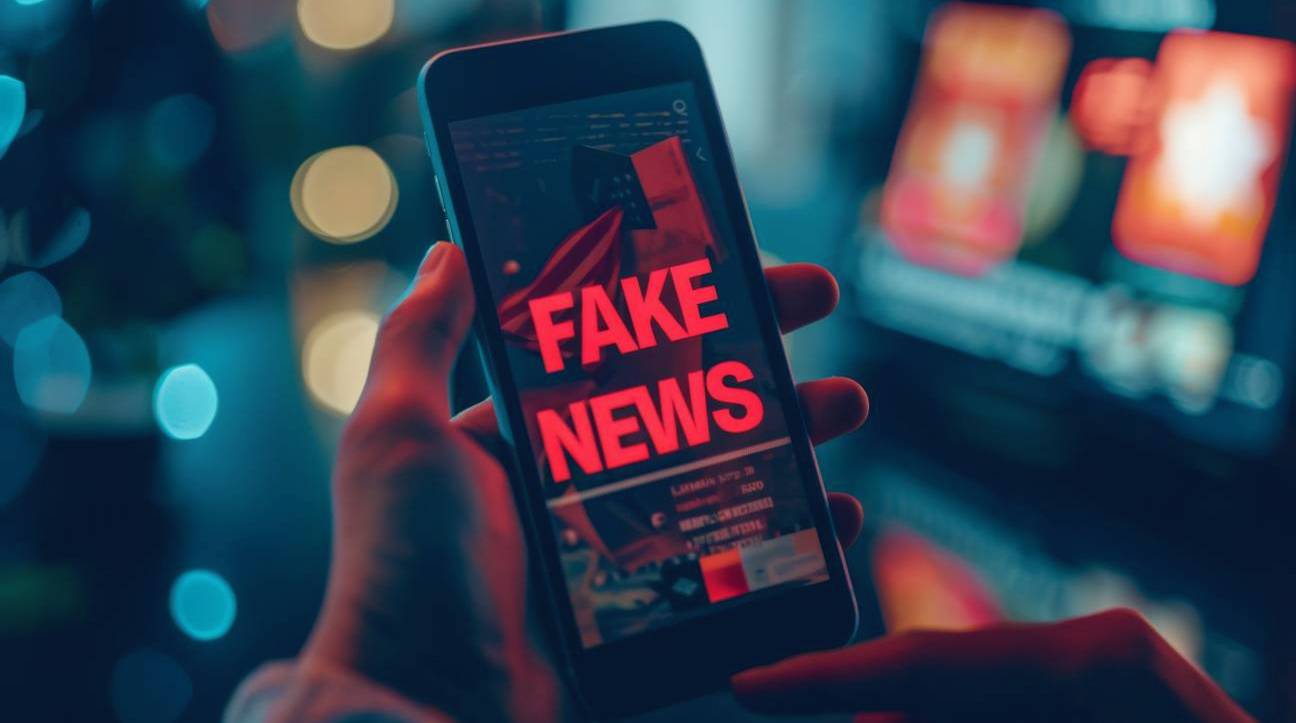
Today, it seems, we no longer live in that society of the image, nor even in the “homo cretinus” that Sartori himself described in 2016, when social media had created a superficial individual, with a poor memory and susceptible to false information. We live in a society where the sale of “smoke” is the foundation of human cognition: the quick message, the short video, and the absence of critical thinking converge with post-truth and artificial intelligence to produce an individual who accepts any farce as truth, sustained merely by a narrative that rarely exceeds 280 characters and whose sole purpose is to provoke outrage, heighten emotions, and reinforce biases.
This “homo fumus” is present in every sphere of life. We have replaced the scientific foundation of psychology, built over decades of research, with enthusiastic coaches who promise to cure depression through verbal affirmations, “family constellations,” or reels. Or with “influencers” who sell shirtless speeches, surrounded by women and sitting in a Ferrari, promising to help you make a million dollars through “burpees.”
In secondary and higher education, the authority of the textbook has been replaced by a TikTok video, and the inappropriate use of AI has forced a return to old-fashioned strategies, such as paper and pencil—as is now being done in Finland—to compel effort and stimulate abilities. At universities, it is increasingly common to hear professors talk about the need to bring students up to speed on basic content because they cannot even synthesize the information contained in a complex text. This makes it harder for the university to fulfill what it should be: the foremost space for Socratic dialogue and the generation of knowledge.
In interpersonal relationships, Bauman’s liquid modernity had already warned of the fluidity and uncertainty of social structures; today, that condition has intensified. Smoke turns “freedom” into precarity, “mobility” into an absence of roots and identity, and the hollow messages of individualism into the loss of the social fabric. A weakened community is left defenseless against the predators of the public sphere: purveyors of smoke who have not the slightest idea how to administer the state, or how solutions to improve people’s living conditions are planned and implemented.
And, obviously, this has reached politics. Daniel Innerarity, in his Theory of Complex Democracy, warns that democracy must be reconceptualized and that the old concepts through which we understood power have become obsolete. The author understands well how smoke feeds political debate: the news about a politician’s romantic partner, or the ridiculous adventures of “Captain ANCAP” or “Superbigote.”
Added to this are Hollywood-style productions featuring helicopters, armored vehicles, and soldiers straight out of Rambo, presented as public security policy, while the results in Ecuador tell another story: 2025 was the most violent year in its history, and the most recent holiday period recorded one of the darkest days of 2026 (38 violent deaths in a single day).
And how can we forget the announcements about annexing Venezuela as the 51st state of the United States, or the “joke” made in an announcement about a possible reelection despite the fact that the Constitution prohibits it? Or the videos by digital influencers attempting to change the image of the state of Israel amid accusations of genocide against it, or other “jack-of-all-trades influencers” who predict earthquakes. Nor can we overlook the display of wealth and luxury in China, which serves to conceal accusations of human rights violations in that country.
All of this is now the foundation of politics. The discussion about government actions or the laws passed by parliament has been left behind, and even less can we expect a reasoned and substantive debate about the ideas that should govern what the state and society do with a country.
And to think that in 1997 we imagined a more peaceful, more democratic world, with better opportunities thanks to that same technology’s ability to disseminate information. Today, selling “smoke” is not only profitable: purveyors of smoke make decisions and wield more influence than scientists. On the other side, the “homo fumus” builds its existence and its life in society around something that does not exist: farces, mockery, short messages that say nothing. Sadly, this is what Sartori’s Homo Videns has devolved into. The intellectual challenge has been reduced to the domain of a few bored nerds “whom nobody understands, and therefore nobody pays attention to.”
What can we expect? Nothing very different from what we already have. Smoke will always need more smoke to conceal the nothingness that sustains it, and that is becoming increasingly profitable for those who sell it. They know that it is cheaper and more convenient to sustain a society based on narratives than on plausible solutions, concrete actions, or the relentless search for and constant questioning of the truth.
The French Revolution, the Carnation Revolution, the Prague Spring, the color revolutions in Eastern Europe, and activists such as Lumumba, Mandela, Martin Luther King, Malcolm X, and Antonio Gramsci are examples of the opposite effect, but using the same tool: a message can make society focus on what truly matters. The situation is complex, and there is no single answer to counter what we are experiencing, but it is necessary and urgent to promote narratives that stand against the smoke: narratives that once again place emphasis on people’s material conditions, the social fabric, critical thinking, and the defense of public administration as a government’s primary function. History has already shown us this.
Autor

PhD from the Rule of Law and Global Governance program at the University of Salamanca. Master's degree in Political Science from the same university and Master's degree in International Relations from IAEN. University professor. Ecuador.