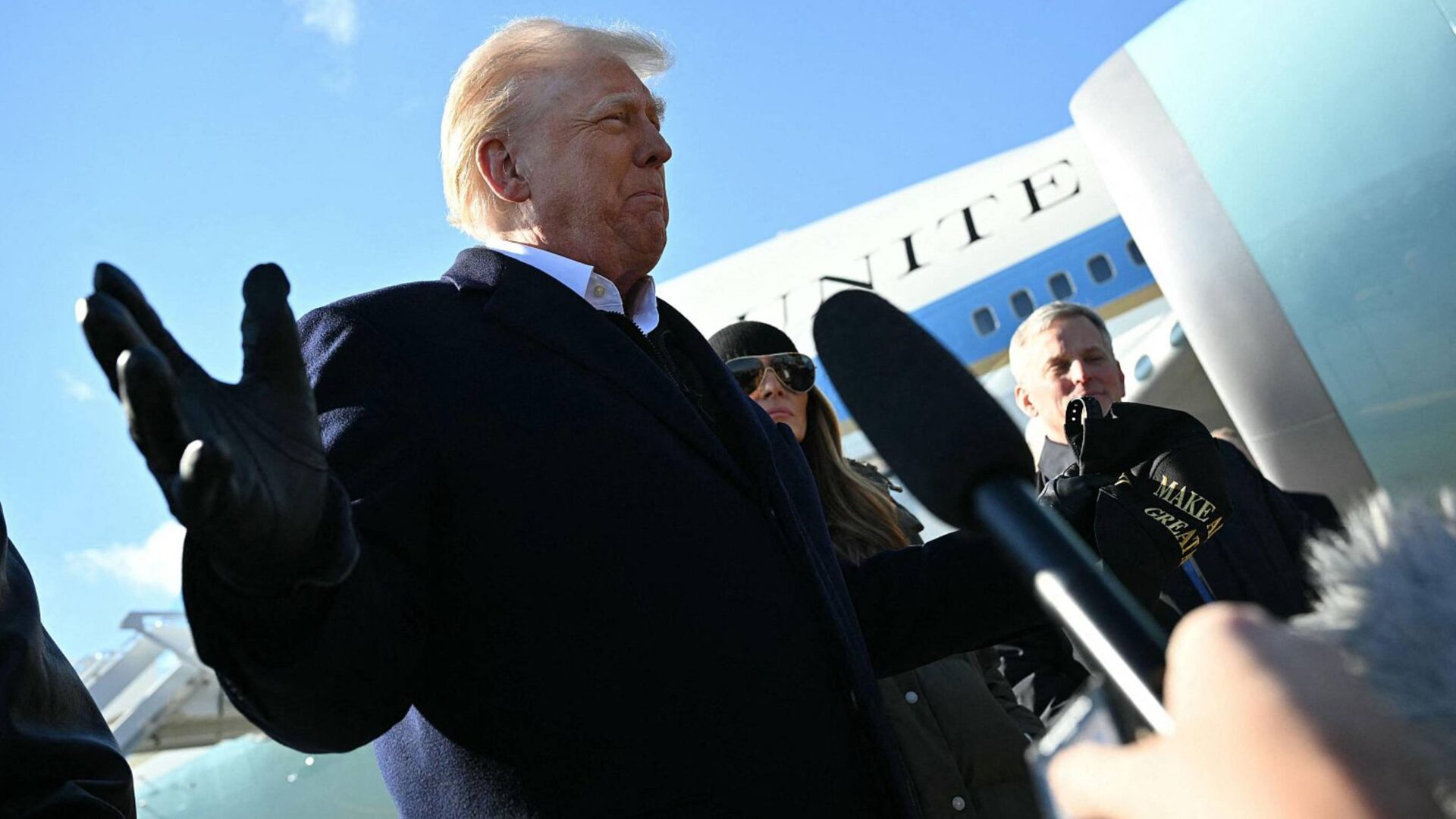
In a recent speech at the White House, which he himself dubbed the “Day of Revelation,” Donald Trump once again placed electoral integrity at the center of public debate. By declassifying Central Intelligence Agency (CIA) documents concerning the Venezuelan government’s ability to manipulate elections, the U.S. president sought to build a narrative bridge between technological vulnerabilities abroad and the alleged fragility of the American electoral system. However, a rigorous analysis of the cited documents—and, above all, of Venezuela’s recent electoral history—reveals a diametrically opposite reality: far from being the vehicle for electoral fraud, voting technology has been the most effective instrument for exposing it.
The gap between the rhetoric and the documents
Trump’s strategy is based on a selective and tendentious reading of the CIA report. While the president claims there was a “specific plot” by Nicolás Maduro’s regime to alter election results through technology, the declassified report is far more cautious. It states that the Venezuelan government had “some capability” to manipulate electronic voting systems within its own territory, but explicitly warns that there is no conclusive evidence of large-scale electronic fraud.

Even more crucial is the CIA’s conclusion regarding the exportability of these alleged manipulations: neither the Venezuelan government nor the company Smartmatic had the capability to interfere with elections outside Venezuela. Nevertheless, Trump has used these findings to cast doubt on the U.S. midterm elections and to reiterate the theory—systematically rejected by the courts—that the 2020 presidential election was stolen from him. This fraud narrative, historically amplified by media outlets such as Fox News—which was forced to pay $787 million to Dominion Voting Systems for spreading baseless conspiracy theories—seeks to erode institutional trust for immediate political purposes.
Technology as the scapegoat in the fraud narrative
Blaming technology for facilitating electoral fraud is a tactic employed by leaders across the political spectrum. In Colombia’s recent elections, President Gustavo Petro repeatedly cast doubt on the technology used by the National Civil Registry, pointing to the alleged opacity of the vote-tabulation software’s source code as evidence of possible manipulation. On the political right, Brazil’s Jair Bolsonaro systematically questioned the integrity of electronic voting machines, despite the fact that the same system had validated his own previous electoral victories over decades without any documented incidents.
As Trump in the United States, these leaders exploit technological complexity to create the impression of a “shadow government” or algorithmic conspiracies. The objective is not to prove fraud, but to generate enough distrust that any unfavorable result can be interpreted as the product of a conspiracy. This normalization of refusing to recognize election results inflicts profound institutional damage: it undermines the legitimacy of democratic alternation in power and turns technology into the convenient target for political frustrations from any side.
Toward serious electoral reform in the United States
It is fair to acknowledge, as many Republicans argue, that there are aspects of the U.S. electoral system that could be improved. These issues should be addressed seriously in order to strengthen public confidence. Proposals requiring photo identification and proof of citizenship to vote, as well as the debate over restrictions on mail-in voting, are entirely legitimate when presented as security measures rather than as tools for voter suppression.
A robust electoral system must ensure that only verified citizens participate and that the identification process is foolproof. However, these necessary improvements should not be confused with validating conspiracy theories about massive hacking operations or “shadow governments” manipulating voting machines. As the CIA report itself indicates, voter databases and registration systems are legitimate areas of concern when it comes to potential foreign cyberattacks. That is a very different matter from claiming that the electoral system is inherently “broken” or “corrupt.”
Venezuela: Technology as a shield against authoritarianism
The greatest paradox in Trump’s argument is that Venezuela’s experience over the past twenty years demonstrates that a well-designed automated voting system is extremely difficult to manipulate without leaving evidence—even for an autocratic regime that controls every institution. Although Maduro’s regime dominated both the National Electoral Council (CNE) and the Electoral Chamber of the Supreme Court of Justice, the security mechanisms built into the voting technology have enabled the opposition to document and conclusively demonstrate electoral fraud.
The first major milestone in this technological resistance came during the 2015 parliamentary elections. Despite the disqualification of opposition candidates and the government’s institutional advantages, the robustness of the voting system allowed the opposition to secure a landslide victory that the regime was unable to conceal. The traceability of the vote and the presence of election witnesses proved essential in validating the popular will.
In 2017, technology made it possible to document two different types of electoral fraud. First, during the election of the National Constituent Assembly, Smartmatic itself reported that voter turnout figures had been inflated by at least one million votes. The company was able to detect the discrepancy because the system incorporated auditing procedures and transmission controls that the CNE could not bypass internally without leaving evidence. Months later, in the gubernatorial election in Bolívar State, candidate Andrés Velásquez exposed manual fraud because he possessed the paper tally sheets printed by the voting machines.
The 2024 fraud: The collapse of the official narrative
The most recent and compelling case occurred on July 28, 2024. On this occasion, the automated voting system served as a genuine safeguard against electoral fraud. The strategy of the democratic opposition, led by María Corina Machado and Edmundo González, focused on leveraging the paper trail produced by every voting machine.
Through a sophisticated network of citizen volunteers known as comanditos, the opposition succeeded in collecting, digitizing, and publishing more than 83.5% of the official tally sheets. These records, protected by security features such as QR codes and digital signatures, demonstrated a decisive victory for Edmundo González, who received 67% of the vote compared to Maduro’s 30%. Claiming an implausible “cyberattack,” the CNE has refused to publish the disaggregated official results. But by then, the technology had already done its job: the paper receipts and printed tally sheets dismantled the government’s narrative within hours.
Independent experts from the United Nations and the Carter Center have confirmed that the tally sheets published by the opposition contain all the CNE’s original security protocols, making large-scale forgery impossible. This demonstrates that even when a regime controls the technology provider—as is currently the case with the Argentine company ExClé—and the central vote-tabulation server, citizen verification of the paper trail prevents electoral fraud from succeeding in the eyes of the international community.
The only guarantee lies in controlled and auditable systems
Trump is using a CIA document that does not conclude electronic fraud occurred to reinforce a narrative that weakens American democracy. The real lesson from Venezuela is that voting technology, when combined with comprehensive audits and a verifiable paper trail, provides the strongest guarantee of electoral transparency.
Even under an autocratic regime that has effectively captured the electoral authority, technological accuracy and citizen mobilization to safeguard official tally sheets have enabled the truth to prevail over disinformation.
Autor

Executive Director of Transparencia Electoral. Degree in International Relations from Universidad Central de Venezuela (UCV). Candidate for a Master's Degree in Electoral Studies at Universidad Nacional de San Martín (UNSAM / Argentina).