In 1807, a young Simón Bolívar traveled through the United States on his way back to South America. The future liberator arrived in a country just three decades removed from its own revolution. He observed a republic that, despite its imperfections and contradictions, had accomplished something remarkable: it had transformed a colonial rebellion into a functioning political system. Years later, Bolívar would write admiringly of the United States’ constitutional order even as he wrestled with the reality that Spanish America faced very different circumstances and challenges.
Bolívar’s experience reflected a broader truth. The American Revolution did not remain confined to thirteen British colonies along the Atlantic seaboard. It became part of a larger hemispheric story. The ideas unleashed in 1776—popular sovereignty, representative government, constitutionalism, and the rejection of inherited political authority—crossed borders and influenced debates from the Caribbean to the Andes.

Two hundred and fifty years later, the question is no longer whether the American Revolution shaped the Americas. The historical record leaves little doubt that it did. The more important question is whether that shared inheritance still points toward a common democratic future or whether the nations of the hemisphere now follow increasingly parallel political paths.
The American Revolution demonstrated that colonial rule could be challenged and that political legitimacy could derive from citizens rather than monarchs. Although revolutionary movements throughout the Americas emerged from their own local conditions and traditions, many confronted similar questions about representation, sovereignty, and self-government. The revolution in Haiti, the independence struggles led by Bolívar and José de San Martín, and the broader collapse of European imperial control of the hemisphere unfolded within a world transformed by the revolutionary era.
By the early twentieth century, republican government had become the dominant political model across the Western Hemisphere. Empires largely disappeared from the Americas—apart from much of the Caribbean. Constitutions proliferated. Elections became established, if imperfect, mechanisms for political competition. The hemisphere developed a common democratic vocabulary. Concepts such as citizenship, constitutional rule, individual rights, and representative institutions became central features of political life from Canada to Argentina.
Yet a shared vocabulary did not produce identical outcomes.
The United States developed relatively durable constitutional institutions and experienced only one large-scale civil war after independence. Much of Latin America and the Caribbean confronted different realities. Military interventions, civil conflicts, authoritarian governments, oligarchic rule, foreign interference, and deep social inequalities shaped political development across the region.
These experiences did not reflect a rejection of democratic ideals but rather demonstrated how similar principles could evolve differently under distinct historical and institutional conditions. As a result, the Americas developed not one democratic tradition but many.
That diversity remains evident today. Across the hemisphere, citizens overwhelmingly express support for democracy as an ideal. Yet they often express frustration with democratic performance. Surveys conducted over the past two decades have consistently revealed a tension between support for democratic governance and dissatisfaction with the institutions responsible for delivering it. Citizens may endorse elections and constitutional government while simultaneously questioning whether political systems can effectively address insecurity, corruption, economic uncertainty, or social polarization.
This challenge represents one of the most important democratic questions of the twenty-first century.
The central political problem of the revolutionary era concerned the source of political authority. Who should govern? Kings or citizens? Empires or republics? Today, the debate has shifted. Most governments in the Americas derive legitimacy from constitutional and electoral systems. The more pressing question concerns effectiveness. Can democratic institutions govern well enough to maintain public confidence?
The answer increasingly shapes political debates throughout the hemisphere.
In some countries, concerns about organized crime, public security, and state capacity dominate public life. In others, debates center on institutional reform, economic competitiveness, migration, technological change, or democratic backsliding. Artificial intelligence, disinformation, transnational criminal networks, and geopolitical competition present challenges that the founders of the United States, or the liberators of Latin America, could scarcely have imagined. Yet these issues ultimately return to familiar questions.
This reality reveals both the strength and the limits of the hemisphere’s shared democratic inheritance.
On one hand, the nations of the Americas continue to operate within a political framework profoundly shaped by the revolutionary era. Elections remain the primary source of political legitimacy. Constitutional government is the dominant organizing principle. Even political actors who challenge democratic norms typically justify their actions using democratic language. The revolutionary ideals that emerged in the late eighteenth century continue to define the terms of political debate.
On the other hand, the hemisphere does not move in lockstep. Different societies confront different pressures, possess different institutional capacities, and pursue different political priorities. Shared origins do not guarantee shared destinations.
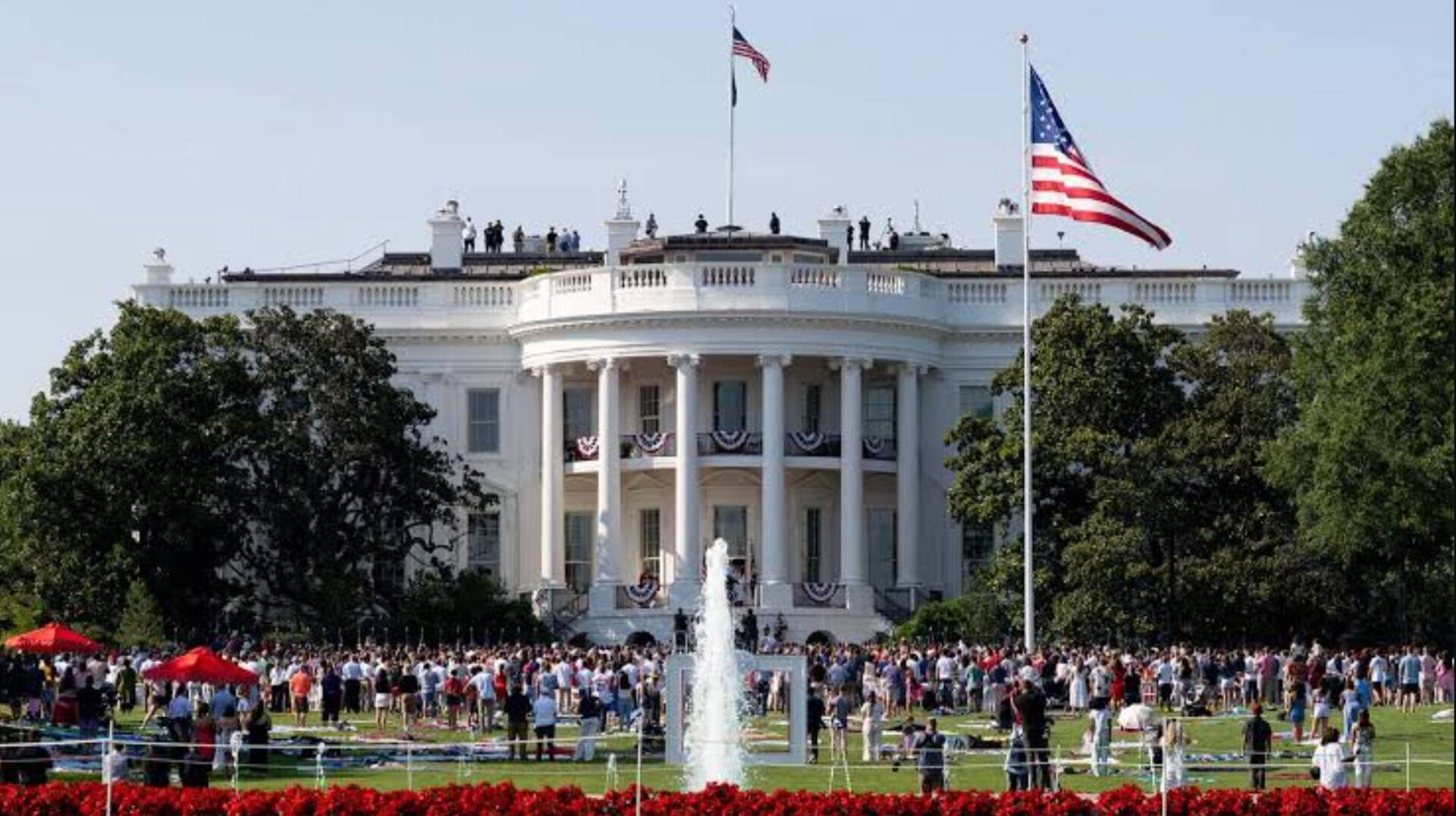
As the United States commemorates the 250th anniversary of its founding, the occasion offers more than an opportunity for national reflection. It provides a moment to consider the broader hemispheric legacy of the revolutionary age. The American Revolution helped initiate a conversation about liberty, representation, citizenship, and self-government that extended far beyond the borders of the United States. Generations of leaders and citizens across the Americas joined that conversation and adapted it to their own circumstances.
Today, the debate has entered a new phase. Few serious political actors argue that monarchy should replace republican government or that popular sovereignty should yield to imperial rule. The foundational questions of the eighteenth and nineteenth centuries have largely been settled. The challenge facing the Americas today is different. Citizens across the hemisphere increasingly ask whether democratic institutions can provide security, prosperity, accountability, and effective governance in a rapidly changing world.
That challenge may ultimately determine whether the Americas move toward a shared democratic future or continue along parallel political paths. The most consequential divide in the hemisphere may not emerge between left and right, or even between democracy and authoritarianism. It may emerge between states that can translate democratic legitimacy into effective governance and those that cannot.
History suggests that when democratic systems lose the capacity to deliver, citizens rarely abandon their demand for results; instead, they often place their faith in leaders who promise to bypass the perceived obstacles of democratic governance altogether. Public confidence in democracy depends not only on elections and constitutions, but also on whether governments can deliver results in the face of some towering hurdles.
The enduring significance of 1776 lies not simply in the institutions it created, but in the proposition that legitimate government derives from the consent of the governed. That principle transformed the political history of the Americas. Yet consent cannot survive on symbolism alone. It requires institutions capable of meeting public expectations and adapting to new realities.
The next chapter of the hemispheric democratic story will not be written by those who celebrate the revolutionary inheritance most enthusiastically. It will be written by those who prove that democratic governance remains capable of solving the problems of the twenty-first century.
Autor

Senior Advisor and Partner at Pan-American Strategic Advisors and a PhD candidate in Political Science at Florida International University.