Comparative diagnoses of the state of democracy continue to accumulate, and the possibilities for understanding its complex current situation continue to expand. All of this is essential for engaging in the debate, not only about what is happening, but also about its causes, in order to try to formulate alternatives. Falling into nihilism is the worst possible outcome. While in a recent text I referred to the pulse of democracy, based on analyses carried out through moderately complex indexes, and left pending an alternative approach consisting of viewing democracy from different angles, today this is complemented by a valuable, newly published regional monograph. Let us examine it.
The V-Dem project, led by the University of Gothenburg (Sweden) and launched fifteen years ago, is based on the configuration of democracy into different varieties according to distinct profiles. This makes it possible to carry out more refined approaches to evaluating its performance, since separate facets of democratic performance are taken into account, facets that do not necessarily coincide. These five varieties are named according to the dominant conceptual criterion.

Thus, when what matters is the principle of political competition, the variety of democracy is called electoral, and the indicators that compose it revolve around elections. The liberal variety of democracy presupposes the existence of limited government, multiple veto points, horizontal accountability, individual rights, civil liberties, and transparency. The participatory variety of democracy relates to government by the people and the extent to which citizens participate in politics. The deliberative variety of democracy is linked to government through reason, so that policies are the result of deliberation. Finally, the egalitarian variety of democracy refers to the equal level of empowerment that citizens should possess.
These facets are broken down into indicators that are ultimately coded by more than three thousand experts, and the result is a classification of the countries under analysis according to the scores achieved on a scale from 0 to 1. Another possibility is to analyze their performance over time.
The data recently presented for the year 2025 regarding Latin American countries confirm their great heterogeneity. Across the five varieties of democracy, Uruguay, Costa Rica, and Chile consistently stand out for their stronger performance, while Cuba, Nicaragua, and Venezuela stand out in the opposite direction. El Salvador has recently joined this latter group, with very low values in four of the five varieties of democracy: liberal, egalitarian, deliberative, and participatory.
As for the evolution recorded between 2020 and 2025, the behavior of the different countries is uneven, and no regional pattern can be identified. Setbacks are recorded across all five varieties in five countries (Argentina, Ecuador, El Salvador, Mexico, and Peru). By contrast, six countries show progress (Bolivia, Brazil, Colombia, the Dominican Republic, Guatemala, and Honduras). Panama, which has higher values than Paraguay, maintains stable behavior alongside that country, as do the three countries with the highest values (Uruguay, Costa Rica, and Chile) and the three countries with very low performance (Cuba, Venezuela, and Nicaragua).
From a very different perspective, yet maintaining a clear connection with what has just been outlined, the United Nations Development Programme (UNDP) has just published its 2026 report on democracy and development focused on Latin America and the Caribbean. It is a meticulous and extensive 344-page study that, exhaustively and through a rigorous collaborative process, analyzes political developments in the region, as well as its risks and expectations.
The work follows the path of the landmark 2004 report in which Dante Caputo, Guillermo O’Donnell, and Gerardo Munck, among others, inspired a fertile integration of the institutional dimension of politics with the social dimension, within the framework of what was then called a “democracy of female and male citizens.” It was the great moment of the challenge of democratic consolidation in the region, after the transition processes had been completed and the agenda of democratic quality had begun to take shape.
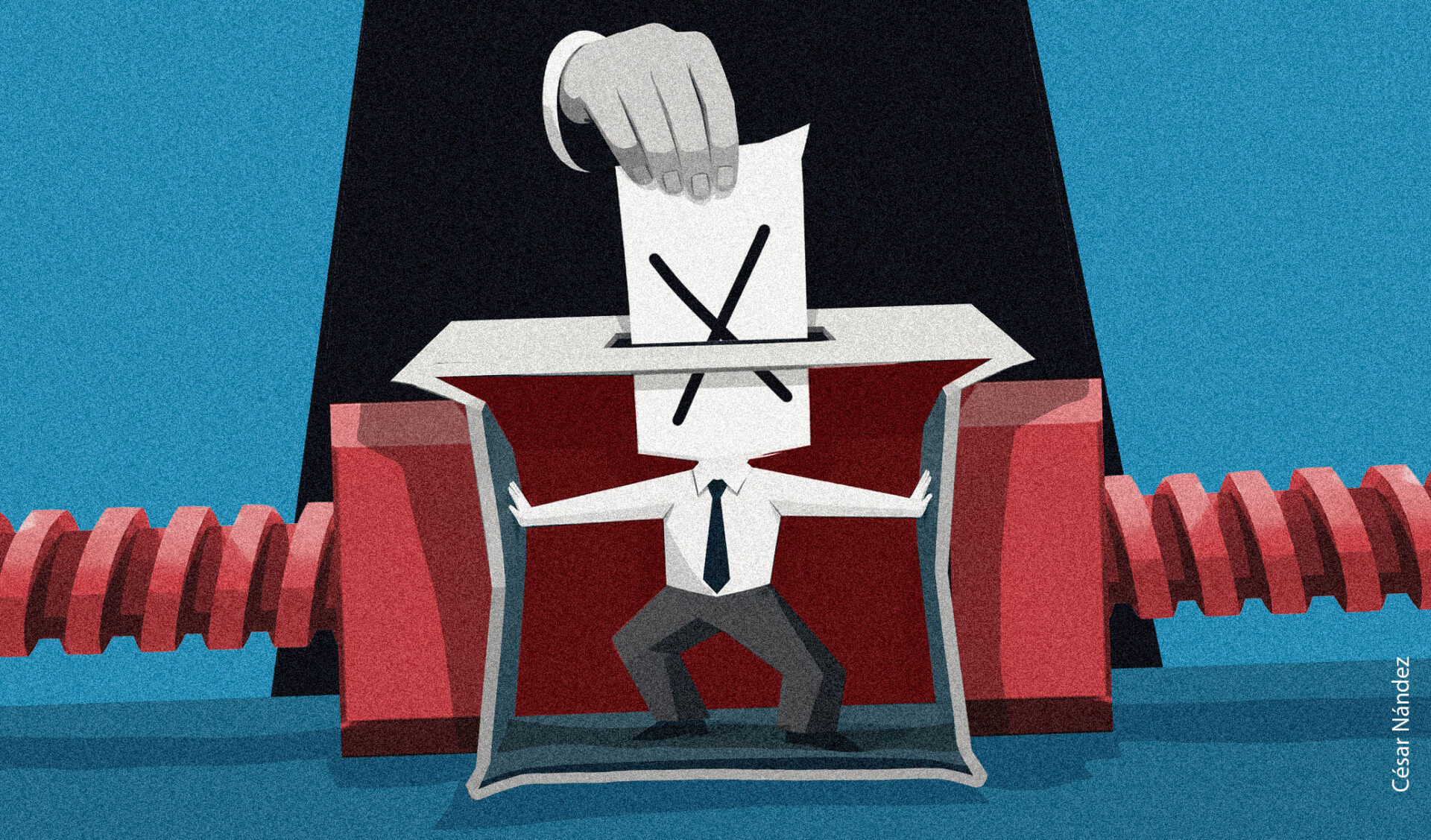
Two long decades later, Latin America’s fatigued democracies find themselves inside a square, enduring pressure that at times becomes unbearable. On one side lies artificial intelligence and its relationship with disinformation and a transforming information system that has reshaped the public sphere. Its impact on democratic mechanisms and state capacities could open an opportunity to strengthen democracy, though this represents an urgent challenge.
A second side is constituted by criminal pressure, which has placed the limited capacity of the state in jeopardy, confronted by illicit economies and incapable of maintaining the monopoly on legitimate violence, projecting a constant struggle of attrition. The third flank is shaped by migration and internal displacement, both subject to permanent social, economic, and cultural tension. Finally, there is the side defined by persistent development deficits in times of planetary crisis and by the failure to satisfy citizens’ demands.
The UNDP report entitled Democracies Under Pressure: Reimagining the Futures of Democracy and Development contains a highly solid conceptual framework articulated through numerous indicators to define the achievements, debts, and risks of democratic backsliding, as well as the way in which political polarization puts democracy to the test. However, it does not remain confined to the already significant descriptive and analytical function, since in its final chapter it ventures a guide for political action by reimagining the futures of democracy through reconnecting democracy, human development, and the state.
As Michelle Muschett, UNDP Regional Director for Latin America and the Caribbean, notes in the foreword, “the future of democracy and development will depend on the ability of our societies to transform pressure into progress without sacrificing agency or human freedoms. This is a collective and unavoidable challenge.”
Autor

Director of CIEPS - International Center for Political and Social Studies, AIP-Panama. Honorary Emeritus Professor at the University of Salamanca and UPB (Medellín). Latest books: "El oficio de politico" (Tecnos Madrid, 2020), "Huellas de la Democracy Fatigada" (Océano Atlántico Editores, 2024) and "Cuando la política dejó de ser lo que era" (Océano Atlántico Editores, 2025).