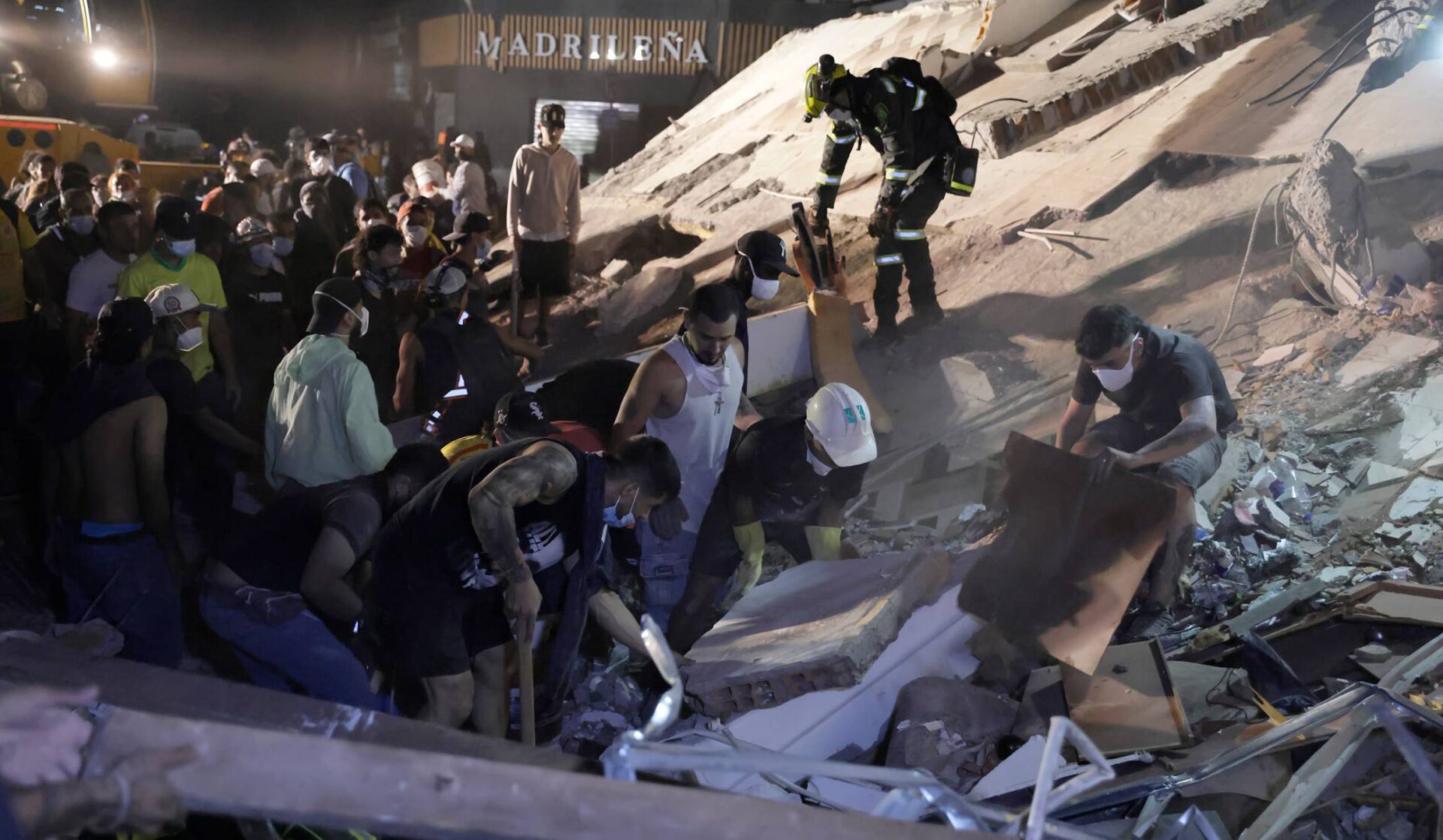
We know that the recurring question on every Colombian’s mind right now is the same: how can we help? Amid the tragedy caused by the 7.4-magnitude earthquake that has affected 11 departments, the story that connects the entire country is one of resilience, of coming together to contribute. There is also a great deal of frustration and pain, both among the diaspora, which feels far from its homeland precisely as we go through one of the most difficult moments in Colombia’s history, and among people living in cities that were not affected by the earthquake. That is why we need to recognize the ways in which we can help and, at the same time, the importance of taking care of ourselves.
There is an image that becomes particularly useful in tragedies such as this earthquake: the human chain. In the affected areas, we see how strangers, united by solidarity, line up to pass from one person to another whatever needs to be transported. It is a tangible expression of an abstract reality: we need one another to survive this moment. Our invitation is to understand that this chain does not require physical presence. For those who are far from the affected areas, their willingness to find ways to contribute, to reach out to others who are going through difficult times, makes them part of a great chain.

It is common, after natural disasters, for there to be a kind of “survivor’s guilt.” We have seen it on social media and in individual conversations, with Colombians feeling bad because they cannot “do more” amid the disaster. This feeling is particularly prevalent among the diaspora. In response, the recommendation is to recognize that we are facing a tragedy almost without precedent in the country’s recent history, as this is the most severe earthquake in 50 years. It is essential to validate the feelings of grief, distress, and hopelessness that people are experiencing. At the same time, it is important to give ourselves space to feel frustrated while also questioning the idea of a shared “guilt.” Not only because it is false to believe that any particular person is to blame for what happened, but also because this is a feeling that causes emotional distress and crushes rather than mobilizes us.
It is also very important to remember that this is a marathon. While rescue and immediate relief efforts, by their very nature, have to be swift, victims will continue to suffer in the time ahead. We cannot become distracted, nor can we allow our resources to become diluted. Support will have to be sustained.
We recognize the work of the Colombian Red Cross, which has managed to reach all the affected municipalities. A donation to them is a good first step. We also encourage you to look for organizations that are carrying out transparent work in the area you have chosen to support. In this way, we can help the country begin its long process of reconstruction and healing its open wounds.
Autor

Director of the newspaper El Espectador. Winner of the Simón Bolívar National Journalism Prize. Master's degree in Journalism with a focus on Newspaper Management from Northwestern University. He holds a degree in Philosophy from the University of Los Andes in Bogotá.