Whenever a new government takes office, I find myself wondering what the president’s agenda on migration will be. It must be said that Abelardo De La Espriella (ADLE) made very few statements as a candidate about his migration policy proposals, if any at all.
Apart from a few statements on social media shortly after he was elected, in which he indicated that he would cooperate with the U.S. government to prevent “bogus asylum seekers” from reaching the United States, we knew little or nothing about what the head of the Colombian government thought about this issue or whether, for example, he would continue the Temporary Protection Statute for Venezuelans (ETPV). The ETPV is undoubtedly one of the most ambitious initiatives undertaken by governments in Colombia (and the region) to grant regular status to Venezuelan nationals.

Deportation policy
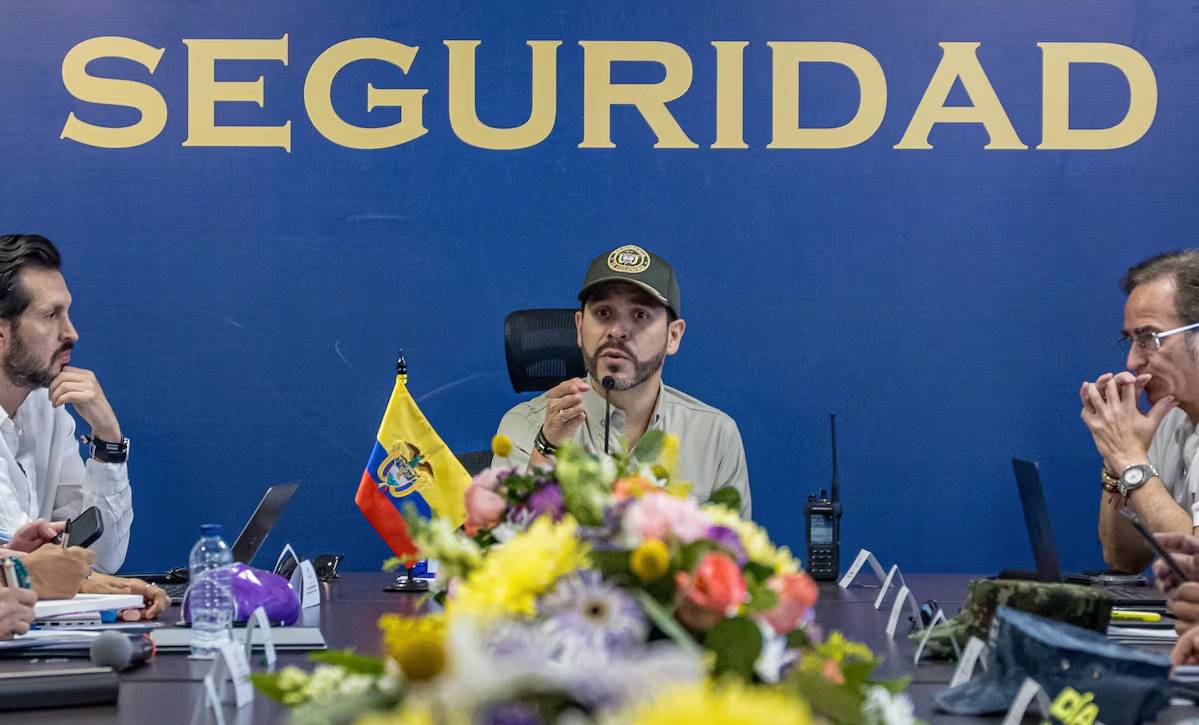
The doubts were quickly dispelled when it became clear that the new president appeared to have only one proposal to offer: an aggressive, tough-on-crime approach centered on deportations. At the end of August, in a statement, De La Espriella announced what his approach would be. Although brief, his remarks contained statements that should not be overlooked. First, he issued an order to Migración Colombia, publicly and in real time, to begin deportation “operations” targeting migrants. The president stated that deportations had been a “campaign position” that he was now honoring as head of government.
De La Espriella warned that his order would prioritize people who had committed crimes, followed by those in an irregular immigration status, regardless of their national origin. The president stated unequivocally that he would not accept “illegal immigrants” and that deportations would have to be carried out “as quickly as possible.” In his remarks, he added: “Colombians first, Colombians second, and Colombians third.”
And what about migrants?
The statement about prioritizing Colombians, which might seem self-evident, takes on a deeply discouraging meaning when read in the context of the orders issued. It points to what the migration agenda for the current four-year term could look like—and the reality is that there is no such agenda. There are no proposals to address these individuals’ needs for inclusion and integration. The only playbook available is the one currently in vogue across the region: the criminalization and exclusion of migrants through detection, detention, and deportation (the three Ds).
This discourse, which may appeal to certain sectors of the population, has adverse consequences for migrants in the country. It spreads fear among them about interacting with the authorities, for fear of being sent back to the countries they left and to which, for various reasons, they cannot or do not wish to return.
One might think that De La Espriella’s statement is just that: words without consequences. Nothing could be further from the truth. Following the announcement, Migración Colombia began publicly announcing on its social media accounts that certain groups of migrants would be “expelled from the country.” Meanwhile, migrants began seeking information about how to regularize their status and what to do in the event of deportation.
“No to illegal immigrants” and the criminalization of migration
The president’s message lumps together people with criminal records (criminal offenses) and those who are in the country irregularly (administrative violations). In the first case, these are people who have been prosecuted for committing crimes in Colombia. This is plainly different from the second scenario, which involves people who entered Colombia without meeting the established requirements or who, despite having met them, have remained in the country beyond the period authorized.
It is essential to clarify that this second scenario is referred to as “irregular migration,” never “illegal migration.” Nor are there “illegal migrants”: illegality refers to conduct, never to a person. Colombia’s Ombudswoman, Iris Marín, has made the same point.
“As quickly as possible” and due process
The president stated that “the order to Migración Colombia is clear, and we’ll call them right now and give it to them” and that “they will have to be deported as quickly as possible.” It is worth remembering that administrative decisions must comply with formal requirements that safeguard the rule of law and make it possible to review the actions of public authorities, without exception.
For the purposes of such review, it is crucial to understand the reasons that lead an authority to take a particular course of action. A phone call to Migración Colombia or a brief public statement lasting just a few minutes is therefore wholly insufficient for this purpose.
Second, no immigration sanction can be carried out “as quickly as possible” without following the required procedures. In every case, the guarantees of due process must be observed. At a minimum, this means that the deportation/expulsion decision must be set out in writing in a duly reasoned administrative act issued in compliance with all formal requirements; that the person being sanctioned must be formally notified of the decision; and that they must be able to file the legally available appeals against it, should they wish to do so.
Furthermore, the collective deportation/expulsion of migrants is strictly prohibited. Since deportation or expulsion constitutes a sanction, each case must be considered individually.
“It is a political decision, and I take responsibility for it”: So who is accountable?
De La Espriella concluded his remarks by stating that this was a presidential order, a political and administrative decision for which he assumed responsibility. Two important aspects here should not go unnoticed. Calling it a political decision is problematic because it suggests that the law has no role to play. All actions taken by public authorities are subject to the law and entail specific legal responsibilities. Migración Colombia should be reminded that deportation/expulsion orders cannot be justified on the grounds that the president has issued an order. Rather, they must be based on the legal provisions governing immigration violations. Failure to do so also entails responsibility for immigration authorities.
Finally, the president should understand that responsibility does not rest with him, but with the authority conducting the administrative proceedings and imposing the immigration sanction—in this case, Migración Colombia. It has been deeply surprising to find that the expulsion orders explicitly stated that they were being carried out in compliance with the president’s order, as though this were sufficient grounds to expel people from the country.
In this context, we must call for three things: first, greater restraint in public discourse and greater precision in language; second, consideration of alternatives for regularizing the immigration status of people in the country; and third, creativity in designing responses to the migration context that focus on solutions rather than treating migration as a problem.
There is already ample evidence of stigma and criminalization across the region (and the world) for us to continue down the same path.
Autor

Lawyer, PhD. and associate professor at the Law School of the Universidad de los Andes (Bogotá), Colombia. Director of the Center for Migration Studies (CEM) and co-founder of the Legal Clinic for Migrants at the same university.