The second round of Colombia’s presidential election has implications for Latin America at the ideological level, but it also favours the reorganisation of the hemisphere under the leadership of the United States and the self-proclaimed “Donroe Doctrine.” Since 2023, left-wing forces have been defeated in several countries, and following Donald Trump’s return to the White House, efforts have intensified to rebuild a sphere of influence centred on right-wing governments.
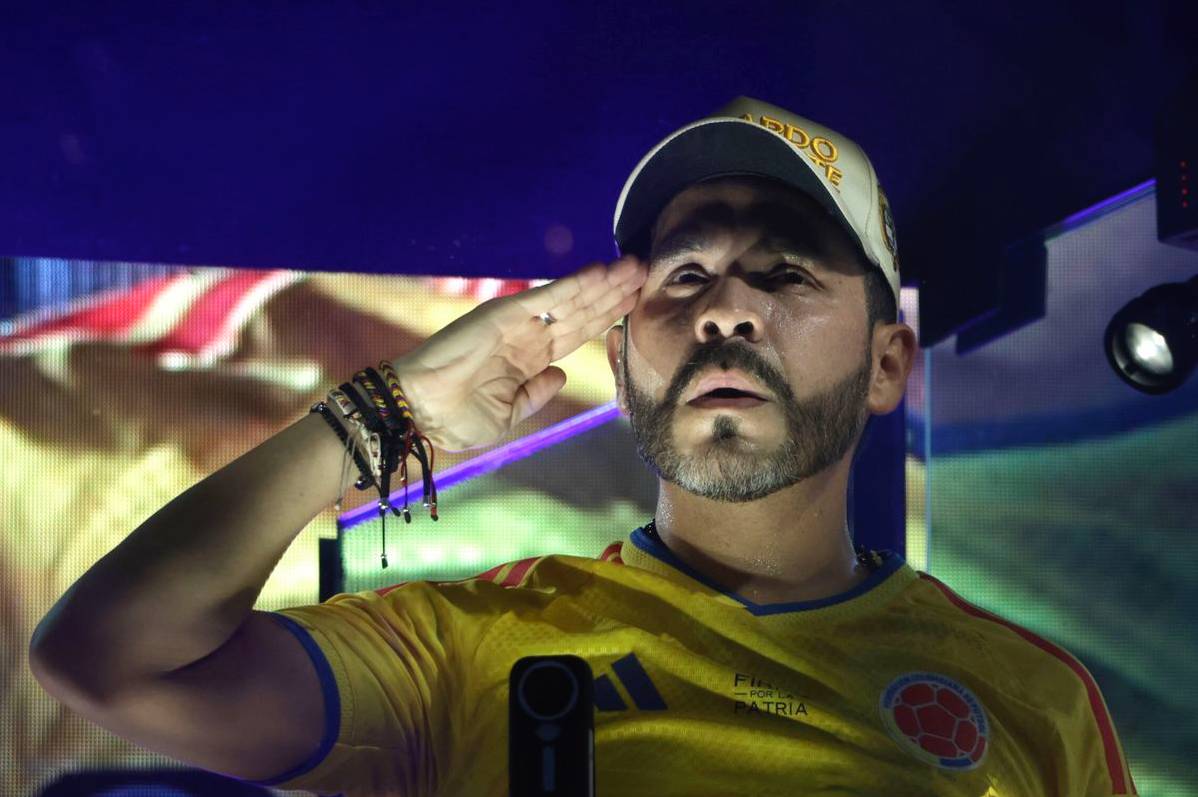
Until a few days ago, Colombia was one of the countries excluded from the Shield of the Americas Summit, where right-wing presidents, along with some left-leaning leaders such as Guyana’s Mohamed Irfaan Ali, signed an agreement to guarantee hemispheric security. Abelardo de la Espriella’s victory in the Colombian election will undoubtedly open a new chapter in Washington–Bogotá relations, one that is closer and less confrontational than the relationship the United States had with Gustavo Petro.

The right’s victory, however, should also be interpreted from a geopolitical perspective. Although the debate has focused on the ideological dispute across the subcontinent, the reality is that the election has broader regional implications. Since the U.S. Department of War published its map of Greater North America, stretching from Alaska and Greenland to Ecuador, Colombia has become a priority country for U.S. national security. Amid the growing confrontations between Petro and Trump, meaningful cooperation would only be possible under a right-wing president.
Colombia occupies a strategic position because it borders Central America to the north, Venezuela—currently under Washington’s tutelage—to the east, and Ecuador, Peru and Brazil to the south. From El Salvador, excluding Nicaragua, to Argentina, the right has expanded in recent years. Peru’s recent election, which brought President-elect Keiko Fujimori to power, together with Abelardo de la Espriella’s victory, has turned the entire Pacific coast blue.
This is no minor issue, as a mountain range of right-wing governments facilitates collaboration and cooperation between Washington and Latin America. Even geographically, the left has been pushed back towards the Atlantic, where the United States has also been reconfiguring maritime access routes, as in the case of the Greater Caribbean. The victory of the right-wing candidate falls squarely within the countries the United States considers part of its sphere of influence; therefore, it would not be surprising if Colombia were to join the Shield of the Americas initiative in the near future.
Colombia’s importance had already become evident after the first round of voting, when President Trump congratulated “the Tiger”—De la Espriella’s nickname—for his decisive victory. A few days before the runoff, the U.S. president reiterated his support for the right-wing candidate, and following the 21 June election, Trump and Secretary of State Marco Rubio congratulated the president-elect, highlighting their intention to cooperate on security, migration and the fight against crime.
The new president also resembles Javier Milei in economic matters. He advocates a tough-on-crime approach similar to that of El Salvador’s President Nayib Bukele, who for decades was allied with Colombia’s traditional right led by former president Álvaro Uribe. Moreover, he is a businessman and a representative of the anti-establishment right in the mould of Donald Trump.
De la Espriella embodies a combination of several elements that have proven successful in recent elections. It should not be forgotten that, like Milei and Bukele, he founded his own political movement, Defenders of the Homeland. It is noteworthy that anti-establishment right-wing movements have proliferated in different waves since Trump’s first term: Bukele in El Salvador and Jair Bolsonaro in Brazil emerged during that period; others, such as Milei in Argentina, rose between 2020 and 2024; and now, during Trump’s second term, Colombia has witnessed a similar phenomenon with De la Espriella.
It is no coincidence that figures such as those mentioned above share similar characteristics, particularly their hard-line stance on public security and their support for the construction of mega-prisons. On the contrary, the radical right has become increasingly appealing. As sociologist Pablo Stefanoni wrote in The Rebellion Became Right-Wing, its rhetoric, aggressiveness, confrontational style and radicalism have captivated several nations, as was the case in Colombia.
Colombia has turned blue, but in 2026 there are still two key electoral contests ahead: Haiti in August, which is essential for control of the Caribbean, and Brazil in October, where Lulismo will once again face Bolsonarismo. Should the right achieve victory in these countries as well, the hemispheric reconfiguration would reach its deepest point.
Autor

Political scientist from UNAM with a diploma in journalism from the Carlos Septién School of Journalism.