From Mexico to Argentina, through Central America and Brazil, wildlife trafficking has evolved from a marginal crime into a key component of transnational organized crime, closely linked to drug trafficking and other illegal economies. Between 2017 and 2022, the region saw 1,945 documented cases of illegal capture and hunting of wild species, with a severe impact on biodiversity and animal welfare.
Networks operating simultaneously in Argentina, Bolivia, Ecuador, Peru, and Colombia are responsible for the hunting of jaguars and pumas to supply the market for fangs and skins, and the capture of live frogs and turtles. The company Caza & Safari, for example, is under investigation as a possible hub of one of the largest wildlife trafficking rings, openly offering hunts for protected species in Argentina and Bolivia and thereby normalizing violence against wildlife.

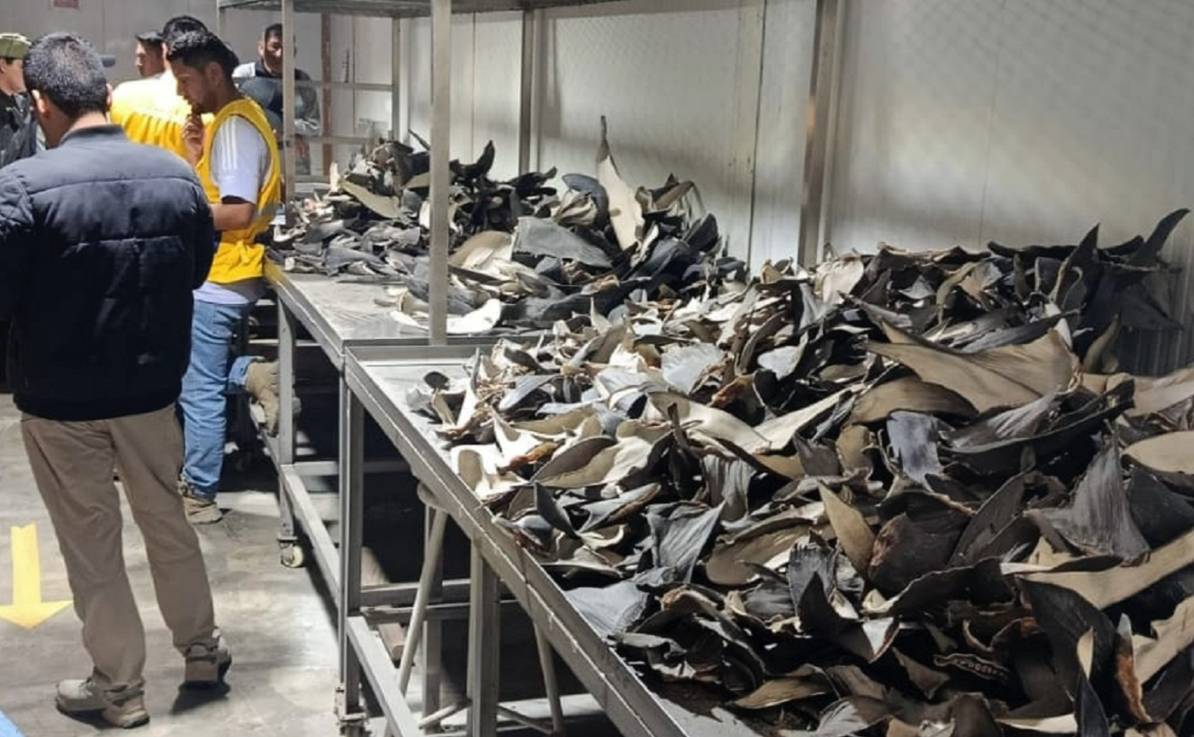
Recent reports on environmental crimes in the Ecuadorian Amazon confirm that the hunting and illegal trade of wildlife are intertwined with extractive activities and criminal networks, threatening the livelihoods of indigenous peoples and local communities. In the Galápagos archipelago, one of the most important marine sanctuaries on the planet, the situation is critical: in 2021, exports of fins from protected sharks to Asian markets tripled in Ecuador, reaching 223 tons.
The illegal wildlife trade destroys ecosystems, particularly affecting endemic species—those that exist only in specific areas. In marine zones, it persists due to legal loopholes that allow bycatch to serve as a cover for laundering targeted catches of protected species. Silky sharks, big-eyed thresher sharks, and other pelagic species are protected only within the boundaries of marine reserves such as the Galápagos, but once they cross the border into the Exclusive Economic Zone and the Carnegie Ridge corridor, their chances of survival drop dramatically.
Wildlife trafficking is on the rise and is closely linked to drug trafficking, exploiting established routes, infrastructure, and corruption networks, reaching an industrial scale of crime in regions such as the South Pacific. These cases reveal a structural crisis that demands innovative and coordinated legal responses.
Protecting the nationality of species
The international community faces the challenge of building an alliance to draft and implement new regulatory tools that can be devised through the ingenuity of jurists and activists. Ecuador, with its ecological Constitution and its experience in confronting the foreign fishing fleet that operates throughout the South Pacific, including the Galápagos marine zone, serves as an example of an argument that can be sustained within the international system: it is possible to protect the nationality of endemic species.
The Ecuadorian Constitution recognizes nature as a subject of rights, which provides an innovative legal basis for strengthening wildlife protection in conjunction with international instruments such as the United Nations Convention on the Law of the Sea (UNCLOS) and the New York Agreement on straddling and highly migratory fish stocks.
In the marine realm, these instruments have enabled concrete actions. In 2017, the Chinese vessel Fu Yuan Yu Leng was seized within the Galápagos Marine Reserve with protected species in its holds, in a landmark case that demonstrated that it is indeed possible to activate criminal mechanisms for wildlife protection. It also paved the way for an in-depth review of how inspecting the holds of vessels operating within the Exclusive Economic Zone is feasible under such regulations and an obligation for South American countries with access to the Pacific Ocean.
In fact, the New York Agreement strengthens cooperation and inspection among states regarding straddling and highly migratory fish stocks, expanding control possibilities beyond strictly national borders. However, rather than a problem of insufficient legal tools, political and economic constraints persist, impeding the state from fully exercising these prerogatives.
The Concept of Ecological Nationality
From this perspective, the idea of ecological nationality begins to take shape: recognizing that certain species, especially endemic, straddling, or migratory ones, may be subject to enhanced protection by the state that has legally assumed responsibility for their conservation. This would allow for stronger diplomatic, criminal, and international cooperation actions against their trafficking or predation, even when such acts occur outside national territory.
Defending jaguars, turtles, and sharks as nationals of the country that protects them implies rethinking sovereignty: not merely as control over territory, but as a real capacity to safeguard natural life. If criminal networks operate globally, the response cannot be limited to borders; we need an international law of nature commensurate with that threat, one that asserts the universality of these rights.
Autor

PhD in Health Promotion. Member of the International Advisory Board of The Lancet Global Health and member of the Steering Committee of the Thematic Working Group on Health Systems in Fragile and Conflict-Affected Settings of Health Systems Global Health.