Latin America faces a paradox that helps explain many of its current political tensions. Never before had so many citizens escaped poverty and gained access to levels of consumption, education and opportunity that had remained out of reach for decades. Yet rarely has the region experienced such high levels of electoral volatility, political frustration and distrust toward its leaders.
During the first decades of the 21st century, the expansion of the middle class was presented as one of Latin America’s greatest achievements. Millions of households gained access for the first time to higher education, credit, homeownership and the prospect of social mobility that had once seemed reserved for others. The promise was simple: each generation would live better than the one before.

That transformation was real. But it also produced a less anticipated consequence. Social mobility changed voters more quickly than political systems were able to adapt to them.
This transformation helps explain what we might call the politics of decline: a form of political behavior driven less by the expectation of upward mobility than by the fear of losing what has already been achieved. It is not a comprehensive explanation of Latin American politics, but rather an analytical framework that helps interpret observable trends across different countries in the region.
For much of the 20th century, broad sectors of society developed stable political identities. Being left-wing, right-wing, Peronist, social democratic or nationalist implied a lasting connection to particular organizations and political projects. That connection has not disappeared. But ideologies have lost some of their ability to retain voters when economic expectations come under strain.
Latin American politics appears to be shifting from a politics of belonging to a politics of expectations.
The first stage of this transformation was marked by social mobility. Poverty reduction, expanded access to credit, educational opportunities and economic growth enabled millions of people to improve their living conditions. But a second stage began to emerge as growth lost momentum, informality persisted, and broad segments of society realized that climbing the social ladder was not the same as feeling secure.
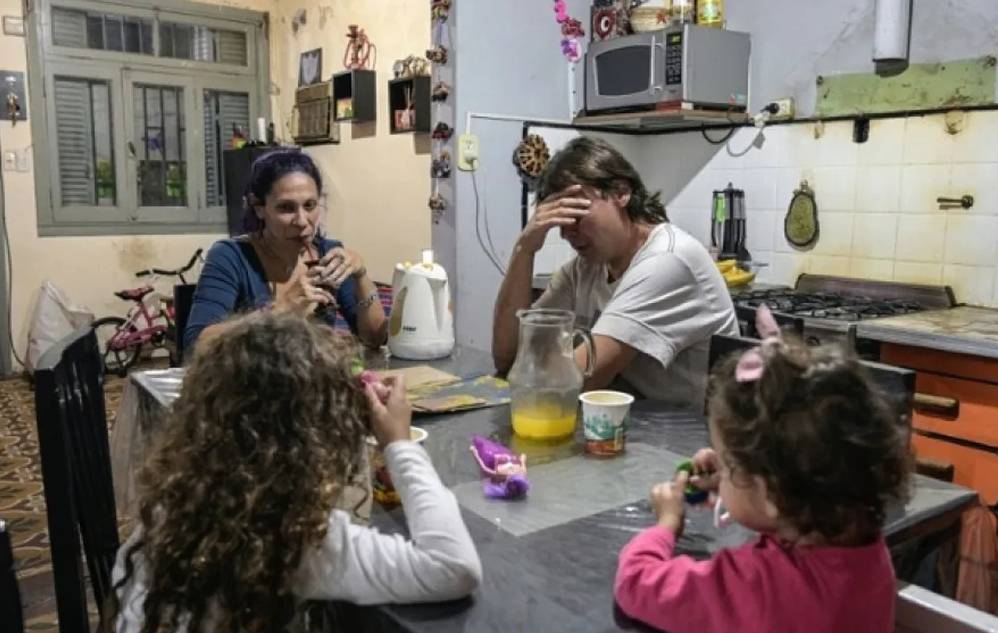
Millions of Latin Americans no longer see themselves as excluded, but neither do they feel fully protected. They have climbed a few steps, yet they believe that an economic crisis, job loss or rising living costs could easily push them backward. They are not necessarily experiencing poverty. They are experiencing vulnerability.
The poor fear the present. The middle class fears the future.
Those who fear the present seek survival; those who fear the future seek preservation. From these different concerns emerge different political demands: the first pushes toward inclusion, the second toward stability. Out of this tension arises the politics of decline. It is a social response to the perception of fragility that emerges when the central concern shifts from how to move forward to how to avoid falling behind.
What millions of citizens seek is not necessarily a dramatic improvement in their living standards, but rather the ability to preserve what they have already achieved: keeping their jobs, maintaining their homes, securing opportunities for their children and protecting a social position that took years to build.
The data help explain why this anxiety is well founded. According to the World Bank, the regional middle class grew from 35.2% of the population in 2015 to 42.3% in 2024, while poverty fell from 32.8% to 25.5% over the same period. These are the figures that sustain the narrative of progress.
Yet the World Bank also reports another figure that receives far less attention: the share of the population classified as vulnerable—earning more than the poverty threshold but less than middle-class income, and therefore exposed to falling back after any economic shock—barely changed over the decade. It represented 32.0% of the regional population in 2015 and 32.2% in 2024. While poverty declined by seven percentage points and the middle class expanded by another seven, this intermediate group remained virtually unchanged.
Millions of households crossed the income threshold without crossing the threshold of security. Statistically, this is the precise origin of the politics of decline: not the absence of progress, but progress built on foundations that millions of citizens correctly perceive as fragile.
The anxiety generated by that fragility helps explain phenomena that, at first glance, may seem unrelated. The rise of anti-establishment leaders, growing electoral volatility, the weakening of traditional party loyalties, and the willingness of large segments of society to experiment with very different political alternatives all reflect the same underlying concern: uncertainty about the future.
Similar patterns can be observed, with important national variations, in Argentina, Brazil, Colombia, Peru and Bolivia. The political responses differ. The underlying anxiety often looks remarkably similar.
This does not mean that ideological identities have disappeared. In many countries they continue to shape much of political competition. Increasingly, however, they coexist with a political logic driven by economic expectations, perceptions of security and the desire to preserve what has already been achieved. The politics of upward mobility rewards promises. The politics of permanence rewards guarantees.
When societies believe they are moving forward, citizens are generally more willing to accept temporary sacrifices and support long-term projects. When fear of decline takes hold, priorities change. Voters become less patient, more demanding and more willing to switch political allegiances if they believe another option can better protect what they have achieved.
If this is indeed the dominant anxiety of a growing share of Latin American society, the challenge facing governments, political parties and institutions will differ from that of previous decades. Creating opportunities for social mobility will no longer be enough. They will also need to provide the security necessary to ensure that such mobility can be sustained over time.
For decades, the central question was how to move up. For a growing part of Latin America, the question now seems to be different: how to stay there.
The answer to that question will shape not only the region’s next electoral cycles. It will also help determine the kind of social contract Latin America will be able to build in the decades ahead.
Autor

Writer and consultant in political and institutional communication. He analyzes politics, society, and mobility dynamics in Latin America, with an emphasis on their institutional implications and the construction of political community.