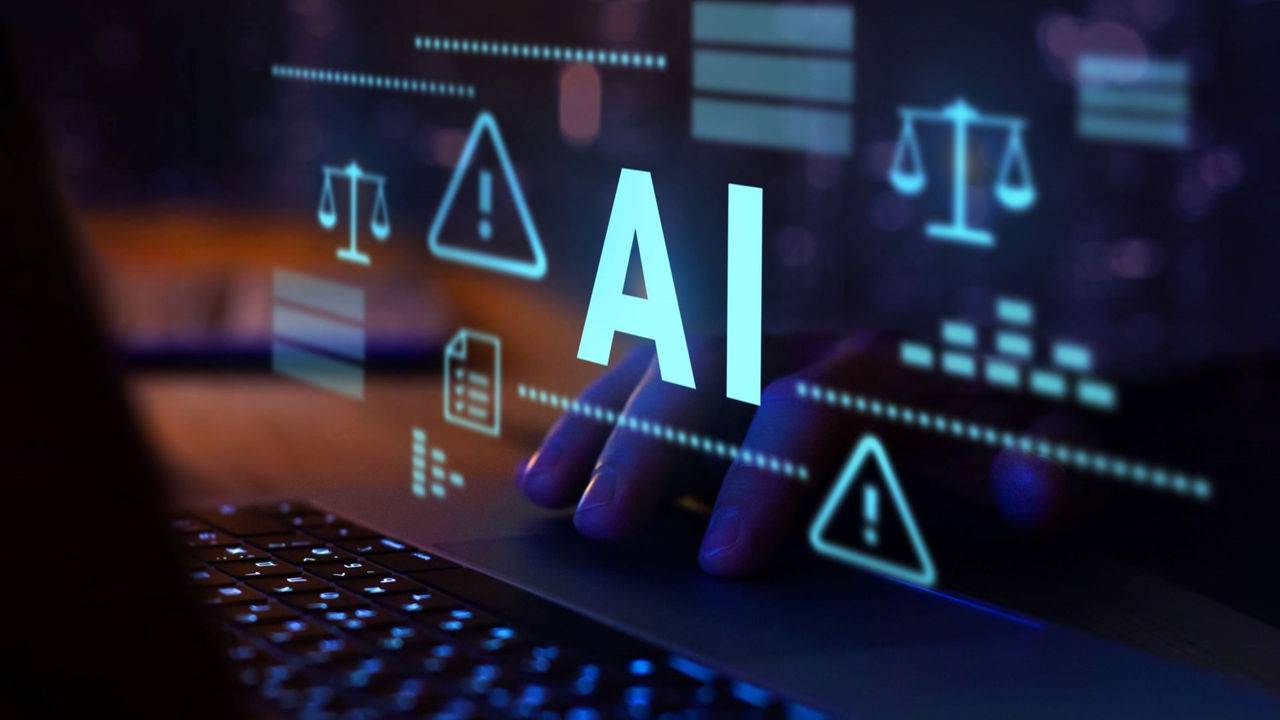
Artificial intelligence is no longer knocking at democracy’s door. It is already inside. It is reshaping how citizens access information, how campaigns persuade, how falsehoods spread, and how power is distributed among citizens, governments, and private actors. The question is no longer whether AI will affect democracy, but whether democracies will be able to bring it under their rules before other, non-democratic powers impose their own.
The challenge is particularly acute when it comes to elections. It is there that democracy ceases to be an abstraction and becomes a set of concrete tasks: organizing electoral processes, counting votes, accepting results, and transferring power. These are complex operations that depend on legal certainty, political impartiality, administrative excellence, and, above all, public trust.

AI introduces real risks to electoral processes. It makes disinformation cheaper, faster, and more convincing. It can amplify polarization, irreversibly contaminate the information environment, undermine privacy, and overwhelm the capacity of electoral authorities to ensure a level playing field, a transparent process, and reliable results.
Yet reducing AI to a mere threat would be shortsighted. When deployed responsibly, transparently, and under proper oversight, AI can help electoral management bodies analyse information, detect interference, streamline processes, and improve access to electoral information by making it available in multiple languages.
Halting technological change is neither possible nor desirable. The task is to govern it democratically and steer it toward expanding freedom, protecting human dignity, and creating shared prosperity.
That requires asking political—not merely technical—questions. How is the infrastructure of the systems that mediate online public debate designed? What data are being used to train the artificial intelligence deployed in electoral processes, and under what safeguards? How do we preserve meaningful human oversight when public institutions rely on automated tools? How do we ensure that smaller states and under-resourced electoral authorities are not left behind by wealthier countries and more powerful corporations? How can we ensure that the electoral information disseminated by AI systems is reasonably accurate and balanced, and that their biases do not go unnoticed? These are not mere technical details, but central issues for the health of democratic life.
The countries of Latin America and the Caribbean are well acquainted with both the vitality and the fragility of democratic competition. By now, the region has accumulated considerable experience in electoral management, observation, dispute resolution, and, increasingly, in responding to disinformation. Yet the speed of AI demands a new layer of institutional and societal preparedness to strengthen the resilience of democratic institutions.
Resilience cannot be improvised in the midst of a crisis, especially when risks evolve at the pace of AI. As a matter of urgency, electoral authorities must assess vulnerabilities, develop protocols, train their staff, build relationships with the media and digital platforms, and communicate clearly with citizens before a major controversy erupts. Preparedness does not eliminate risks, but it can prevent a viral falsehood or an opaque decision from eroding public trust in electoral processes.
All the challenges posed by AI require a collective response. Governments must protect rights without stifling innovation. Electoral authorities must safeguard the integrity of electoral processes. Civil society and academia must monitor, investigate, and propose solutions. International organizations must convene, support, and raise the alarm before inaction causes irreversible harm.
But adopting a purely defensive posture is not enough. All political and social actors—national and international alike—must also strive to identify and promote every use of AI that expands democratic participation, strengthens accountability, and enables institutions to respond more effectively to the people they serve. In other words, they must harness AI to revitalise democracy.
AI can accelerate the spread of falsehoods or expand rights. It can concentrate power or open new avenues for participation. It can erode trust or help rebuild it. None of these futures is predetermined. The course of humanity’s journey with AI will depend on the human decisions made at this crucial moment regarding its design, regulation, investment, transparency, oversight, and cooperation. That is why the conversation about AI cannot remain confined to specialists. It must become a social and democratic priority.
This week in Santo Domingo, electoral authorities, governments, and experts from across Latin America and the Caribbean, with the support of International IDEA and the collaboration of the Central Electoral Board, are gathering to advance that goal: building shared knowledge, strengthening institutional AI literacy, and reinforcing safeguards before the next crisis puts democratic institutions to the test.
Democracy cannot remain passive in the face of AI’s emergence. If we want AI to serve the public interest, all institutional, political, and social actors must work to govern it according to the principles that sustain democratic life: freedom, equality, transparency, accountability, and the protection of human dignity. This is a debate that can no longer be postponed.
This text was written in the framework of the II Regional Seminar: Artificial Intelligence and Electoral Management in Latin America and the Caribbean, organized by International IDEA.
Autor

Secretary general of IDEA International since 2019, member of the Inter-American Dialogue, and expert in democratic governance. He was vice president of Costa Rica, minister, senior official of the OAS and academic. Abogado, held degrees of Essex and Oxford.