In the past years, the open sky of the Patagonian landscape has been overtaken episodically by gigantic clouds of smoke, under which the thunder of burning forests advanced until the fuel ran out. Having devoured the wood and sheared most wildlife from the area, these apocalyptic fires weren’t followed by environmental remediation or measures to support affected communities. Instead, the Argentinian government considered lifting safeguards for native forests and protected areas, and clearing the path for new technological development in burned areas.
While it has been argued that governments are unable to keep up with the rapid advancements in digital technologies, Argentinian President Javier Milei has shown how they can become quickly attuned with them. The reform to the Fire Management Law that would have allowed fire-damaged ecosystems, even if burned intentionally, to be used for new purposes was not proposed in a vacuum. Milei had recently offered the region of Patagonia for data centers to feed AI, and making fire-damaged land available would have helped expedite their construction. Yet thanks to widespread protests, and resistance from Patagonian representatives, these reforms failed to pass.

Still, the full scale of Argentina’s AI investment remains dangerously clouded, hindering the public’s ability to react to and resist these changes that threaten biodiversity, bodies of water, and cultural landscapes. Milei’s denial of the anthropogenic drivers of climate change further obscures the economic interests behind this agenda, and the risks that this cybernetic race brings to the region.
Finding “friendly” governments such as Argentina’s is essential to the expansion of AI corporations and AI-dependent giants like Palantir in need of expanding data centers. In continuation of their historical role as a commodity provider, South American countries are easy prey to biokleptocracy, where corporations appropriate vital resources for private gain to the point of depletion. Patagonia in particular is emerging as the cybernetic core of the AI movement: a resource-rich place where biology and technology are poised to become fused.
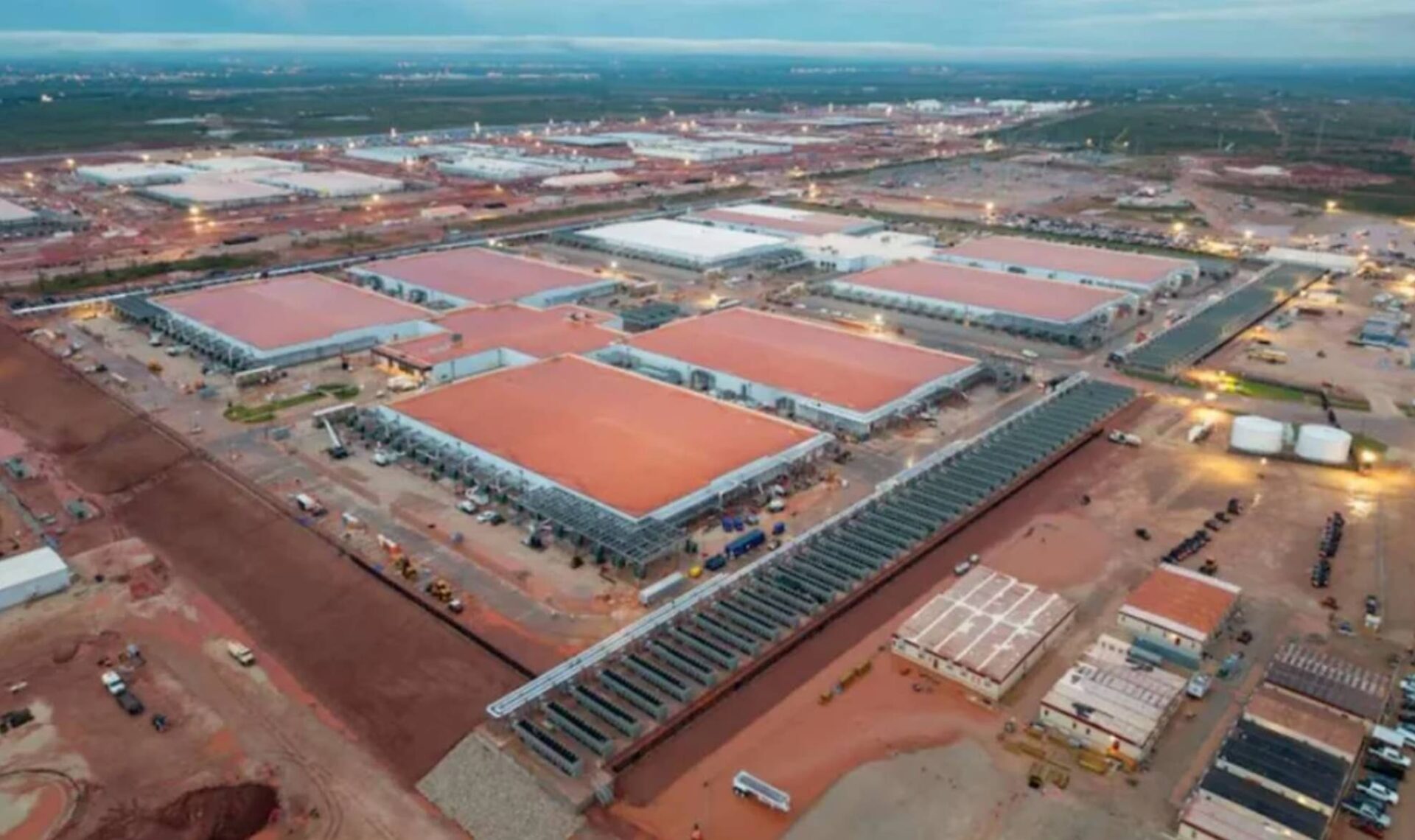
Patagonia, a region covering a large part of southern Argentina, is a prime location for data centers, given its vast spaces, naturally low temperatures, water necessary for cooling, and vicinity to energy sources. It is where, last year, OpenAI announced its Stargate Argentina $25 billion plan to build a large-scale data center, while Tesla announced last June that it was analyzing building a data center in Argentina. Yet sourcing water for data centers may impact wetlands and water bodies, exacerbating droughts that Argentina has already experienced.
These recent proposals coincide with Peter Thiel, co-founder and major partner of the AI company Palantir, moving with his family to Argentina—and meeting with Milei himself. Data centers are essential to Palantir, valued at more than $400 billion, which builds data integration and analytics platforms for corporations and governments, including intelligence agencies.
Thiel has already pushed geographical frontiers elsewhere, such as by investing in Panthalassa’s ocean data centers, powered by wave energy and using seawater for cooling. But, apart from damaging seabed habitats during installation, these servers contribute to thermal and sound pollution by heating the surrounding waters and producing a continuous low-frequency noise. Thiel’s interest in Argentine projects may similarly ignore the environmental risks.
Alex Karp, Palantir co-founder and CEO, has framed the competition for AI as an arms race that must be supported to impede a Chinese takeover. At the center of his rhetoric, captured in his Penguin-published book “The Technological Republic”, is Thiel’s own portrayal as a global peace crusader. Yet the AI arms race led by Thiel and his allies actually creates a violent feedback loop: AI hardware such as data centers consumes resources and threatens life-supporting ecosystems, while AI software increases surveillance and suppresses opposition to the destruction.
In fact, the limits to how much civil society can demand more regulation are reinforced by AI-supported technological surveillance of the population. Currently, Argentina registers the DNA of accused, not just convicted, criminals, which can dissuade civil society from advocating to protect ecosystems if there is fear of being criminalized. In 2024, Milei even proposed using AI surveillance to “predict” future crimes. Worries have emerged that Argentina’s AI investments, and Milei’s connection to Thiel, will lead to further surveillance of the population, enabled by AI.
Even so, people continue to organize to fight for the environment, including against the extraction of lithium, which is a critical resource for building hyperscale data centers. Lithium mining in northern Argentina already dried up the Trapiche River and is endangering the La Puna wetlands, risking both the local ecological and cultural richness and the more distant hydroelectric energy generation, drinking water provision, and agricultural land irrigation. The pervasive images of heavily equipped police confronting small crowds of protesters against natural landscapes in South America capture the stark imbalance between government-backed corporations and environmental defenders.
Still, the full potential of environmental impacts of Argentina’s AI expansion remains hidden. Entrenched corruption in Argentinian politics means that there is limited transparency in the dealings behind governmental deregulation. Milei is even seeking to give AI extraordinary power, by allowing “non-human” businesses run solely by AI.
There is a need for greater transparency on the connections between a technological overlord such as Thiel and Milei’s push for AI infrastructure and self-governance. Public resistance has proven one of the few effective measures to resist the cybernetic frontier and the risks it brings to life and health. Without transparency, that resistance is blind and more likely to falter.
Autor

PhD in Health Promotion. Member of the International Advisory Board of The Lancet Global Health and member of the Steering Committee of the Thematic Working Group on Health Systems in Fragile and Conflict-Affected Settings of Health Systems Global Health.

Environmental journalist and master in Fine Arts (MFA) in fiction at the University of New Orleans and training at the Research Journalism Center (SUJO) in Bergen, Norway.