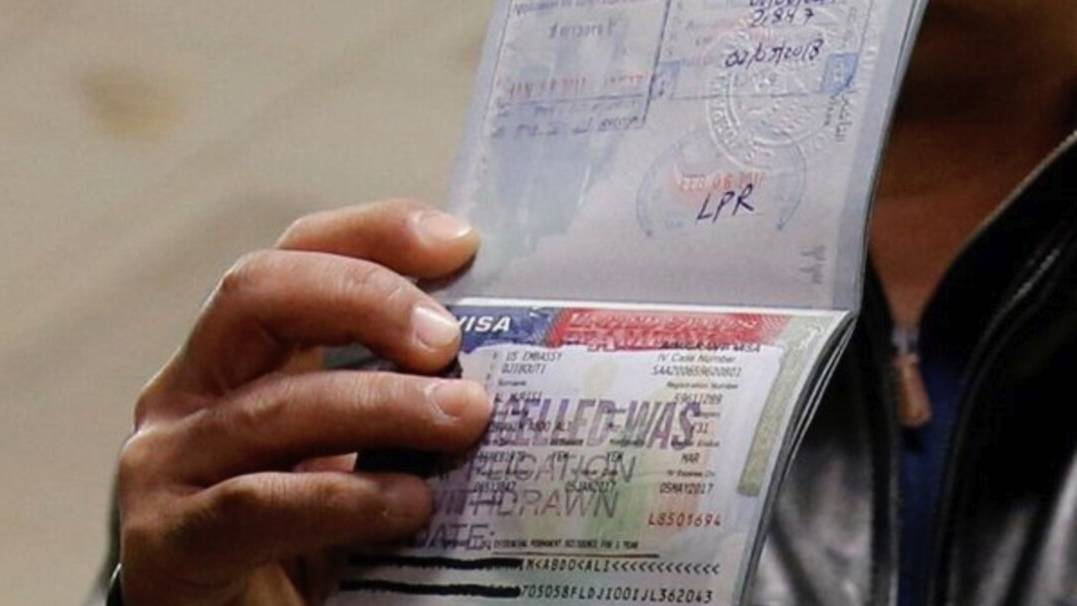
In the United States, the visa has become a mechanism of control used to condition certain judicial decisions and force cooperation on security matters. The visa has its origins in the immigration quotas of 1921 and 1924, promoted by Congressman Albert Johnson and Senator David Reed, which sought to control the entry of foreigners into the country after World War I (1914–1918). Although there is no formal Reed-Johnson doctrine, visa restrictions have become an instrument of diplomatic pressure and also a geopolitical tool. Just as Henry Kissinger resorted to diplomacy and Madeleine Albright defended the use of force on some occasions, the State Department uses visas to influence the decisions of countries across the subcontinent.
Visa restrictions are not exclusive to Donald Trump. In his case, they are more evident because he has used them as a mechanism to align countries across the hemisphere. Some of his predecessors, such as Bill Clinton, George W. Bush and Joe Biden, also employed this strategy. In previous cases, the restrictions were attributed to alleged corruption, criminal ties and what was referred to as “anti-democratic actors.”

However, in this new Trump administration, the reshaping of the hemisphere rests not only on the Monroe Doctrine and the Trump Corollary but also on control over permits granting access to U.S. soil.
The most striking case is that of Mexico and the revocation of the visa of Andrés Manuel López Beltrán, son of former President López Obrador. President Claudia Sheinbaum has questioned the measure and accused Washington of interference. Likewise, the former president’s son demanded in a letter the dismissal of Secretary of State Marco Rubio and Deputy Secretary Christopher Landau.
It is worth noting that visa revocation does not, in itself, constitute an attack on sovereignty, since a visa is not a human right but rather a permit to seek entry into the United States for purposes such as tourism or work. The Morena movement has questioned the measure and portrayed it as a form of interference, using it as political fuel in a context marked by the proximity of the 2027 midterm elections.
Another case that can be cited is Brazil. The Trump administration revoked the visas of members of the Federal Supreme Court to prevent Jair Bolsonaro from being prosecuted. Washington sought to ensure that the former president would not be barred from holding office so that he could compete in this year’s elections. When it failed to achieve this, Trump imposed 50% tariffs on a large share of Brazilian products and opened a channel of confrontation with President Luiz Inácio Lula da Silva, who is seeking to defeat Flávio Bolsonaro, the former president’s son, at the polls and secure a fourth term.
Brazil’s pre-electoral landscape is marked by Trump’s pressure and attempts to align the South American giant with the new Monroe Doctrine. Lula has used these actions to build his campaign and candidacy around a movement to defend national sovereignty. Flávio Bolsonaro, meanwhile, considers the deterioration in relations with the United States to be the president’s fault, meaning his victory would open a new chapter in relations between the White House and the Planalto Palace.
The threat of visa revocation has also served to limit China’s influence in the hemisphere and, in doing so, reaffirm U.S. hegemony. In Chile, Washington’s pressure was linked to the Chile-China Express project, which envisaged the construction of a fiber-optic submarine cable between Chile and Hong Kong. The project was suspended after the Chilean government revoked the concession initially approved. The U.S. ambassador in Santiago, Brandon Judd, had expressed concern about the risks that, in his view, the project posed to regional security.
Faced with this situation, then-President Gabriel Boric decided to put the construction of the cable on hold. Subsequently, Washington revoked the visas of Transport Minister Juan Carlos Muñoz; Deputy Transport Minister Claudio Araya; and the chief of staff of the same ministry, Guillermo Petersen.
In neighboring Colombia, former President Gustavo Petro also had his visa revoked following a controversial visit to Washington. During a pro-Palestinian protest in New York, the former president called on U.S. soldiers to disobey Trump’s orders. The State Department revoked his visa; Petro stood by his statements, and several of his ministers voluntarily gave up their visas. Although tensions with Trump persisted, the Colombian president chose to moderate his rhetoric and avoid inflammatory statements. In March 2026, the United States reinstated Petro’s visa until the end of his term.
Central America has not been immune to this phenomenon. In Costa Rica, the White House revoked the visas of former President Oscar Arias and then-President of the National Assembly Rodrigo Arias. The visas of several opposition legislators to the government of Rodrigo Chaves, a key U.S. ally, were also revoked.
Just as we have so far seen examples of visa revocations, there are also cases in which visas have been used as a form of recognition for cooperation with the White House. In El Salvador, the Joe Biden administration revoked the visas of several officials accused of corruption, as also occurred in other cases involving Honduras, Guatemala and Nicaragua. However, with Trump’s return to the White House, some of these restrictions were reviewed or lifted, at least in the case of El Salvador.
Although the State Department has said that visa revocations are based strictly on legal and national security criteria and compliance with its immigration rules, and has denied that they constitute punishment for political opinions or personal attitudes, the national security argument is the broadest and most generic, as it allows Washington to define what it considers a threat to its security.
The justifications range from alleged collusion between politicians and organized crime figures, as in the Mexican case, to attempts to limit the influence of other countries in the hemisphere, as in Chile, or warnings about the possible radicalization of far-left groups, including pro-Palestinian groups, according to U.S. government officials. In some cases, these measures have been described as interference, as in the Brazilian case.
Visas, therefore, have ceased to be merely an immigration tool and have become a mechanism of punishment and reward. Under Trump, denying or restoring access to the United States is another way of imposing discipline and reaffirming U.S. hegemony across the continent.
Autor

Political scientist from UNAM with a diploma in journalism from the Carlos Septién School of Journalism.